 |
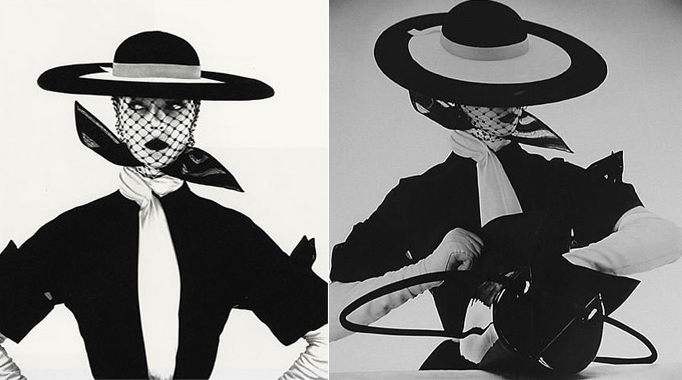
| Jean Patchett |
I thought I would share a research paper I wrote for my beginning photography class. I've always admired Irving Penn's photography; it was a joy to learn more about this gentle, creative artist.
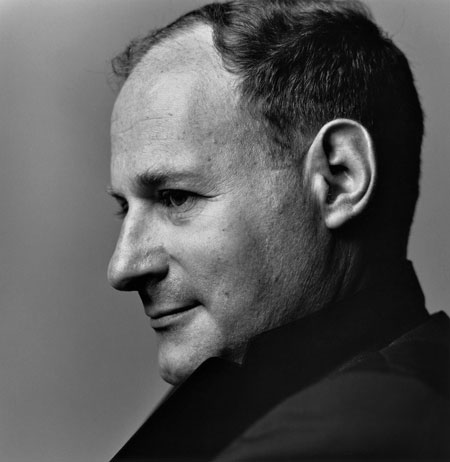 |
| Irving Penn, Photograph by Bert Stern/Associated Press |
Irving Penn was born in Plainfield, New Jersey in 1917 and received a degree in advertising design from the Philadelphia Museum School of Industrial Art in 1938. He began his career as an art director for Junior League magazine and later for Saks Fifth Avenue. In 1942 quit his job to pursue painting. After one year in Mexico, he abandoned the effort, concluding he would never be more than a mediocre painter.
Fashion
Upon his return, he was offered to be the stylist for the cover of October 1, 1943 issue of Vogue magazine. He created a still life, featuring an enormous topaz, and was then asked to also photograph the scene. It was Vogue Magazine’s first color cover.
 |
Vogue Magazine’s First Color Cover October 1, 1943 |

 |
| Lisa Fonssagrives |
 |
| Lisa Fonssagrives, Vogue UK, January 1950 |
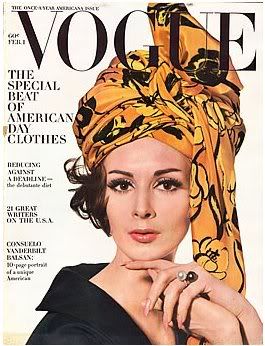 |
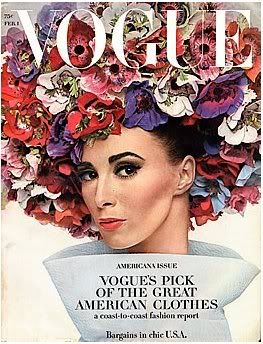
| Wilhelmina Cooper, American Vogue February 1st,1963.. Image credit |
 |
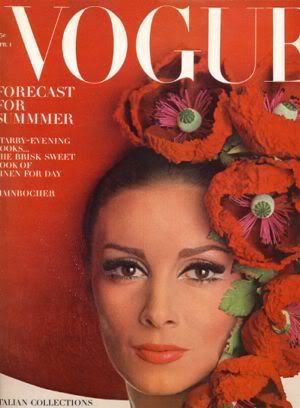
| Wilhelmina Cooper, American Vogue February 1st,1964. Credit:PaperPursuits. |
 |
| Wilhelmina Cooper, American Vogue April 1st 1965. Image credit |
 | ||
May 2004 Vogue featuring Nicole Kidman in Christian Lacroix
|

 |
Balenciaga Mantle Coat (Lisa Fonssagrives-Penn) Paris, 1950 |
 |
| Lisa Fonssagrives |
 |
| Lisa Fonssagrives |
The photo used for the April 1, 1950 cover of Vogue, named “The Black and White Idea”, sold for $481,000 at Christie’s Auction House in 1985.
 |
| Jean Patchett, April 1, 1950 Vogue Magazine |
The photo shows model Jean Patchett from the waist up wearing a black and white ensemble. Penn styled the shot with perfect balance, symmetry and obsessive precision. The backdrop is stark white, giving the greatest contrast possible for the mostly-black silhouette. Each fashion detail is highlighted: the wide-brimmed felt hat, the black neck scarf, and the short sleeves with split cuffs contrast to strike a precise silhouette against the white backdrop. The bird-cage netting and Patchett’s deep red lipstick, which reads black in black & white photos, contrast with her light complexion. Her eyes, looking to her extreme right, reveal the maximum whites, lest they get lost behind the netting. The elbow-length gloves were cropped away for the cover, creating an even stronger contrast. Given how the masthead and text of the cover fits comfortably in the white space without ever detracting from the photo, I’m guessing that Penn retained control over final layout. The overall result is a striking magazine cover that is arresting even if viewed from across the street. I have no doubt the cover generated countless inquiries about each piece of this ensemble.
Next time, Irving Penn's portraiture and still lifes.