Showing posts with label animals. Show all posts

Sunday, May 8, 2011

South African Giraffe and their Calves


DSC09031 Baby Giraffe
South African Giraffe (Giraffa camelopardalis giraffa)

Some of our fondest memories of our trip to Botswana in the summer of 2009 were the times we encountered the gentle South African Giraffe. I forget who in our Landcruiser spotted the chestnut-brown and buff fur through the trees of the African savanna on first morning at Stanley’s Camp.

DSC07502 Southern Giraffe hiding


Our guide, Poniso, immediately stopped the car and we quietly waited to see if this giraffe will reveal herself. Within a minute of motionless silence, this giraffe cow stepped out of the camouflage of the acacia tree into the open as if to admit defeat in a game of hide and seek.  We were taken by her beauty and couldn’t believe our good fortune as we viewed her through our camera lenses. When our shutters stopped snapping, Poniso whispered to us that she was hiding a calf.  


DSC07511 Southern Giraffe with hidden calf

We all quickly scanned the landscape until we finally saw the rump of a small giraffe hidden behind the large tree trunk on the left, below the light spot where an elephant has stripped the bark bare. Click on the photo to see a hint To see this photo in original size click here.


We now understood why this mother stepped out of hiding so quickly; she placed herself in a vulnerable position to protect a calf. 

*** 

Three days later, at Chief’s Camp, we stumbled upon another giraffe cow and calf. 


DSC09028 Mama and Baby Giraffe


We can’t assume that this is the calf’s mother because chances are good that this cow is watching several calves in a nursery herd while other giraffe cows browse for acacia leaves. The giraffe male does not assist in parental care because would be impossible to defend the vast terrain required to supply the large quantity of food he needs to stay healthy. Without a defined territory, he does not know which calves are his. Thus the female giraffes pool together their resources and form what amounts to a babysitting co-op.

The calf’s tawny brown spots are lighter than an adult’s, giving it an even more endearing appearance. I’m sure you can imagine our muffled squeals of delight when we got a close view of this curious calf.


DSC09031 Baby Giraffe cropped

DSC09038 Giraffe calf


Happy Mother’s Day to all the mothers who bond together and form a village to raise their young.

DSC07509 Southern Giraffe ox-pecker bird
South African (or Southern) Giraffe (Giraffa camelopardalis giraffa) and Red-billed Oxpeckers (Buphagus erythrorhynchus)
________
Resource:
"Introduction to the Social System of Giraffe (Giraffa Camelopardalis)." Biology @ Davidson. Web. 08 May 2011. <http://www.bio.davidson.edu/people/vecase/Behavior/Spring2004/breedlove/parentalcare.html> .

Thursday, January 6, 2011

The Sami People of Nordkapp

IMG_4835 Nordkapp

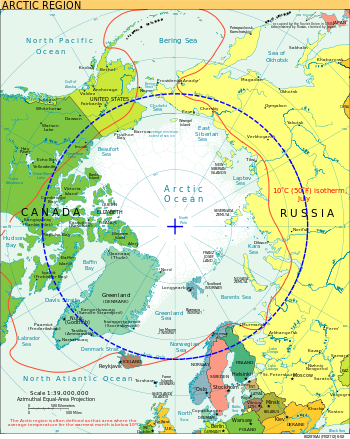
This summer we took a cruise on the Norwegian passenger and freight line Hurtigruten ("Express Route" in English) We boarded the "Midnatsol" in Bergen and sailed for one week up to Kirkenes.  One of the last stops of our voyage was the North Cape (Nordkapp), located well north of the Arctic Circle.

One of the surprises on this cruise is that I did not spot more birds along the way. I fully expected to see many breeding grounds along the coastline, but it was surprisingly bare. I was therefore on high alert when I saw a few small dots bobbing in the water about an hour before we docked.


IMG_4822 puffin at nordkapp uncropped

A closer examination revealed that these dots were puffins. Not a great picture, but it's the only one I have.

IMG_4822 puffin at nordkapp
Atlantic Puffin (Fratercula arctica)

I had the option to take the bird safari excursion, where I would have been able to see large flocks of puffins and kittiwakes and even the mighty sea eagles, but ultimately I chose to join the rest of my family on the bus tour to see the North Cape (Nordkapp), 21 miles away, on the north side of the island of Magerøya

We docked in Honningsvåg, which claims to be the northernmost city in Norway, or even the world, but there are several other cities who dispute this claim. The village was occupied by the Germans in World War II; sadly, only the chapel was spared destruction. After the war,  many of the houses were restored to their original style, using the original color scheme. Historically, white was the most expensive paint color and therefore the most prestigious. Prestige or not, the white houses would not look as pristine and idyllic were it not for the occasional red and yellow structures against the bright green grass. 

IMG_4826 on the way to Nordkapp

We boarded a bus that drove us past the traditional fish racks which still had cod drying in the sun before winter sets in. 

IMG_4932 Nordkapp fish racks

We saw many more racks on the hillsides, but they had already been picked bare. 

IMG_4847 Nordkapp fish racks

The bus careened along the winding roads across the bald sub-arctic landscape of the island.

IMG_4840 Nordkapp bus view

Periodically the bus driver would point out reindeer grazing on the short grass. See if you can spot the stag and three does below. Don't worry if you can't, I had trouble seeing them too. If you're hell-bent on seeing them, you can click here . Fortunately, we did get the opportunity to see more reindeer up close only a few minutes later.


IMG_4837 Norkapp bus view

Only the indigenous people called the Sami (also spelled Sámi, or Saami) are allowed to practice reindeer husbandry in Norway. Magerøya Island can boast 5,000 reindeer, all owned by five Sami families. The reindeer are allowed to roam freely, with only minimal fencing to keep them from harm. 

DSC07820 Nordkapp fence

The tags in the ears of the reindeer indicate ownership. 

IMG_4858 reindeer numer 1069
Reindeer (Rangifer tarandus)

IMG_4855 reindeer

IMG_4854 reindeer

Both males and females grow antlers.  I was amazed how fuzzy they were (no, I did not touch them). 

IMG_4870 reindeer

To save energy, they shed them annually. On our way back to the ship, we found shed antlers offered for sale in a small Sami shop near the ship.

The bus stopped at a Sami trading post where a Sami posed with tourists in his colorful native costume. It is not difficult to imagine the seed of inspiration for Santa's elves' costumes.

IMG_4851 reindeer photo op

The Sami use a temporary shelter, called a lavvu, which is strikingly similar to the teepees of Native Americans of the Great Plains. The portability of this structure allows the herdsmen to follow their reindeer.

IMG_4930 Sami Trading Post


IMG_4867 saami tent

Traditionally the reindeer hides were used as a cover, but now lighter fabrics are used to lighten the load. The long straight poles to construct these dwellings must be prized because tall vegetative growth appears to be scarce in this region. To our surprise there was an open fire inside, but the smoke easily escapes from the smoke hole at the top. 

IMG_4865 saami tent

The interior walls were decorated with the gorgeous native attire made with generous yardage and elaborate workmanship. I can imagine how fantastic these crisp, bright colors would look in the stark white snow. 

IMG_4861 saami costume

The trousers are made of reindeer hides.

IMG_4863 saami costumes

IMG_4864 saami costumes

The style and colors used in these these garments appear to be a perfect blending of Scandinavian, Russian, and Northwest Indian cultures.  Not surprising, given that all these descend from within the Arctic Circle and the nomadic nature of the Sami people. 

Many Sami regard the term Laplander as a pejorative term. In most Scandinavian languages the word "lap" means a patch of cloth used for mending. Where one culture used a scrap of fabric out of necessity, one could see how it may be difficult to understand that another culture used them as artistic adornments. 

We had only a few minutes to take a look at the goods offered in the trading post. My sister is to be commended for finding and purchasing a splendid black wool shawl for our mother in less than five minutes.

IMG_4873 saami costumes

IMG_4874 saami accessories


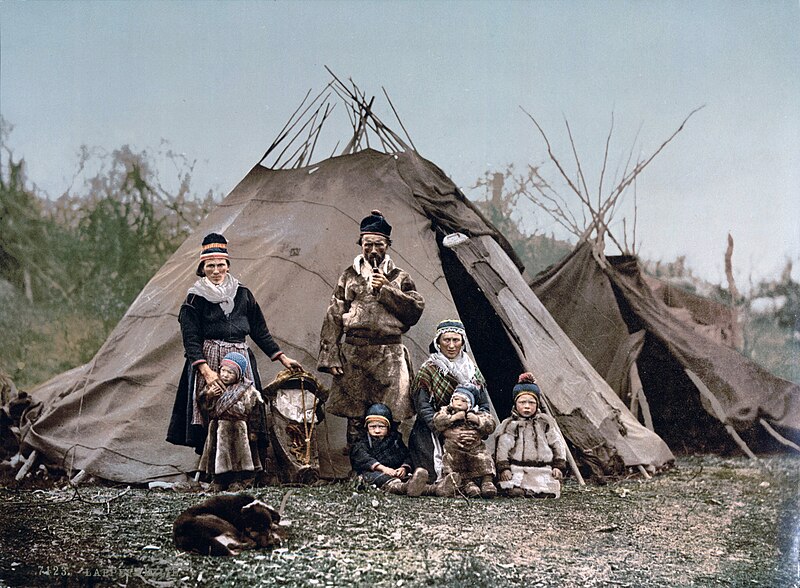
The Sami people suffered from laws of forced assimilation into the Norwegian culture, which peaked from 1900 to 1940 when anyone who wanted to buy or lease state lands for agriculture in the county had to have knowledge of the Norwegian language and register with a Norwegian name.

Sami Family, 1900, Source: Wikipedia

Despite these pressures and other draconian practices since the nineteenth century, the Sami prevailed. The pressures to chip away at their colorful culture is now coming from all around the globe.

IMG_4938 Nordkapp Saami vendor and teen

I dearly hope that the Sami culture continues to prevail so that the world can enjoy their artistry. 
Enhanced by Zemanta

Wednesday, December 22, 2010

Now, Dasher! Now, Dancer! Now, Prancer, and Vixen!


DSC07819 Saami and reindeer
Sami and his reindeer (Rangifer tarandus)

"On, Comet! On, Cupid! On, Donder and Blitzen!


This Sami reindeer herder is making sure that Santa's reindeer are well fed before their long journey ahead. Another day, I will write more about meeting this reindeer at the North Cape (Nordkapp), inside the Arctic Circle, and the indigenous people who practice reindeer husbandry. In the mean time, I hope you have a Merry Christmas!


"To the top of the porch! to the top of the wall!
"Now dash away! dash away! dash away all!"

- excerpt "A Visit from St. Nicolas" by Clement Clarke Moore


UPDATE: My post about the Sami People and their reindeer is here.

Monday, July 12, 2010

Macro Monday - Crocodile Recollections

DSC09302 Nile Crocodile scales detail


DSC09379 Nile Crocodile

When talented sculptor Patrick Gracewood published a post about crocodiles a few days ago, I was inspired to write about my recollections about crocodiles.

My first memory of crocodiles was in 1960 when we were ready to leave Java for my mother’s native land, The Netherlands. Indonesia’s spiraling inflation triggered the rupiah’s devaluation thus forcing my parents to invest their available cash in material goods. Their challenge was in finding goods that were easy to transport and not subject to stiff import duties. Even though I was only five years old, and my sisters eight and ten, we were dripping in solid gold bracelets, necklaces and rings as we boarded the Garuda airplane. Jewelry that was worn was not subject to duty fees. My mother also selected high-quality, compact Balinese sculptures and paintings plus two crocodile purses and one large crocodile suitcase. The concept of conservation and the term “politically correct” had not been invented yet. For my parents, it was a matter of survival.

It was fun to wear all the jewelry, but they quickly became a nuisance and their novelty wore off almost immediately. Of all the goods my parents bought, I was most intrigued with the crocodile luggage.
I loved endlessly stroking my fingers across the rich brown reptilian armor. I shuddered at the thought of encountering the animal that bore the high-ridged scales now running along the length of the suitcase. My mother noticed my fascination and told me that she planned to sell as many of our new purchases as soon as we landed in Amsterdam so that we would have cash. I was crushed. As luck would have it, or maybe by design, my mother never sold the crocodile goods. Until our last day in Holland. The couple that gave us a ride to Rotterdam admired our luggage and my parents sold all three pieces on the spot. I still remember how the attractive young wife pranced around with glee with the suitcase in one hand and a purse in the other.

In all likelihood, the crocodile the Indonesians used was the Saltwater Crocodile, (Crocodylus porosus), the largest of all living reptiles. Never again in my life did I ever see a crocodile suitcase that was as large, with ridges as high, and color as deep as the suitcase we owned for six years. Mostly, I think that is a good thing.

***

DSC09401 Crocodiles and Elephants

Last year, we visited the Cuando (Chobe) River in Botswana along the Namibian border. We arrived in time to see the elephants bathing in the river at sunset. It was easy to get caught up in observing the elephants’ social behavior in their tightly knit social groups. All our camera lenses zoomed out to the max, hoping to catch the antics of the baby elephants, still learning how to use their trunks. It wasn’t until our son gasped “Waaaa!” that we realized that two large crocodiles were right under our nose. I was more than a little unnerved to see these menacing creatures up close.

DSC09398 nile crocodiles

Over the next couple of days, we saw about a dozen Nile Crocodiles (Crocodylus niloticus). All were camouflaged artfully in their surroundings, like this pair catching the last rays of the sunset:

DSC09437 Two Crocodile sunset

Having trouble seeing them? Here’s is a close-up of one; the other is out of frame, further up the riverbank on the right.

DSC09436 Nile Crocodile

DSC09438 Nile Crocodile detail

The only time I was actively concerned about my safety was when Poniso, our guide, pulled the bow of the boat up on the bank and then killed the engine.

DSC09377 Nile Crocodile

Without wanting to sound an alarm, I gave a tiny squeal of concern. “Oh, don’t worry. He’s not coming after us. Look how full his belly is. He’s just had a full meal.”, Poniso rationalized. What if the engine won’t start up? What if he’s thinking about a little dessert? I can read it on his face.

DSC09300 Nile Crocodile

He still looks pretty hungry to me.

DSC09380 Nile Crocodile open mouth

Never have I been so relieved to hear an engine start up. I don’t mind a little adventure, but I don’t believe in pressing my luck.

Speaking of pressing one’s luck. We saw a young adult on another boat with his legs dangling over the edge of the boat and his bare feet ankle-deep in the water. Brrrr! This is an apt time to cite the delightful little Lewis Caroll poem that Patrick Gracewood found:

How doth the little crocodile 
Improve his shining tail,
And pour the waters of the Nile
On every golden scale!

How cheerfully he seems to grin,
How neatly spread his claws,
And welcome little fishes in
With gently smiling jaws!

.....Lewis Caroll

Thank you Patrick for inspiring me to write this post. Please pop over to his blog to read his post about some beautiful crocodile sculptures.

Please visit lisaschaos, the lovely home of Macro Mondays.
Related Posts Plugin for WordPress, Blogger...
Bookmark and Share