Showing posts with label fauna. Show all posts

Monday, July 12, 2010

Macro Monday - Crocodile Recollections

DSC09302 Nile Crocodile scales detail


DSC09379 Nile Crocodile

When talented sculptor Patrick Gracewood published a post about crocodiles a few days ago, I was inspired to write about my recollections about crocodiles.

My first memory of crocodiles was in 1960 when we were ready to leave Java for my mother’s native land, The Netherlands. Indonesia’s spiraling inflation triggered the rupiah’s devaluation thus forcing my parents to invest their available cash in material goods. Their challenge was in finding goods that were easy to transport and not subject to stiff import duties. Even though I was only five years old, and my sisters eight and ten, we were dripping in solid gold bracelets, necklaces and rings as we boarded the Garuda airplane. Jewelry that was worn was not subject to duty fees. My mother also selected high-quality, compact Balinese sculptures and paintings plus two crocodile purses and one large crocodile suitcase. The concept of conservation and the term “politically correct” had not been invented yet. For my parents, it was a matter of survival.

It was fun to wear all the jewelry, but they quickly became a nuisance and their novelty wore off almost immediately. Of all the goods my parents bought, I was most intrigued with the crocodile luggage.
I loved endlessly stroking my fingers across the rich brown reptilian armor. I shuddered at the thought of encountering the animal that bore the high-ridged scales now running along the length of the suitcase. My mother noticed my fascination and told me that she planned to sell as many of our new purchases as soon as we landed in Amsterdam so that we would have cash. I was crushed. As luck would have it, or maybe by design, my mother never sold the crocodile goods. Until our last day in Holland. The couple that gave us a ride to Rotterdam admired our luggage and my parents sold all three pieces on the spot. I still remember how the attractive young wife pranced around with glee with the suitcase in one hand and a purse in the other.

In all likelihood, the crocodile the Indonesians used was the Saltwater Crocodile, (Crocodylus porosus), the largest of all living reptiles. Never again in my life did I ever see a crocodile suitcase that was as large, with ridges as high, and color as deep as the suitcase we owned for six years. Mostly, I think that is a good thing.

***

DSC09401 Crocodiles and Elephants

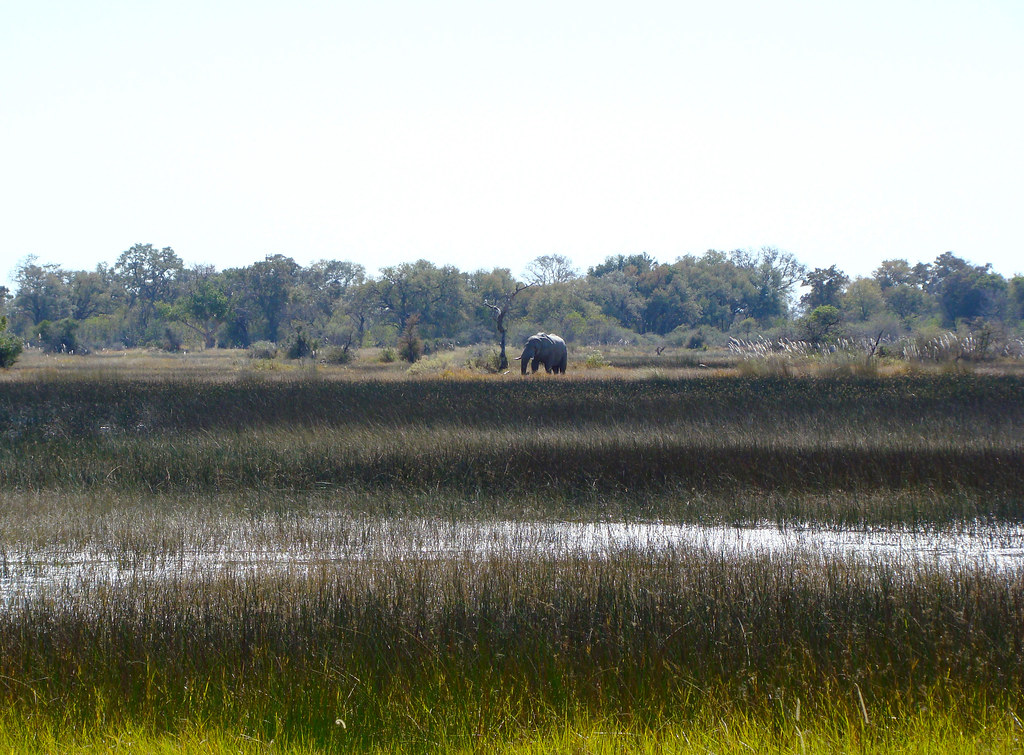
Last year, we visited the Cuando (Chobe) River in Botswana along the Namibian border. We arrived in time to see the elephants bathing in the river at sunset. It was easy to get caught up in observing the elephants’ social behavior in their tightly knit social groups. All our camera lenses zoomed out to the max, hoping to catch the antics of the baby elephants, still learning how to use their trunks. It wasn’t until our son gasped “Waaaa!” that we realized that two large crocodiles were right under our nose. I was more than a little unnerved to see these menacing creatures up close.

DSC09398 nile crocodiles

Over the next couple of days, we saw about a dozen Nile Crocodiles (Crocodylus niloticus). All were camouflaged artfully in their surroundings, like this pair catching the last rays of the sunset:

DSC09437 Two Crocodile sunset

Having trouble seeing them? Here’s is a close-up of one; the other is out of frame, further up the riverbank on the right.

DSC09436 Nile Crocodile

DSC09438 Nile Crocodile detail

The only time I was actively concerned about my safety was when Poniso, our guide, pulled the bow of the boat up on the bank and then killed the engine.

DSC09377 Nile Crocodile

Without wanting to sound an alarm, I gave a tiny squeal of concern. “Oh, don’t worry. He’s not coming after us. Look how full his belly is. He’s just had a full meal.”, Poniso rationalized. What if the engine won’t start up? What if he’s thinking about a little dessert? I can read it on his face.

DSC09300 Nile Crocodile

He still looks pretty hungry to me.

DSC09380 Nile Crocodile open mouth

Never have I been so relieved to hear an engine start up. I don’t mind a little adventure, but I don’t believe in pressing my luck.

Speaking of pressing one’s luck. We saw a young adult on another boat with his legs dangling over the edge of the boat and his bare feet ankle-deep in the water. Brrrr! This is an apt time to cite the delightful little Lewis Caroll poem that Patrick Gracewood found:

How doth the little crocodile 
Improve his shining tail,
And pour the waters of the Nile
On every golden scale!

How cheerfully he seems to grin,
How neatly spread his claws,
And welcome little fishes in
With gently smiling jaws!

.....Lewis Caroll

Thank you Patrick for inspiring me to write this post. Please pop over to his blog to read his post about some beautiful crocodile sculptures.

Please visit lisaschaos, the lovely home of Macro Mondays.

Monday, November 23, 2009

Macro Monday – Painted Reed Frog


DSC08889 Painted Reed Frog
Painted Reed Frog (Hyperolious marmoratus)

Not as razor sharp as I would have liked, but I'm still proud of this photo because I was bobbing around in a canoe when I shot this.
awarewriter inspired me to post the panned out version of this photo. The foreground reeds remind me of an ikebana arrangement:

DSC08887 Painted Reed Frog

Visit host Lisa at Macro Monday.

Monday, November 16, 2009

Macro Monday – Panthera Leo

DSC08613 Lion snout

This is not exactly a macro photo since I was about ten feet away from this lion, but I read Lisa's Macro Monday rules carefully and I think this qualifies as "any close-up photo".

The original photo was okay but there was a sprig from a bush in front of the lion's face and the lion's eyes were closed so I decided to crop the photo.

DSC08613 Lion

See more of Lisa's Macro Monday posts here.

Thursday, November 12, 2009

Brown Pelican Delisted from Endangered List

DSC02474 Brown Pelicans

Yesterday the U.S. Fish and Wildlife Service officially removed the Brown Pelican (Pelicanus occidentalis) from the endangered species list of the federal register after being on the list since 1970. They were almost completely wiped out due to habitat loss, hunting, and pesticides like DDT and dieldrin. The pesticides caused the pelican eggshells to be so thin that they were not viable. Their numbers plummeted down to 10,000. Louisiana, known as the Pelican State, had no pelicans left and there were only a few nesting pairs left in its neighboring state Texas. The government’s ban on the use of DDT in 1972 helped restore the population to its current thriving population.

Though the smallest of the pelican family, it is still an impressively large bird with an average wing-span of 6-8 feet (2-2½ meters), and weighing in at 6-12 pounds (3-5½ kg).

There are five subspecies:
P. o. californicus (California Brown Pelican)
P. o. carolinensis (Eastern Brown Pelican)
P. o. occidentalis (Caribbean Brown Pelican)
P. o. murphy (Pacific Brown Pelican)
P. o. urinator (Galápagos Brown Pelican)

Galápagos Brown Pelican

My family and I were most fortunate to see brown pelicans nesting during our trip to the Galápagos Islands in 2007. There are about a dozen nests on this beachfront hillside…

DSC01029 Galapagos Brown Pelican nests

…with a million dollar view of the Pacific Ocean which they shared with the Galápagos Fur Seals:

DSC00994 Galapagos seals

These two nest mates got the penthouse:

DSC01005 Two Galapagos Brown Pelicans in nest

As most animals we encountered in the Galápagos Islands, they were completely unperturbed by our presence. Touching was strictly forbidden but we were allowed to approach an animal provided we did not change their behavior:

DSC01027 Galapagos Brown Pelican

They have a transparent third eyelid called the nictitating membrane:

DSC01009 Galapagos Brown Pelican nictitating membrane


The juveniles were brown all over. This one was drying his wings in his nest:

DSC01026 Galapagos Brown Pelican in Nest


California Brown Pelican

Last month, I went to Carmel with my book club for our annual Fall Adventure. We went kayaking in the Elkhorn Slough and saw this flock of white-headed adults and immature all-brown pelicans quietly resting on this rock.

DSC02476 Brown Pelicans

They didn’t seem to mind sharing the space with cormorants:

DSC02477 Brown Pelicans and Cormorants

The weather was perfect for kayaking and wing-drying:

DSC02485 Brown Pelican drying wings

Let’s hear three cheers for the Brown Pelicans because they beat the odds. Their removal from the endangered species list is a great tribute to the conservationists who fought to protect their habitat and create legislation banning the pesticides that harmed these beautiful birds.

Saturday, October 10, 2009

High-Style Picnic in Botswana

DSC08195 Southern Yellow-billed Hornbill
Southern Yellow-billed Hornbill (Tockus leucomelas)

After spending the morning with Douglas Groves and his elephants, we arrived at our lunch spot  to find this elegantly set picnic table with a crisp white tablecloth and napkins. If you look closely, or click on the photo, you can see the elephants in the background.

DSC08189 Picnic table in the bush

While we waited for the elephants to catch up with us, I used the opportunity to photograph the birds that shared their space with us. I think they tolerated us knowing that crumbs were on their way.

Even though Zazu of "The Lion King" is a red-billed hornbill and the one we saw was yellow-billed (opening photo), the similarity was so striking that I couldn't help but expect a Morning Report à la Zazu:


I think this Red-billed Francolin is a prime candidate to become a Disney character because the yellow ring around the eye makes this bird look like he has a perpetually perplexed look on his face.

DSC08217 redbilled francolin (francolinus adspersus)
Red-billed Francolin (Francolinus adspersus)

I heard the rapid "rat-tat-tat" long before I located this Cardinal Woodpecker at the top of a very tall tree stump.

DSC08200 Cardinal Woodpecker
Cardinal Woodpecker (Dendropicos fuscescens)

When Douglas Groves arrived, he placed some exotic African fruits on the table:

DSC08202 Picnic with the elephants

and he even showed us some elephant teeth:

DSC08204 elephant teeth

We enjoyed a delicious lunch while the elephants enjoyed more special treats of fruits and vegetables, their reward for patiently posing for photographs with every party at the picnic table.

DSC08206 Picnic with elephants

After lunch, the elephants continued their ambassadorship by giving each and every one of us a great big elephant trunk kiss on our cheeks. It was impossible not to flinch. The trunk was wetter, slimier, and hairier than I imagined.

DSC08233 elephant smooch cropped

Slimy or not, it was one of the most memorable send-offs I have ever received.

Thursday, October 8, 2009

Living with Elephants

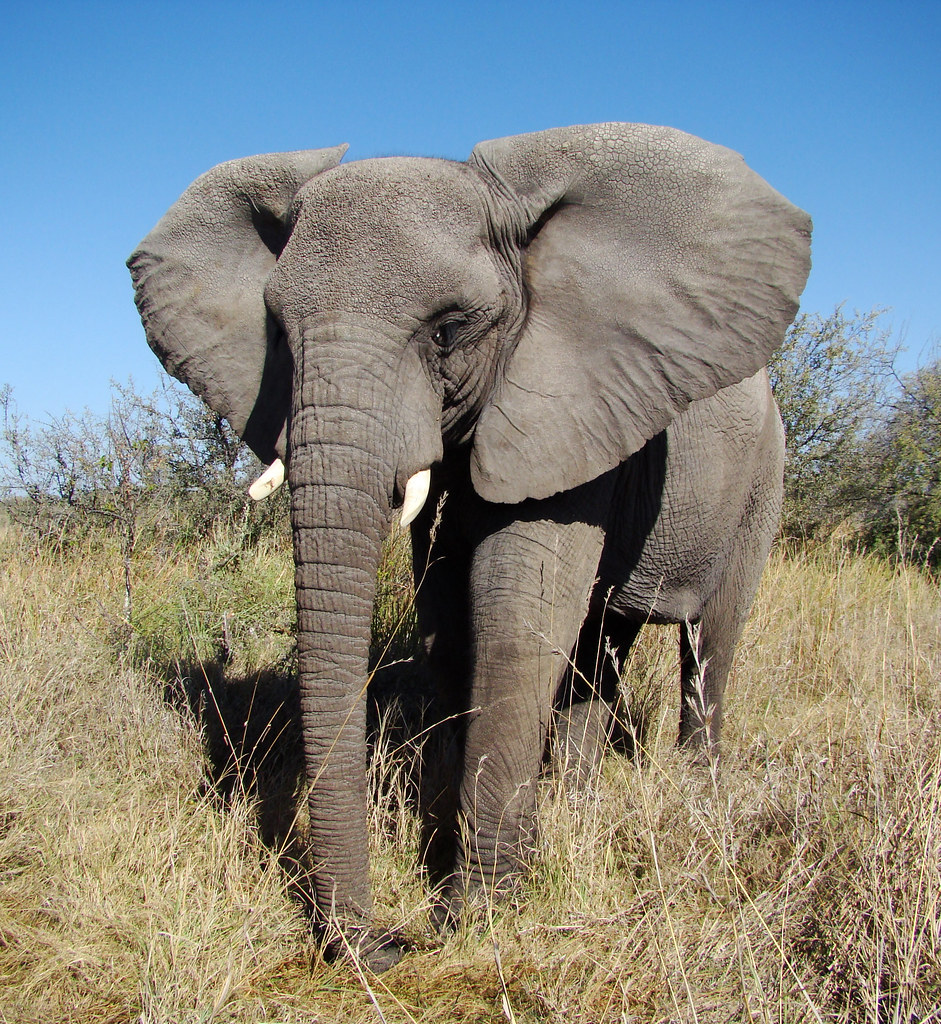
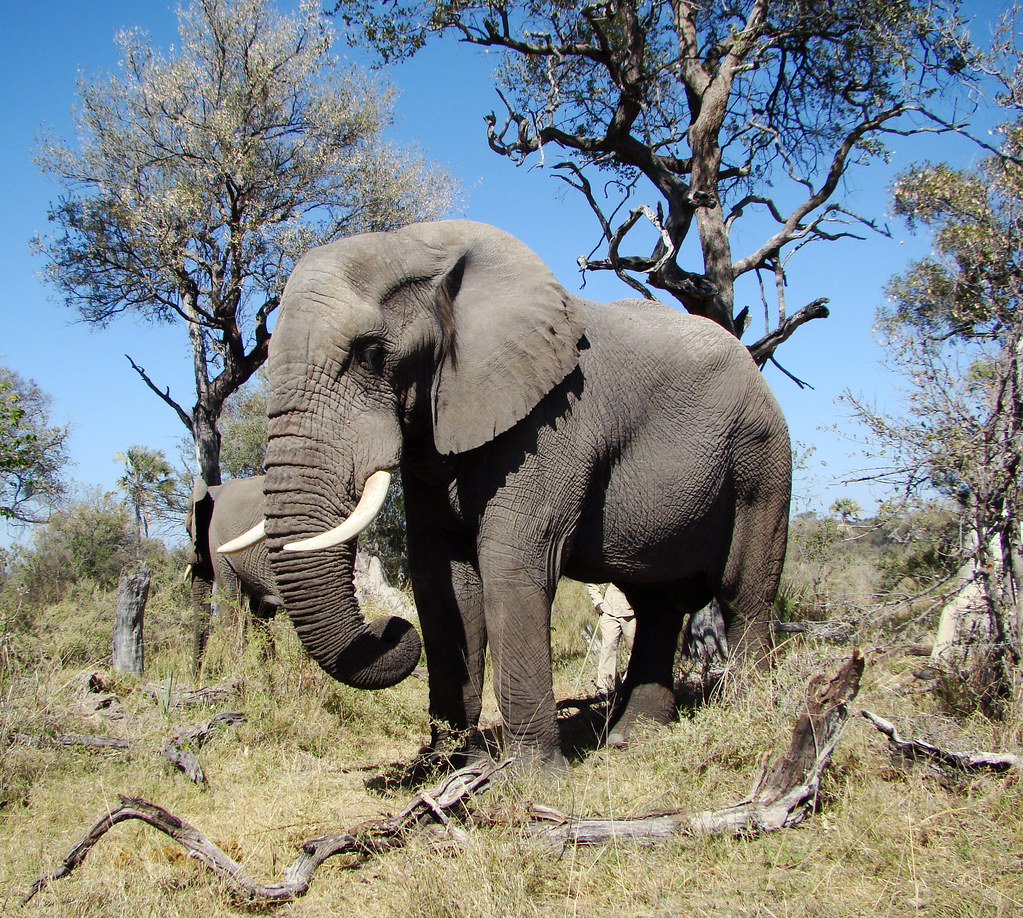
DSC08097 Elephant posing
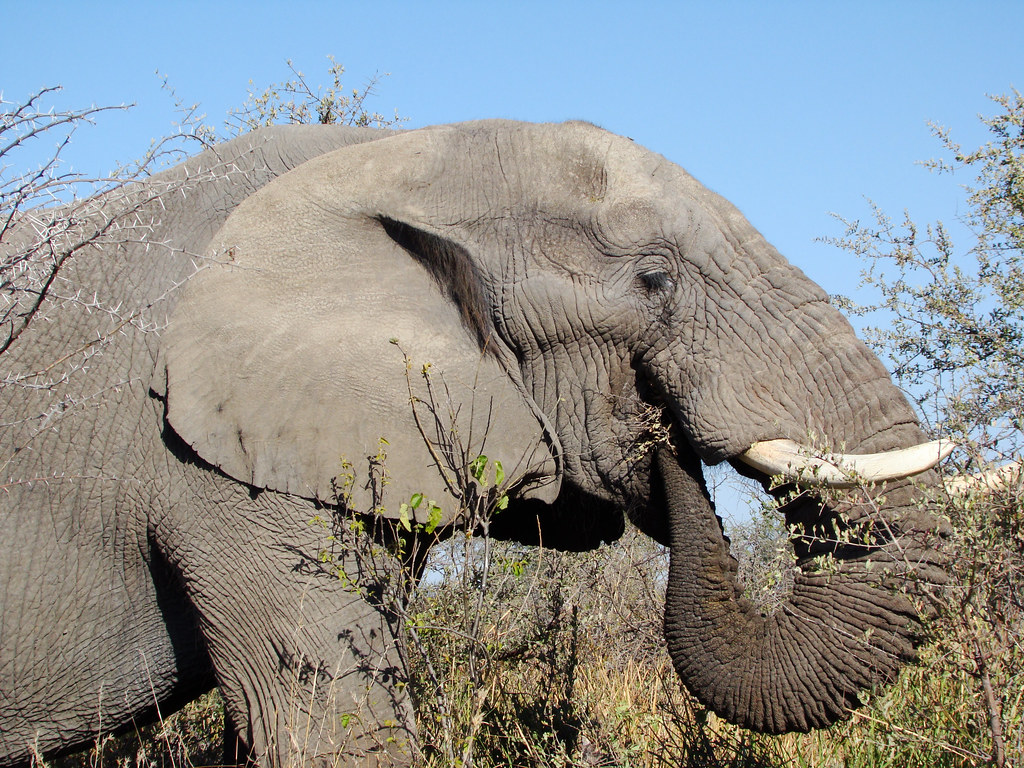
African Bush Elephant (Loxodonta africana


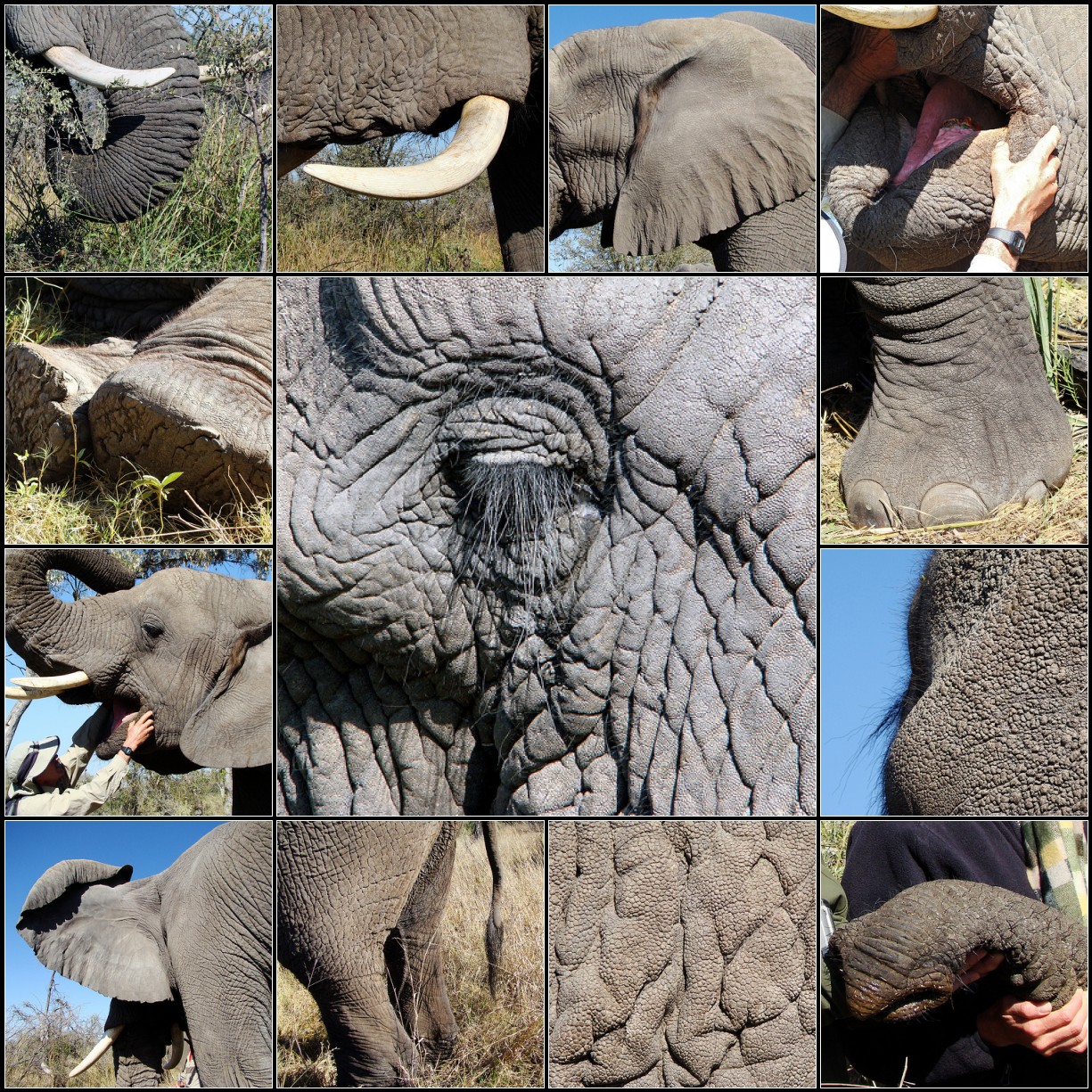
Ta da!  I now reveal the identity of the textured photo from last week. Those of you who guessed elephant, go to the head of the class.

Our elephant adventure began when we stepped into the dining tent at Stanley’s Camp in the Okavango Delta of Botswana. My fifteen-year-old son immediately exclaimed “Wow! This is the best lunch ever!” I looked around to see what earned this declaration. The food was not in sight yet, so that wasn’t it. He wasn’t even looking at the cool way the tent gave the right of way to the sausage trees:


DSC07792 Stanley's Camp dining tent

When he saw my puzzled face, he exasperatedly gestured past the flap and said: “No there!”


DSC07789 Elephant at Stanley's

Our very first elephant sighting was of this exceptionally large bull, affectionately named Stanley by the camp staff. It seemed fitting that the camp would be named after this elephant rather than
the famous explorer. After all, the camp encroached upon Stanley the Elephant’s territory when it was built. On the other hand, the camp’s wildlife program helps protect Stanley and other animals in the region. Our guide Poniso was thrilled to see our son’s glee because he was certain that he would experience the “best vacation ever” with what was coming ahead.


On our last day at Stanley’s we spent an extraordinary morning with a trio of special elephants. Oregon native Douglas Groves, founder of Living with Elephants Foundation, and his two capable elephant handlers introduced us to Jabu, Thembi and Morula. Groves and his zoologist wife Sandi adopted them after they were orphaned by culling programs in South Africa and Zimbabwe. The controversial culling practice is used to reduce the burgeoning elephant population.


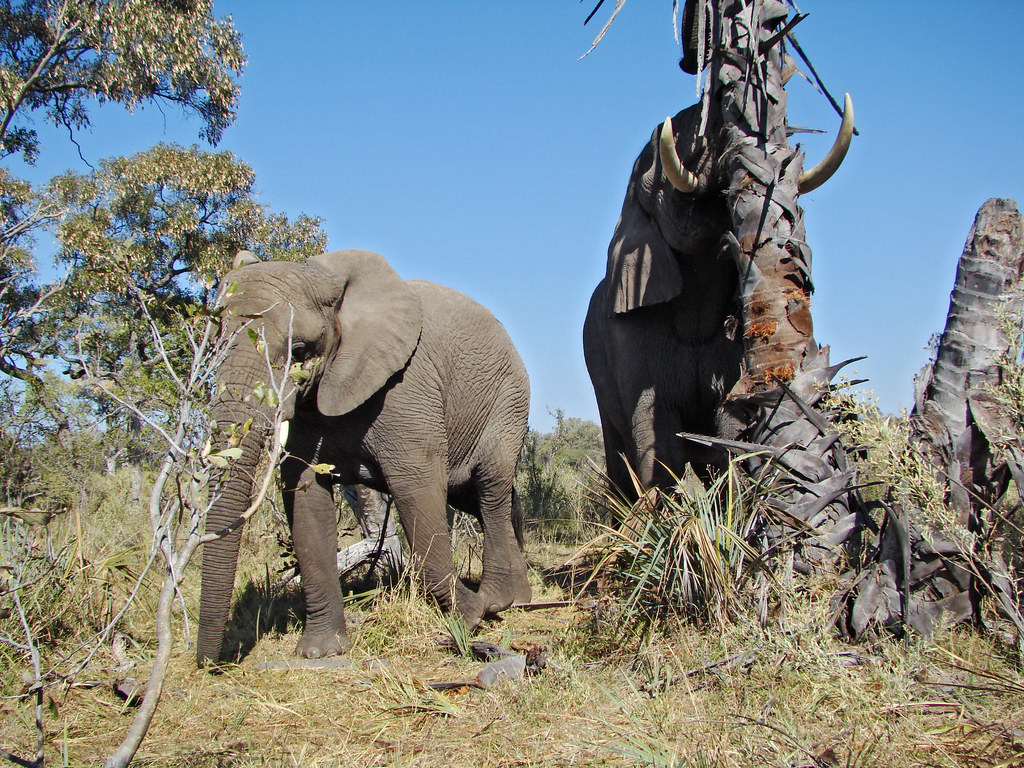
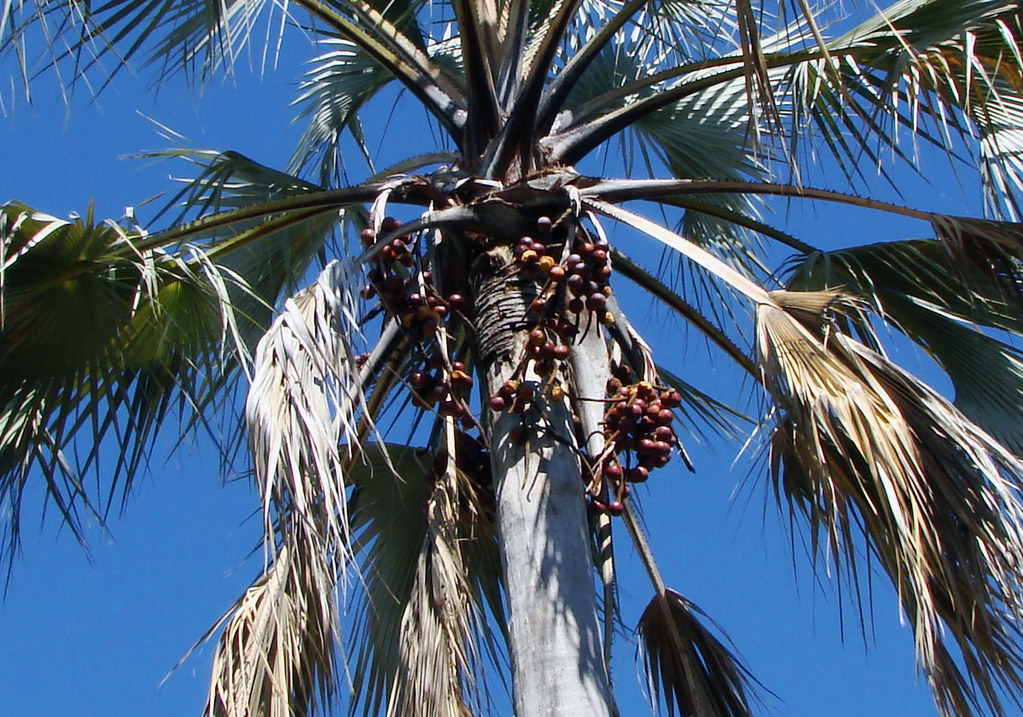
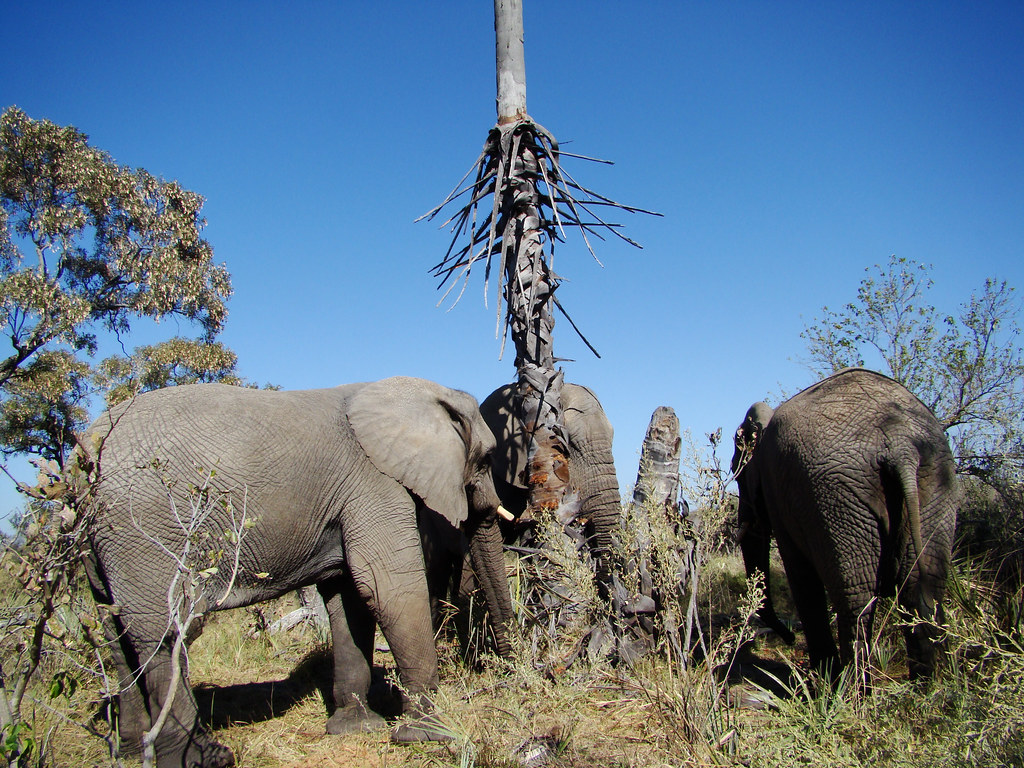
As soon as we met Groves he began sharing his encyclopedic knowledge of all things elephant. He rattled off facts about the elephant’s habitat, behavior, diet, anatomy, and morphology in rapid-fire succession. In the mean time, the threesome stayed within our sight eating everything in their path. Here Jabu gave  the Real Fan Palm several vigorous shakes with his trunk. It looks like the tree on the right got shaken a bit too vigorously in the past:

DSC08117 Elephant shaking real fan palm tree


His goal was to free these prized nuts, known colloquially known as vegetable ivory:


DSC08116 Real Fan Palm nuts


Once released, all three hoovered up this elephant delicacy:


DSC08120 Three elephants


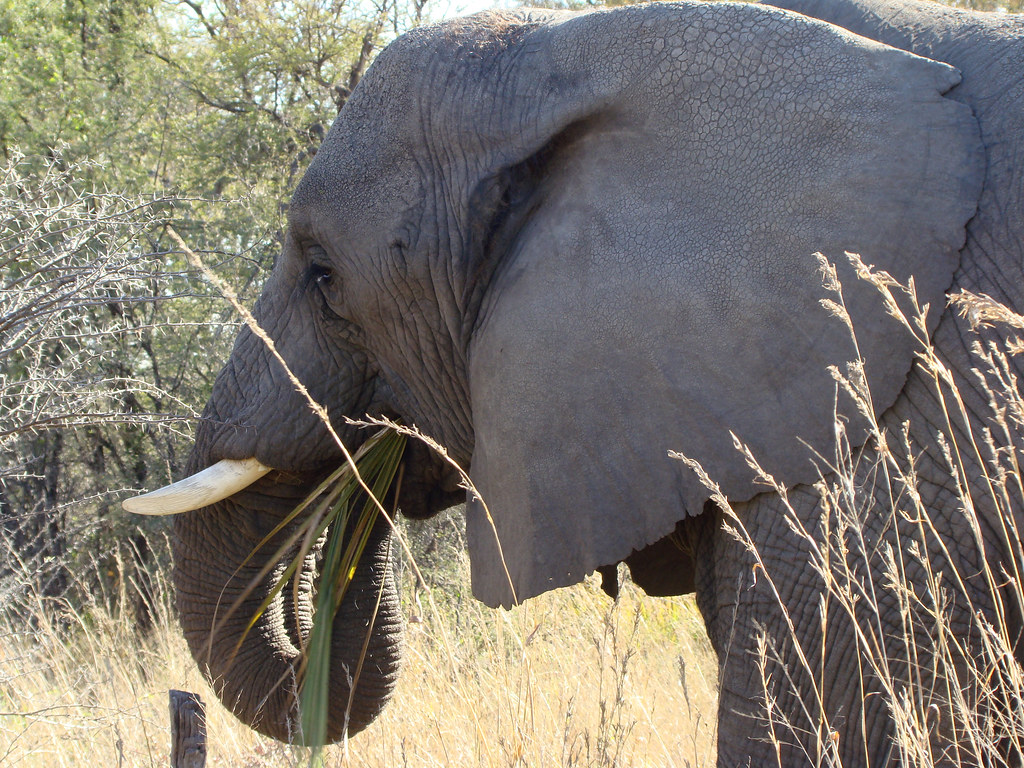
The leaves of this palm appeared to be tasty too:


DSC08017 African Elephant eating palm


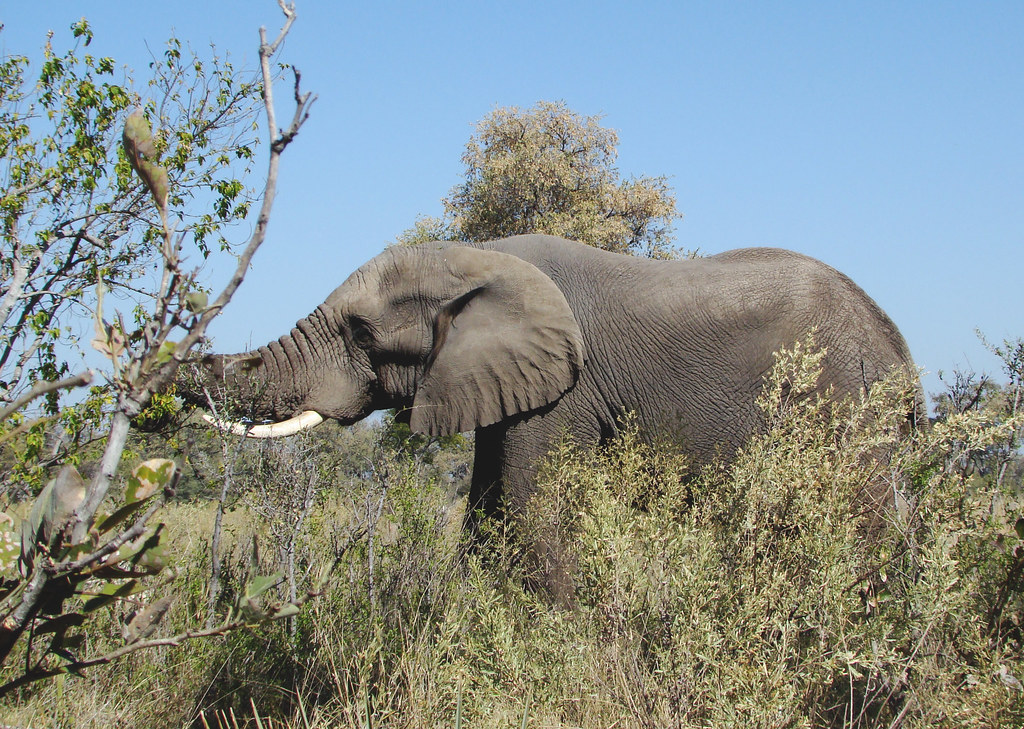
A branch of this juvenile raintree was within easy reach and with a snap and a “crunch crunch” the branch vanished within a minute, leaving only a stump behind.


DSC08146 Elephant grabbing a branch


DSC08032 elephant


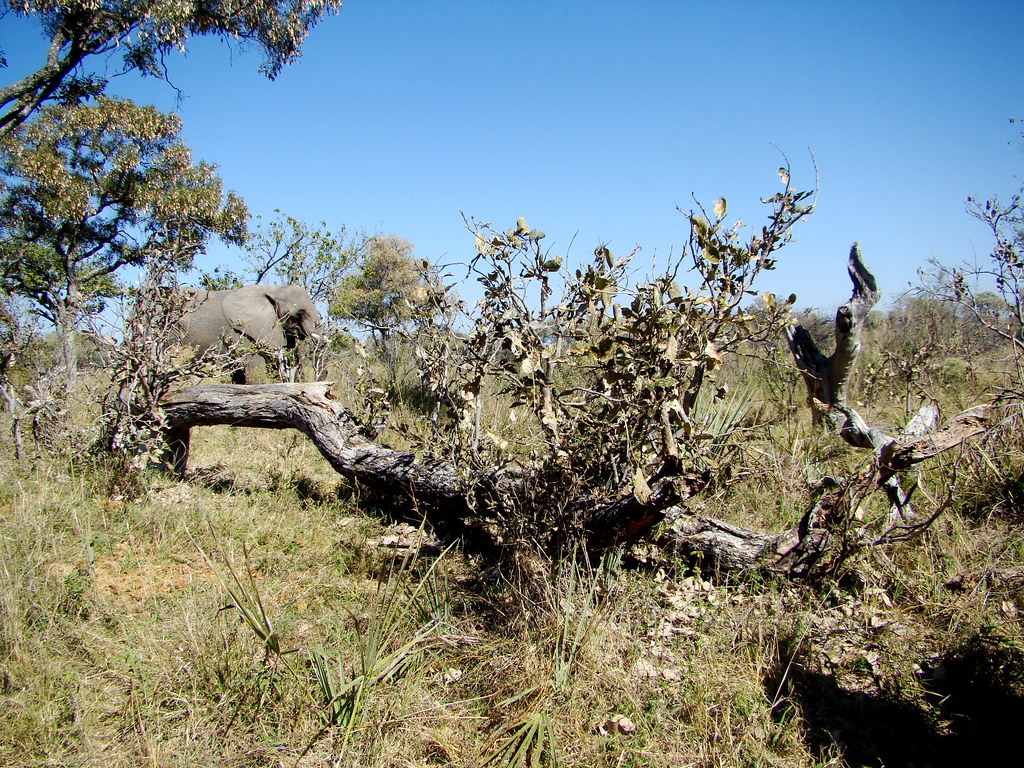
Elephants spend sixteen hours a day foraging and need to eat an average of 300 pounds (140 kilograms) of vegetation per day to survive. It didn’t take long for us to learn how to recognize where elephants have trod:


DSC08152 Elephant with felled raintree


giving us a glimpse into the complex debate about the practice of elephant culling in many parts of Africa. I promise to do a separate post on this very complex issue.

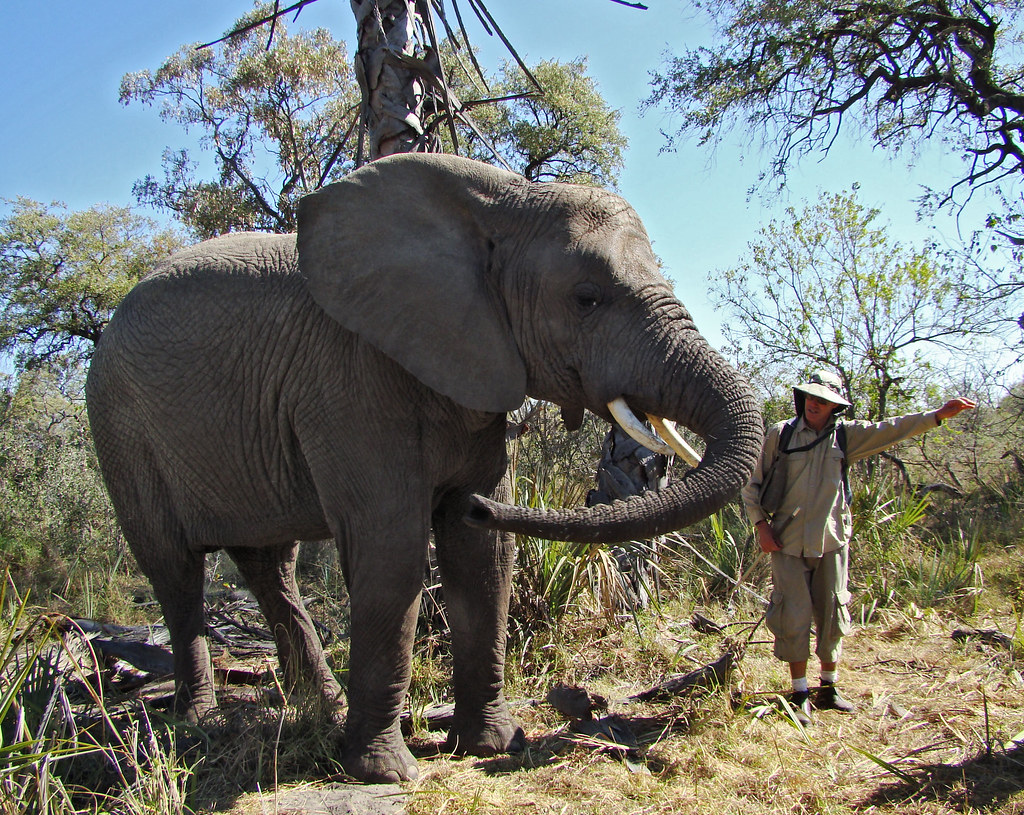
Groves put his elephant training background to use when he taught the trio multiple maneuvers to teach us about their anatomy and behaviors:


My creation


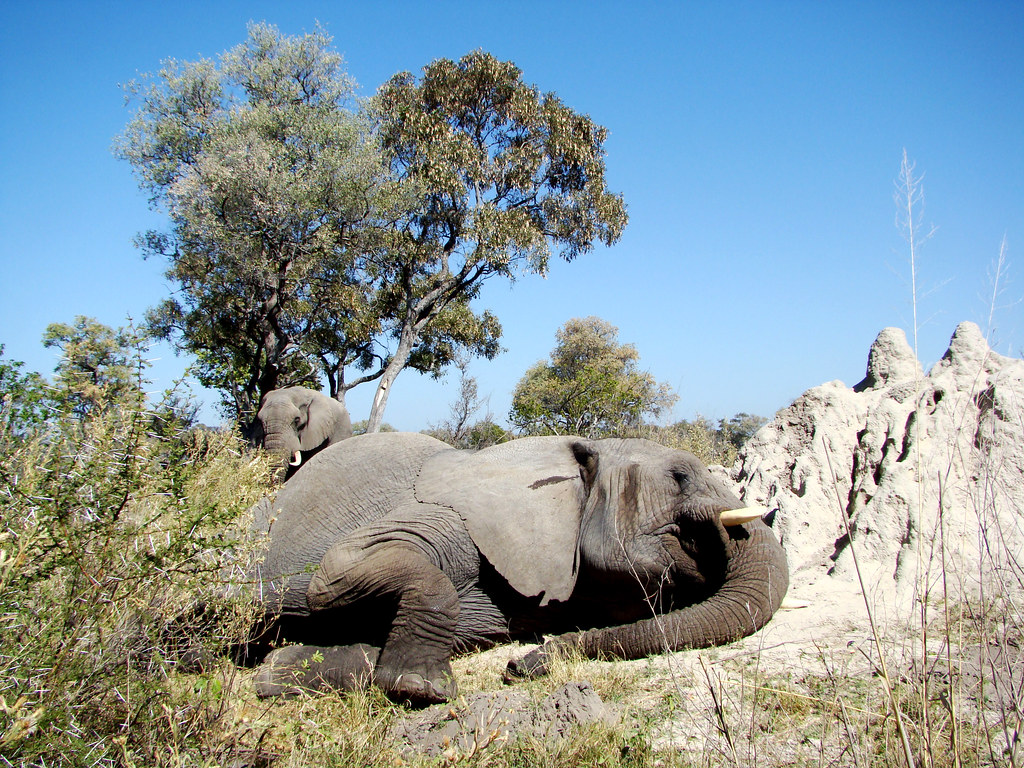
Elephants rarely lie down, but when they do, they favor lying on the slope of a termite hill so they don’t get crushed by their own weight and to make it easier to rise again.


DSC08162 Elephant lying down on termite hill


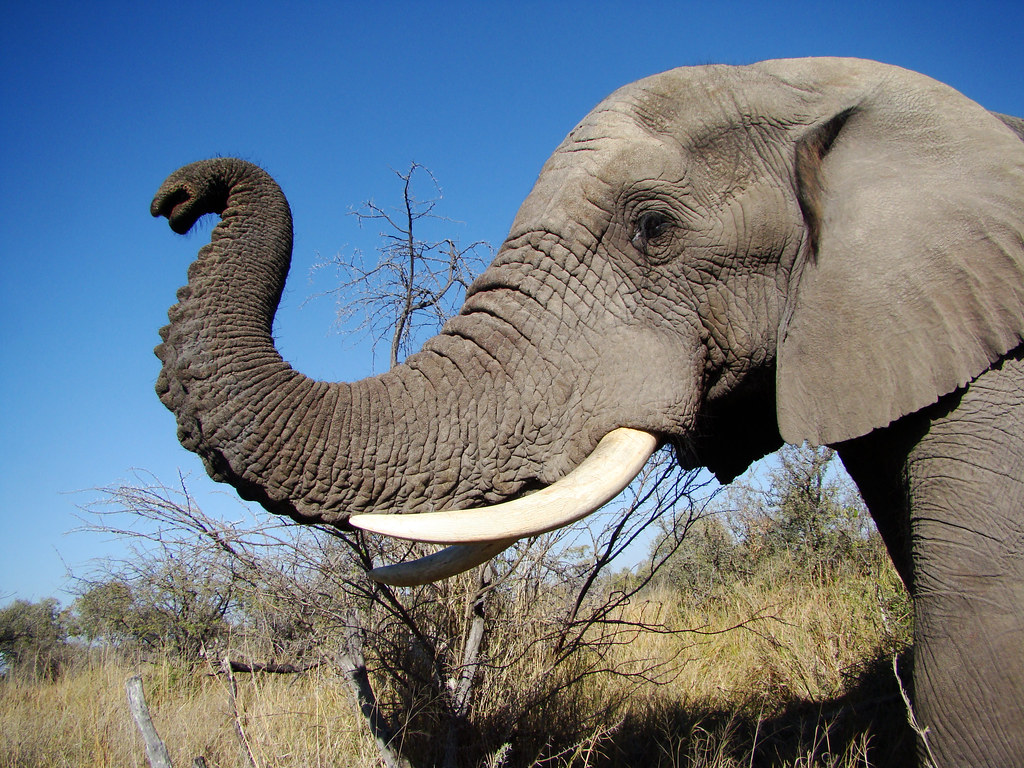
Groves taught Jabu to trumpet on command and even how to make very funny kissy noises:


DSC08051 Elephant trunk


Groves understood how the livelihood of his beloved elephants depended on creating photo opportunities for his audience. Here he produced fruit and vegetable tidbits from his pouch to persuade Marula to flex her ears:


DSC08096 Douglas Groves directing elephant pose


I believe it was Thembi who liked to borrow hats:


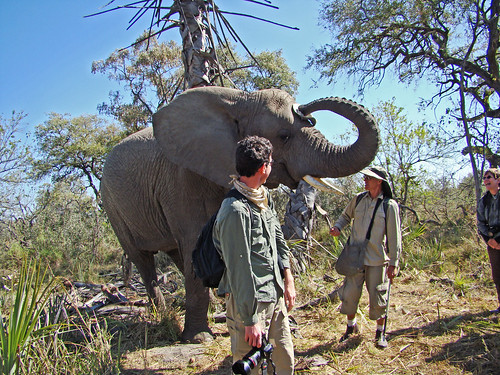
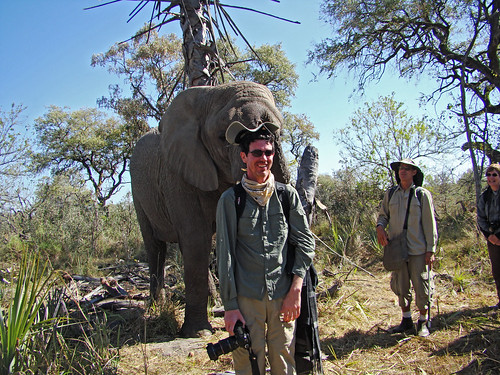
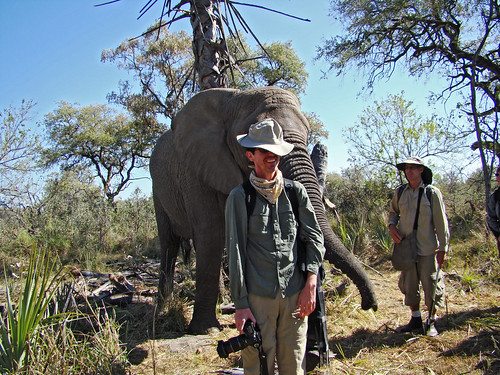
DSC08148 Elephant stealing hat


DSC08149 Elephant returning hat


DSC08150 Elephant returned hat


She was also very talented at swinging her trunk in circles on command:


DSC08143 Elephant swinging trunk


As I observed these elephants in their natural environment, I had to keep reminding myself that we were not in a zoo or looking through the window of a diorama in a natural history museum. When I was reviewing my photos, this shot looked to me like it might have been taken on a set in Hollywood:


DSC08156 Elephant


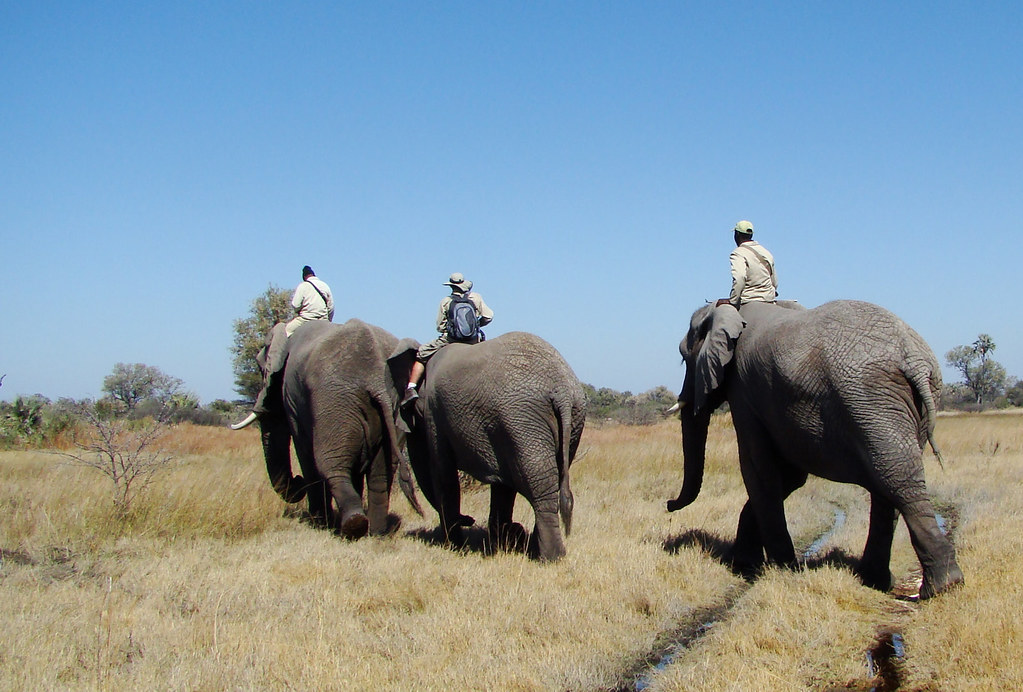
After the entertaining and informative demonstration, Groves and his handlers mounted the elephants and rode to the luncheon waiting for us in a shade of a lovely grove of trees.


DSC08184 Elephant walk


It was difficult to take in the marvel of the morning we spent with these magnificent elephants. I'm sure you understand how I turned black and blue from pinching myself throughout this trip.
Related Posts Plugin for WordPress, Blogger...
Bookmark and Share