Monday, March 14, 2011

Roy DeCarava – Shooting in Available Light


Roy DeCarava
"Woman Descending Stairs"
1951
Each week in my Beginning Photography class, our instructor Moshe Quinn introduced us to a new master photographer and assigned a mini research project each week. Though it was time-consuming, I loved learning about each photographer.

Roy De Carava was one of my favorite Photographers of the Week. I was thrilled to stumble upon this gentle photographer's interview on Fresh Air with Terry Gross early in my research.


I was amazed to learn that he “accepts the lighting conditions, whatever they are”. He didn’t believe that you couldn’t take a photo just because there wasn’t enough light. He said “I would rather sacrifice the information, in terms of details and things like that, for a feeling of mood.” This was a revelation for me, because I am the first to bellyache about the lack of perfect light conditions and point to it as a reason for not capturing a great image.

In “Woman Descending Stairs”, he allowed our eyes to find the precious few swathes of white in the photo. First one sees the woman’s hand as it elegantly bundles the excess volume of her coat. Then we are drawn to her legs that swished open her coat to reveal the light corner of the lining. Her natural grace would be the envy of any runway model.

In “Man Coming up Subway Stairs”, DeCarava conveys the man’s exhaustion by capturing the pull of the hand, just out of frame, and his posture slumped in his once-crisp shirt, now rumpled by a hard day’s work.


© Roy DeCarava
"Man coming up subway stairs"
1952

In an image from the book “The Sound I Saw”, DeCarava froze a moment of quietude that two jazz musicians found in an unadorned room back stage. It’s hard to decide whether this is quiet moment preceded or followed a lively jazz session on stage.

Roy DeCarava from "The Sound I Saw"
published by Phaidon Press in 2001

Here are some other images of DeCarava's I admire. The white shirts and the Lingerie shop signs are the stars of this image:

Roy DeCarava
Lingerie, New York
1950
Smithsonian American Art Museum

The tight embrace during a dance reveals just enough of the couple to imply the intimacy between them.


I love his fascination with stripes:

ROY DECARAVA
Man in Striped Shirt at Piano
Gelatin silver print. 1954/1981. Signed, titled, dated and numbered 481 3/2 in ink on the verso.
10 x 12 7/8in. (25.4 x 32.7cm.) Framed. 


DeCarava photographed many Jazz musicians who performed in Harlem, like Coltrane and Elvin:

Roy De Carava, Coltrane and Elvin, 1960

... and Duke Elington


I dare you to sit still during this fabulous clip of the young Duke Ellington playing “Take the A Train”. The A Train is the very best way to get to “Sugarhill way up in Harlem… in a hurry, hurry, hurry…”


Segment from the film”Reveille with Beverly” from 1943; the song was composed in 1939 by Edward Kennedy "Duke" Ellington (April 29, 1899 – May 24, 1974).
Enhanced by Zemanta

Friday, March 4, 2011

Blaine Kern's Mardi Gras World

IMG_0824 Blaine Kern's Mardi Gras World

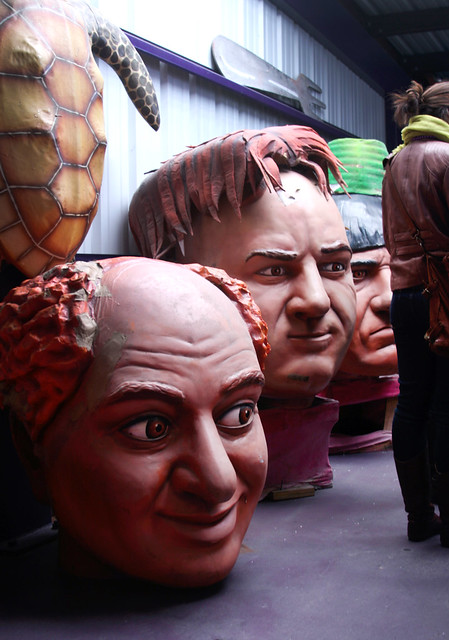
During the week between Christmas and New Year, one hundred of our closest relatives descended upon New Orleans for a big family reunion. I learned during this trip that rather than taking down the Christmas tree and relegating to it to the sidewalk, a true New Orleanian simply replaces the Christmas ornaments with Mardi Gras beads. The tree's next incarnation is symbolic of the seamless transition from Christmas and New Year's straight into Mardi Gras season. It seemed à propos then, that George Schiaffino led a small group of his cousins to Blaine Kern's Mardi Gras World.

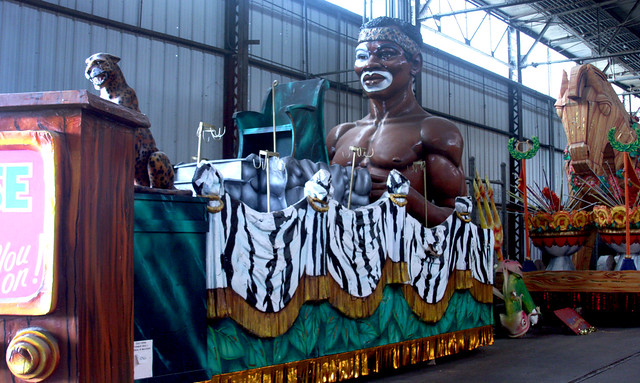
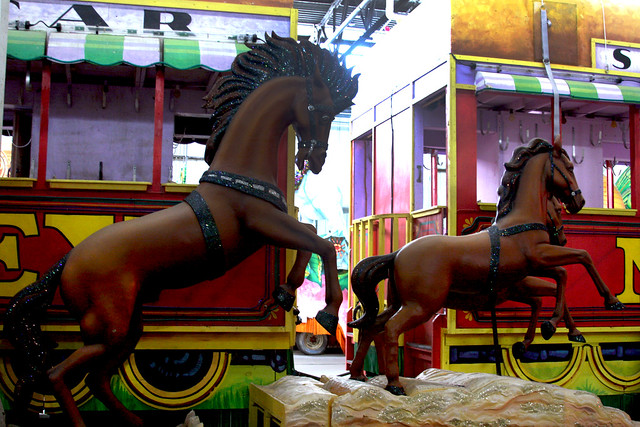
Blaine Kern is the self-proclaimed "Mr. Mardi Gras" and biggest float manufacturer in the world. His warehouse is open to the public and showcases the larger-than-life props used on Mardi Gras parade floats.

IMG_0809 Blaine Kern's Mardi Gras World

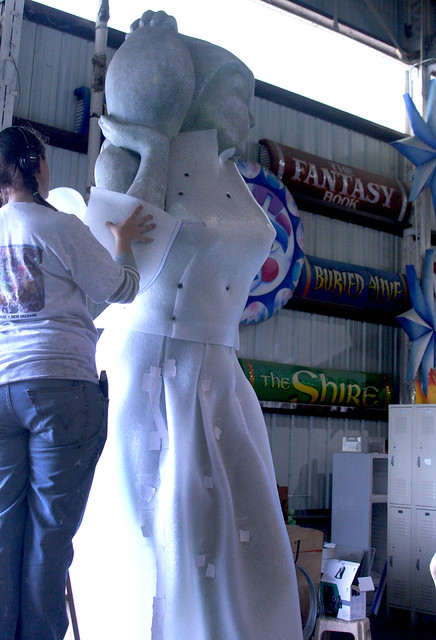
A closer examination of the props reveals the foam interior of these sculptures. 

IMG_0810 Blaine Kern's Mardi Gras World

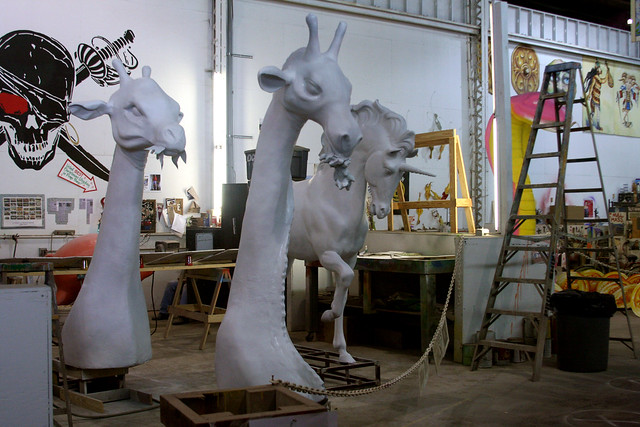
Our tour guide explained that production begins with the sculptured blanks.

IMG_0822 Blaine Kern's Mardi Gras World

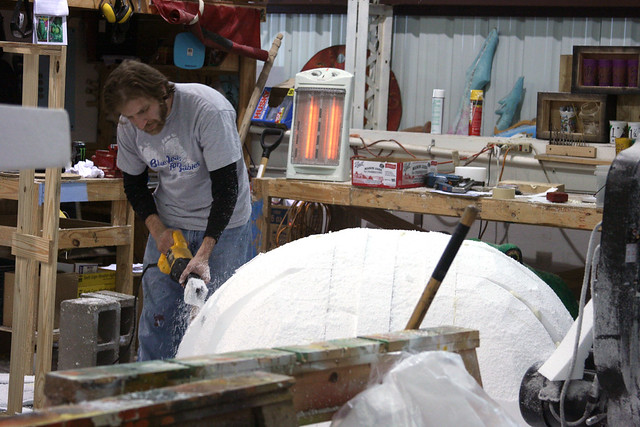
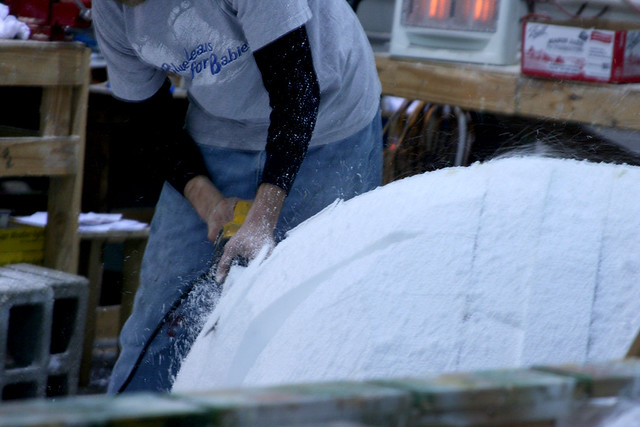
The vast majority of the blanks are made of polystyrene because it is economical and easily tailored with a small chainsaw.


Designers dress the sculpture using styrofoam sheets.


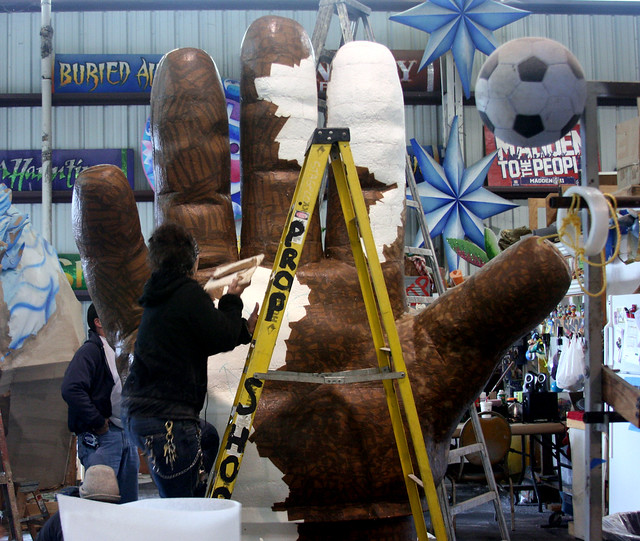
Next comes the layer of color. Sometimes texture is applied in sheets...

IMG_0818 Blaine Kern's Mardi Gras World

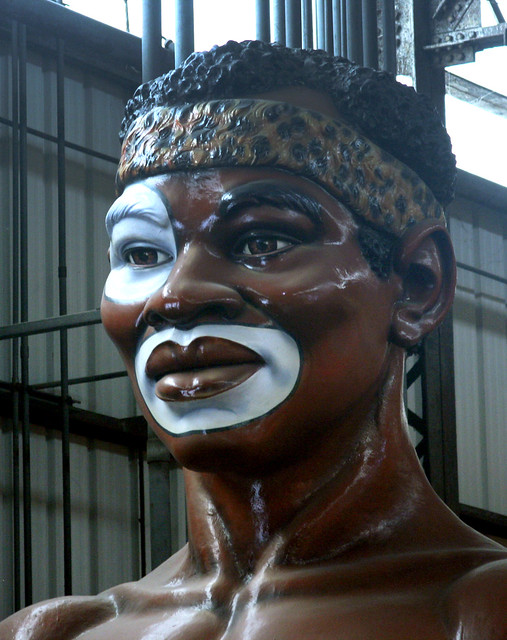
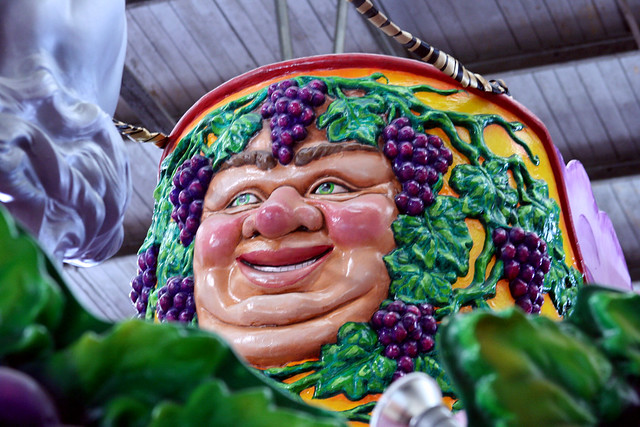
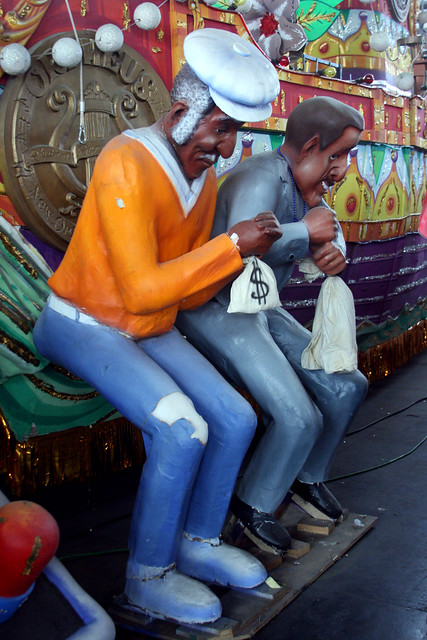
...but other times life is breathed into the characters with a masterful application of paint.

IMG_0851 Blaine Kern's Mardi Gras World

IMG_0847 Blaine Kern's Mardi Gras World

The characters are then installed into the float, complete with a throne for the guest of honor.

IMG_0846 Blaine Kern's Mardi Gras World

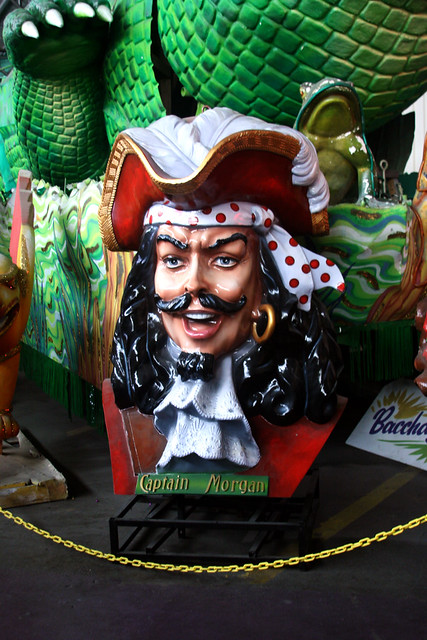
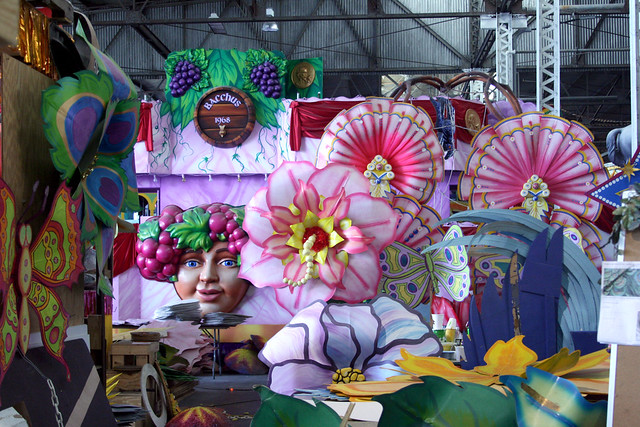
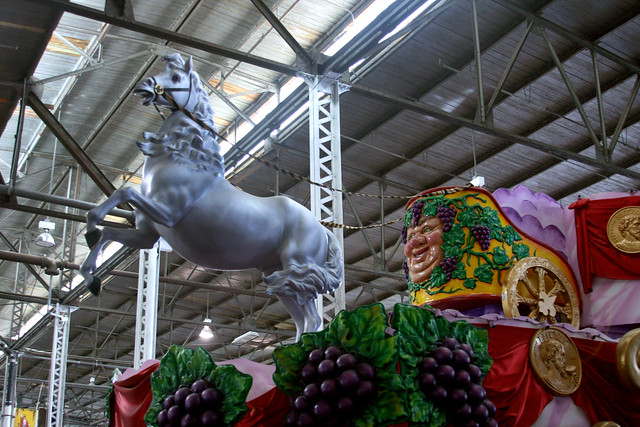
The warehouse has no shortage of float accessories to complete the look and also to hide the mechanics of the vehicle.

IMG_0821 Blaine Kern's Mardi Gras World

Floats are commissioned by Mardi Gras krewes. A krewe (pronounced "crew") is the organization that produces a parade and ball for the Carnival season. Historically, only the privileged were allowed to join a krewe. With a desire to serve the general populace, the Krewes of Endymion and Bacchus marked the dawn of a new era by dropping the requirement to be part of the New Orleans social elite. Blaine Kern rose to the occasion when Owen "Pip" Brennan, Jr., Captain of the Bacchus Krewe, told him: "We want the biggest. We want the best."

IMG_0829 Blaine Kern's Mardi Gras World

IMG_0843 Blaine Kern's Mardi Gras World

Today, the Kern family runs an empire that creates floats for parades all over the world...

IMG_0849 Blaine Kern's Mardi Gras World

 ...including this one for the Orpheus Krewe.

IMG_0844 Blaine Kern's Mardi Gras World

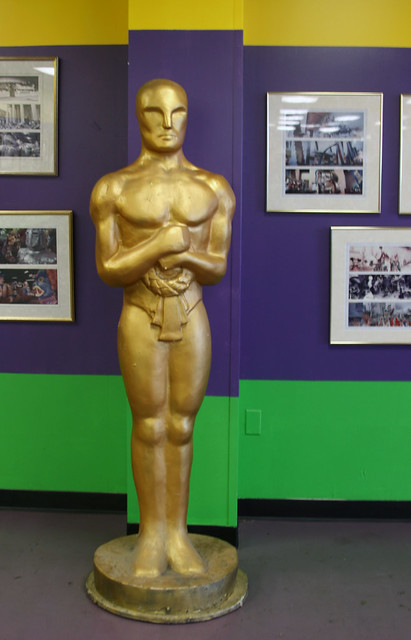
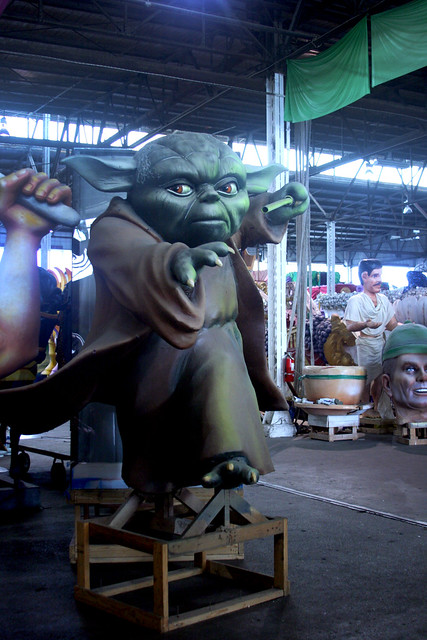
The Kerns work with the krewes, drawing inspiration from Hollywood pop culture...

IMG_0807 Blaine Kern's Mardi Gras World

IMG_0848 Blaine Kern's Mardi Gras World


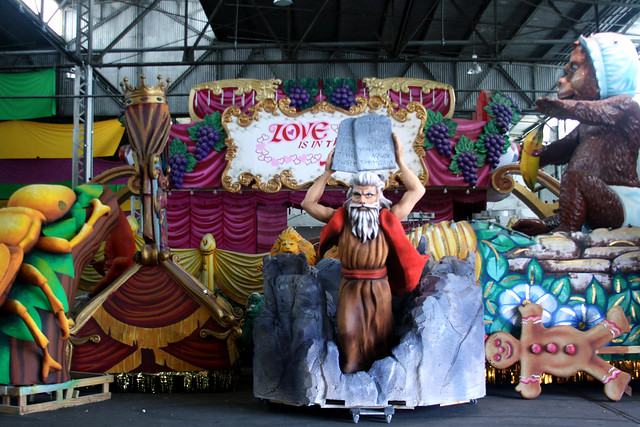
...but also from the stories Blaine Kern heard in his childhood, like those from the Bible...

IMG_0845 Blaine Kern's Mardi Gras World

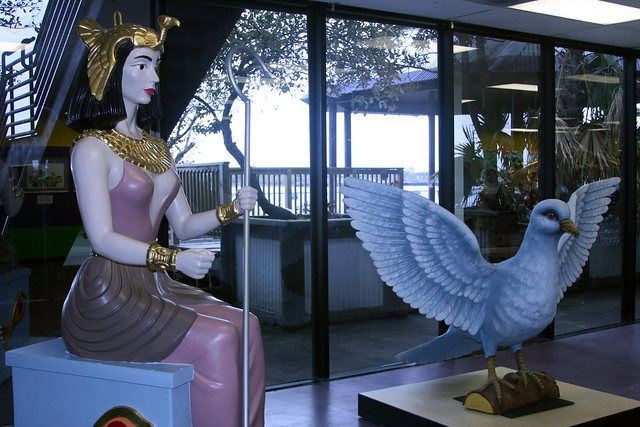
...ancient history...

IMG_0806 Blaine Kern's Mardi Gras World

...or Asian folklore.

IMG_0834 Blaine Kern's Mardi Gras World

This coming Tuesday will be Mardi Gras, followed by forty days of Lent. Lent is possibly the only time in New Orleans without a big celebration, but don't worry, everyone can look forward to the New Orleans Jazz Fest the weekend after Easter.

Enhanced by Zemanta
Related Posts Plugin for WordPress, Blogger...
Bookmark and Share