Showing posts with label wildlife. Show all posts

Monday, December 12, 2011

Endemic, Indigenous, Native, Migrant, and Introduced


Galápagos sea lion (Zalophus wollebaeki)

After four days in Quito, we flew to the Galápagos Islands for a week-long adventure on the Eclipse. Each night after dinner, the passengers gathered in the lounge where one of the naturalists on board briefed us on our excursion options for the next day, followed by an informative talk about the islands. On our first night, Naturalist Javier Cando explained ecological terms to describe how native a species is. 
Endemic: The organism is unique to one geographic location and nowhere else in the world. An endemic species may have originated here, or evolved into a separate species, or subspecies, due to geographic isolation. 
Indigenous (native): The organism occurs in the location naturally, without the aid of humans. These species are carried to the region by wind, water, or by another organism. 
Migrant: The animal travelled long distances in search of a new habitat.
Introduced: The organism is either deliberately or accidentally brought to a new ecosystem by human activity. 

We all laughed when Javier told us that he was endemic to the Galapagos Islands. I guess I can say that my sisters and I were introduced into the United States by our parents, who migrated here. 

***

I was a bit timid about using the camera my brother-in-law loaned me for this trip. Even though it was a point-and-shoot, it was the fanciest camera I had ever used. It was during this afternoon on July 29th, 2007, that marked the beginning of my love affair with the camera, and for that, I owe a great debt to my brother-in-law.

***

For our first excursion, the Eclipse cruised to Las Bachas Beach , on the north end of Santa Cruz Island. As we came close to shore, we watched a flock Frigatebirds dive for supper.

DSC00803 Galápagos frigatebirds
Frigate Birds (Fregata)

I don’t know if they were the endemic Magnificent Frigatebird (Fregata magnificence) or the smaller, native Great Frigatebird (Fregata minor)...

DSC00810 frigate bird
Frigate Bird (Fregata)

…but I do know that both species of Frigatebirds are kleptoparasitic. These rogues love to mob flocks of Blue-footed Boobies and force them to regurgitate so that their catch can be intercepted.

DSC00801 Galápagos frigate birds and blue-footed boobies
Frigate Birds (Fregata) and Blue-footed Booby (Sula nebouxii)

I was excited to explore the mossy boulders to see what I could discover. Javier told us to stay away from the moss, not only because it’s slippery, but because we are not to disturb any of the fauna or flora. Careful not to tread on any moss, I did manage to photograph this American Oystercatcher, endemic subspecies galapagensis. This uncommon resident has only around 200 pairs in the Galápagos Islands. 

DSC00804 American Oystercatcher
American Oystercatcher (Haematopus palliatus galapagensis)

DSC00808 American Oystercatcher
American Oystercatcher (Haematopus palliatus galapagensis)

A Yellow Warbler hopped between the rocks picking insects off the moss.

DSC00816 yellow warbler cropped
Yellow Warbler (Dendroica petechial aureola)

Its race, aureola, is near-endemic and also known as the Mangrove Warbler.

DSC00856 yellow warbler cropped
Yellow Warbler (Dendroica petechial aureola)

Looking across the rocky shore, I occasionally saw orange dots scampering about.


DSC00830 Galapagos Sally Lightfoot Crab habitat 

The Sally Lightfoot Crab is the most common crab along the west coast of the Americas and native to the Galápagos Islands. 

DSC00822 Galapagos Sally Lightfoot Crab
Sally Lightfoot Crab (Grapsus grapsus)

John Steinbeck‘s entertaining observations about how the Sally Lightfoot Crab lives up to its name can be read here.

DSC00826 Galapagos Sally Lightfoot Crabs
Sally Lightfoot Crab (Grapsus grapsus)
DSC00831 two sally lightfoot crabs
Sally Lightfoot Crab (Grapsus grapsus)

We saw a solitary Galápagos Flamingo feeding on the far end of a saltwater lagoon when we joined Javier for brief walk. It is believed that the flamingo migrated from the Carribean and then evolved into an endemic subspecies here.

DSC00814 American Flamingo
Galápagos Flamingo (Phoenicopterus ruber glyphorhynchus)

A Galápagos Mockingbird hopped around our small group, flitting back and forth between the sandy beach…

DSC00854 Galápagos mockingbird cropped
Galápagos mockingbird (Mimus parvulus)

…and the mangrove trees. 


DSC00852 Galápagos mockingbird
Galápagos mockingbird (Mimus parvulus)

***


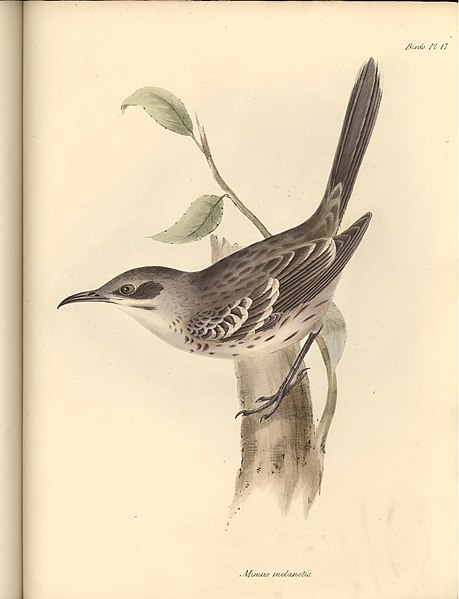
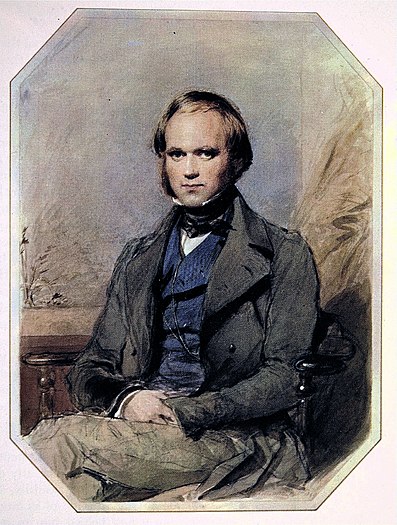
It was the mockingbird, not finches, that first caught Charles Darwin’s eye when he visited the Galápagos Islands at age 26 in 1835:
“I have specimens from four of the larger islands…The specimens from Chatham and Albemarle Isd. appear to be the same; but the other two are different. In each Isld. each kind is exclusively found. “  
Floreana Mockingbird or Charles Mockingbird
(Mimus trifasciatus) 
San Cristobal Mockingbird or Chatham Mockingbird
(Mimus melanotis) 

Sadly, many mockingbirds were driven to extinction, or near extinction, by rats introduced to the islands by buccaneers.

When Darwin returned to England, he used his mockingbird observation as the basis for concluding that the thirteen finches he observed in the Galápagos Islands all evolved separately due to the isolation of the islands.

*** 

Early during the walk, our 13-year-old son shared with Javier that his goal was to see a marine iguana on this trip. Javier smiled and told him that this could be arranged. Imagine my son’s excitement when he saw them on his very first excursion:

DSC00866 Six marine iguanas and Sally Lightfoot crab
Marine Iguana (Amblyrhynchus cristatus)

Charles Darwin was not as enamored with them as my son was.
 “The black Lava rocks on the beach are frequented by large (2-3 ft), disgusting clumsy Lizards. They are as black as the porous rocks over which they crawl & seek their prey from the Sea. I call them 'imps of darkness'. They assuredly well become the land they inhabit.” 
I have to agree with my son; what's not to love about this remarkable creature?


DSC00858 marine iguana cropped
Marine Iguana (Amblyrhynchus cristatus)
DSC00867 marine iguana
Marine Iguana (Amblyrhynchus cristatus)

Once he saw them on land, my son's next goal to was to see them swim in the ocean. They swam gracefully, swishing their tails in smooth back and forth waves.

DSC00861 marine iguana swimming
Marine Iguana (Amblyrhynchus cristatus)

As an extra bonus, we saw a green turtle swimming nearby.

DSC00860 Green Turtle and Sally Lightfoot Crab cropped
Galápagos green turtle (Chelonia mydas agassisi) 

DSC00859 Green Turtle cropped
Galápagos green turtle (Chelonia mydas agassisi) 

The Galápagos green turtle is a subspecies of the green sea turtle we see in Hawaii. The species is indigenous, but the subspecies is endemic to the Galápagos Islands .

The same holds true for the Brown Pelican, with the amusing subspecies name urinator.

DSC00864 Galápagos Brown Pelican
Brown Pelican (Pelecanus occidentalis urinator)

DSC00864 Galápagos Brown Pelican cropped
Brown Pelican (Pelecanus occidentalis urinator)

When we returned to the beach, we sat among the Galápagos sea lions.

DSC00839 Galápagos sea lion
Galápagos sea lion (Zalophus wollebaeki)

DSC00837 Galápagos sea lion
Galápagos sea lion (Zalophus wollebaeki)


…and all cooed when we saw the baby sea lions nursing.


DSC00842 Galápagos sea lions nursing
Galápagos sea lion (Zalophus wollebaeki)

This  small beach was a great choice for our first excursion because it provided an intimate setting where the 47 passengers of the Eclipse had a chance to become acquainted with each other.

DSC00843 tourists at Las Bachas Beach
Galápagos sea lion (Zalophus wollebaeki) and Homo Sapien

Even though we Homo Sapiens are an introduced species into the Galápagos Islands, it is my sincere hope that we will not have a negative impact to the abundance of this ecology.

***

Works Cited

"File:Mimus Melanotis.jpg." Wikipedia, the Free Encyclopedia. Web. 12 Dec. 2011. <http://en.wikipedia.org/wiki/File:Mimus_melanotis.jpg>.

"File:Mimus Trifasciatus.jpg." Wikipedia, the Free Encyclopedia. Web. 12 Dec. 2011. <http://en.wikipedia.org/wiki/File:Mimus_trifasciatus.jpg>.

"Grapsus Grapsus." Wikipedia, the Free Encyclopedia. Web. 12 Dec. 2011. <http://en.wikipedia.org/wiki/Grapsus_grapsus>.

"INaturalist.org · Galápagos, EC." INaturalist.org · A Community for Naturalists. Web. 12 Dec. 2011. <http://www.inaturalist.org/places/12990>.

"Marine Iguana." Wikipedia, the Free Encyclopedia. Web. 12 Dec. 2011. <http://en.wikipedia.org/wiki/Marine_Iguana>.

Stewart, Paul. Galapagos: the Islands That Changed the World. New Haven, Connecticut, CT: Yale UP, 2007. Print.

Swash, Andy, Rob Still, and Ian Lewington. Birds, Mammals, and Reptiles of the Galápagos Islands: an Identification Guide. New Haven: Yale UP, 2005. Print.

Sunday, May 8, 2011

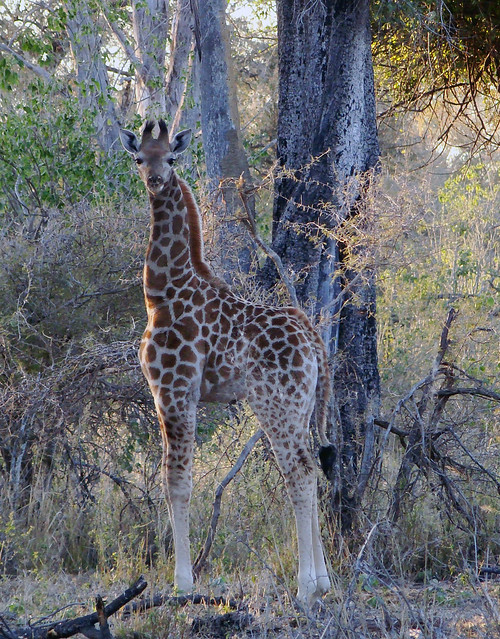
South African Giraffe and their Calves


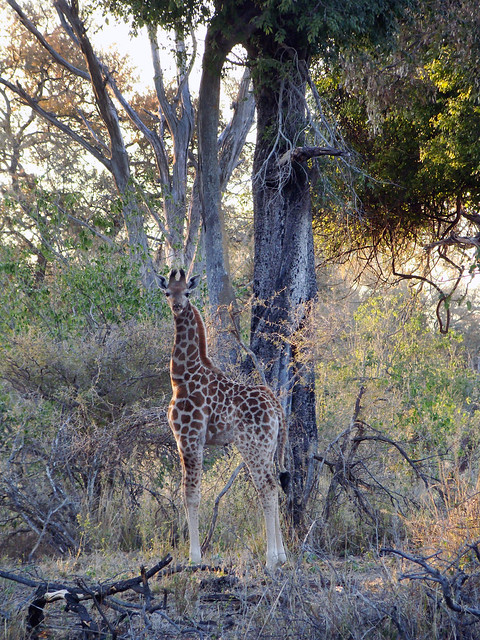
DSC09031 Baby Giraffe
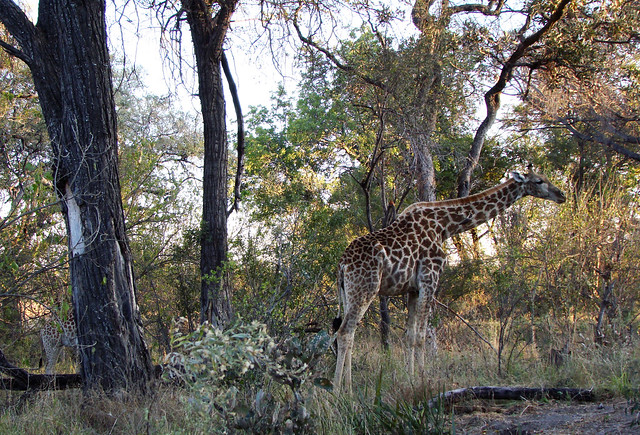
South African Giraffe (Giraffa camelopardalis giraffa)

Some of our fondest memories of our trip to Botswana in the summer of 2009 were the times we encountered the gentle South African Giraffe. I forget who in our Landcruiser spotted the chestnut-brown and buff fur through the trees of the African savanna on first morning at Stanley’s Camp.

DSC07502 Southern Giraffe hiding


Our guide, Poniso, immediately stopped the car and we quietly waited to see if this giraffe will reveal herself. Within a minute of motionless silence, this giraffe cow stepped out of the camouflage of the acacia tree into the open as if to admit defeat in a game of hide and seek.  We were taken by her beauty and couldn’t believe our good fortune as we viewed her through our camera lenses. When our shutters stopped snapping, Poniso whispered to us that she was hiding a calf.  


DSC07511 Southern Giraffe with hidden calf

We all quickly scanned the landscape until we finally saw the rump of a small giraffe hidden behind the large tree trunk on the left, below the light spot where an elephant has stripped the bark bare. Click on the photo to see a hint To see this photo in original size click here.


We now understood why this mother stepped out of hiding so quickly; she placed herself in a vulnerable position to protect a calf. 

*** 

Three days later, at Chief’s Camp, we stumbled upon another giraffe cow and calf. 


DSC09028 Mama and Baby Giraffe


We can’t assume that this is the calf’s mother because chances are good that this cow is watching several calves in a nursery herd while other giraffe cows browse for acacia leaves. The giraffe male does not assist in parental care because would be impossible to defend the vast terrain required to supply the large quantity of food he needs to stay healthy. Without a defined territory, he does not know which calves are his. Thus the female giraffes pool together their resources and form what amounts to a babysitting co-op.

The calf’s tawny brown spots are lighter than an adult’s, giving it an even more endearing appearance. I’m sure you can imagine our muffled squeals of delight when we got a close view of this curious calf.


DSC09031 Baby Giraffe cropped

DSC09038 Giraffe calf


Happy Mother’s Day to all the mothers who bond together and form a village to raise their young.

DSC07509 Southern Giraffe ox-pecker bird
South African (or Southern) Giraffe (Giraffa camelopardalis giraffa) and Red-billed Oxpeckers (Buphagus erythrorhynchus)
________
Resource:
"Introduction to the Social System of Giraffe (Giraffa Camelopardalis)." Biology @ Davidson. Web. 08 May 2011. <http://www.bio.davidson.edu/people/vecase/Behavior/Spring2004/breedlove/parentalcare.html> .

Monday, July 12, 2010

Macro Monday - Crocodile Recollections

DSC09302 Nile Crocodile scales detail


DSC09379 Nile Crocodile

When talented sculptor Patrick Gracewood published a post about crocodiles a few days ago, I was inspired to write about my recollections about crocodiles.

My first memory of crocodiles was in 1960 when we were ready to leave Java for my mother’s native land, The Netherlands. Indonesia’s spiraling inflation triggered the rupiah’s devaluation thus forcing my parents to invest their available cash in material goods. Their challenge was in finding goods that were easy to transport and not subject to stiff import duties. Even though I was only five years old, and my sisters eight and ten, we were dripping in solid gold bracelets, necklaces and rings as we boarded the Garuda airplane. Jewelry that was worn was not subject to duty fees. My mother also selected high-quality, compact Balinese sculptures and paintings plus two crocodile purses and one large crocodile suitcase. The concept of conservation and the term “politically correct” had not been invented yet. For my parents, it was a matter of survival.

It was fun to wear all the jewelry, but they quickly became a nuisance and their novelty wore off almost immediately. Of all the goods my parents bought, I was most intrigued with the crocodile luggage.
I loved endlessly stroking my fingers across the rich brown reptilian armor. I shuddered at the thought of encountering the animal that bore the high-ridged scales now running along the length of the suitcase. My mother noticed my fascination and told me that she planned to sell as many of our new purchases as soon as we landed in Amsterdam so that we would have cash. I was crushed. As luck would have it, or maybe by design, my mother never sold the crocodile goods. Until our last day in Holland. The couple that gave us a ride to Rotterdam admired our luggage and my parents sold all three pieces on the spot. I still remember how the attractive young wife pranced around with glee with the suitcase in one hand and a purse in the other.

In all likelihood, the crocodile the Indonesians used was the Saltwater Crocodile, (Crocodylus porosus), the largest of all living reptiles. Never again in my life did I ever see a crocodile suitcase that was as large, with ridges as high, and color as deep as the suitcase we owned for six years. Mostly, I think that is a good thing.

***

DSC09401 Crocodiles and Elephants

Last year, we visited the Cuando (Chobe) River in Botswana along the Namibian border. We arrived in time to see the elephants bathing in the river at sunset. It was easy to get caught up in observing the elephants’ social behavior in their tightly knit social groups. All our camera lenses zoomed out to the max, hoping to catch the antics of the baby elephants, still learning how to use their trunks. It wasn’t until our son gasped “Waaaa!” that we realized that two large crocodiles were right under our nose. I was more than a little unnerved to see these menacing creatures up close.

DSC09398 nile crocodiles

Over the next couple of days, we saw about a dozen Nile Crocodiles (Crocodylus niloticus). All were camouflaged artfully in their surroundings, like this pair catching the last rays of the sunset:

DSC09437 Two Crocodile sunset

Having trouble seeing them? Here’s is a close-up of one; the other is out of frame, further up the riverbank on the right.

DSC09436 Nile Crocodile

DSC09438 Nile Crocodile detail

The only time I was actively concerned about my safety was when Poniso, our guide, pulled the bow of the boat up on the bank and then killed the engine.

DSC09377 Nile Crocodile

Without wanting to sound an alarm, I gave a tiny squeal of concern. “Oh, don’t worry. He’s not coming after us. Look how full his belly is. He’s just had a full meal.”, Poniso rationalized. What if the engine won’t start up? What if he’s thinking about a little dessert? I can read it on his face.

DSC09300 Nile Crocodile

He still looks pretty hungry to me.

DSC09380 Nile Crocodile open mouth

Never have I been so relieved to hear an engine start up. I don’t mind a little adventure, but I don’t believe in pressing my luck.

Speaking of pressing one’s luck. We saw a young adult on another boat with his legs dangling over the edge of the boat and his bare feet ankle-deep in the water. Brrrr! This is an apt time to cite the delightful little Lewis Caroll poem that Patrick Gracewood found:

How doth the little crocodile 
Improve his shining tail,
And pour the waters of the Nile
On every golden scale!

How cheerfully he seems to grin,
How neatly spread his claws,
And welcome little fishes in
With gently smiling jaws!

.....Lewis Caroll

Thank you Patrick for inspiring me to write this post. Please pop over to his blog to read his post about some beautiful crocodile sculptures.

Please visit lisaschaos, the lovely home of Macro Mondays.
Related Posts Plugin for WordPress, Blogger...
Bookmark and Share