Showing posts with label folk art. Show all posts

Thursday, January 6, 2011

The Sami People of Nordkapp

IMG_4835 Nordkapp

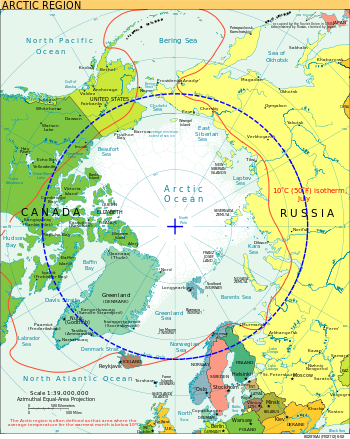
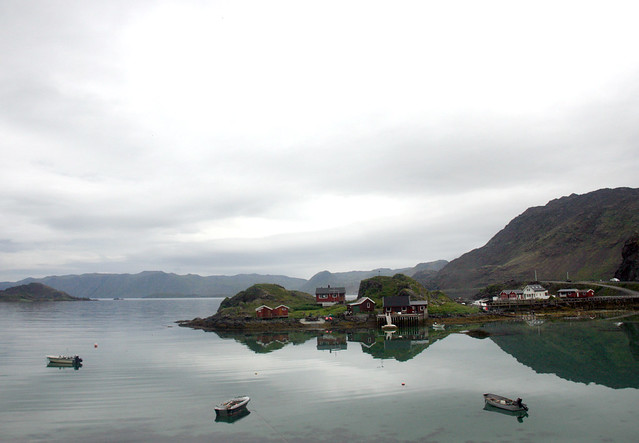
This summer we took a cruise on the Norwegian passenger and freight line Hurtigruten ("Express Route" in English) We boarded the "Midnatsol" in Bergen and sailed for one week up to Kirkenes.  One of the last stops of our voyage was the North Cape (Nordkapp), located well north of the Arctic Circle.

One of the surprises on this cruise is that I did not spot more birds along the way. I fully expected to see many breeding grounds along the coastline, but it was surprisingly bare. I was therefore on high alert when I saw a few small dots bobbing in the water about an hour before we docked.

IMG_4822 puffin at nordkapp uncropped

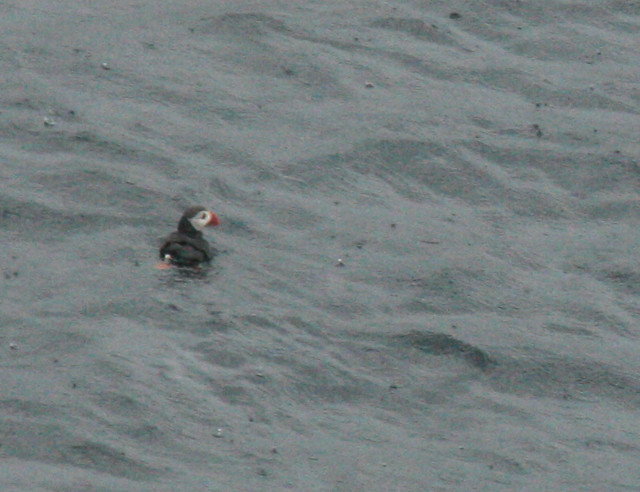
A closer examination revealed that these dots were puffins. Not a great picture, but it's the only one I have.
IMG_4822 puffin at nordkapp
Atlantic Puffin (Fratercula arctica)

I had the option to take the bird safari excursion, where I would have been able to see large flocks of puffins and kittiwakes and even the mighty sea eagles, but ultimately I chose to join the rest of my family on the bus tour to see the North Cape (Nordkapp), 21 miles away, on the north side of the island of Magerøya

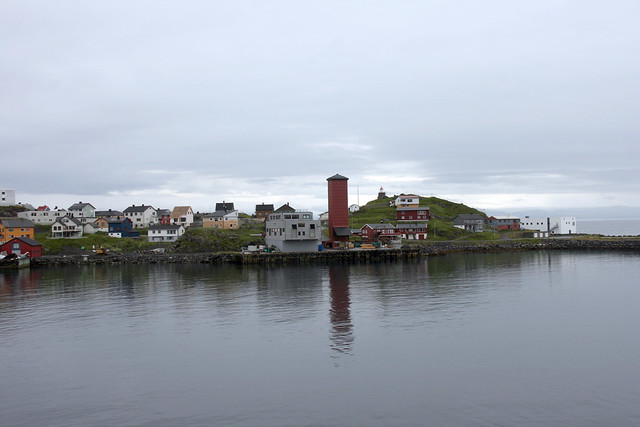
We docked in Honningsvåg, which claims to be the northernmost city in Norway, or even the world, but there are several other cities who dispute this claim. The village was occupied by the Germans in World War II; sadly, only the chapel was spared destruction. After the war,  many of the houses were restored to their original style, using the original color scheme. Historically, white was the most expensive paint color and therefore the most prestigious. Prestige or not, the white houses would not look as pristine and idyllic were it not for the occasional red and yellow structures against the bright green grass. 
IMG_4826 on the way to Nordkapp

We boarded a bus that drove us past the traditional fish racks which still had cod drying in the sun before winter sets in. 
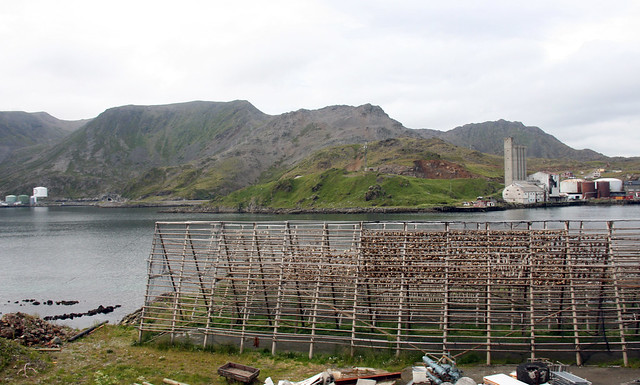
IMG_4932 Nordkapp fish racks

We saw many more racks on the hillsides, but they had already been picked bare. 
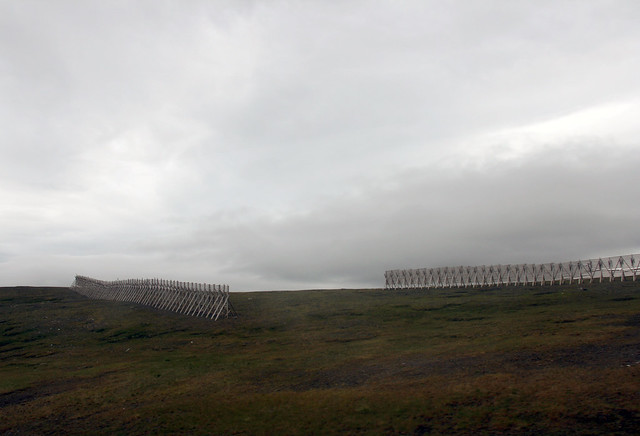
IMG_4847 Nordkapp fish racks

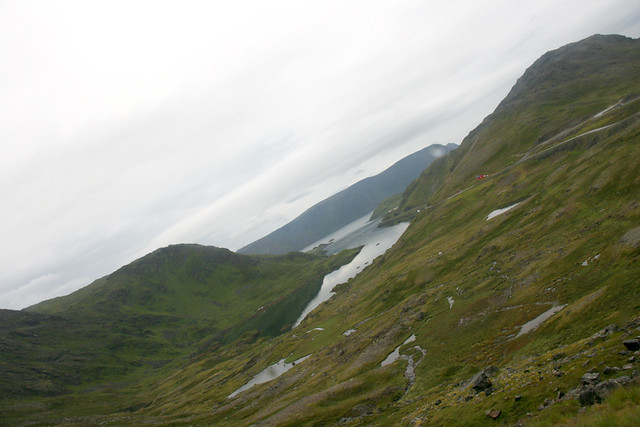
The bus careened along the winding roads across the bald sub-arctic landscape of the island.

IMG_4840 Nordkapp bus view

Periodically the bus driver would point out reindeer grazing on the short grass. See if you can spot the stag and three does below. Don't worry if you can't, I had trouble seeing them too. If you're hell-bent on seeing them, you can click here . Fortunately, we did get the opportunity to see more reindeer up close only a few minutes later.
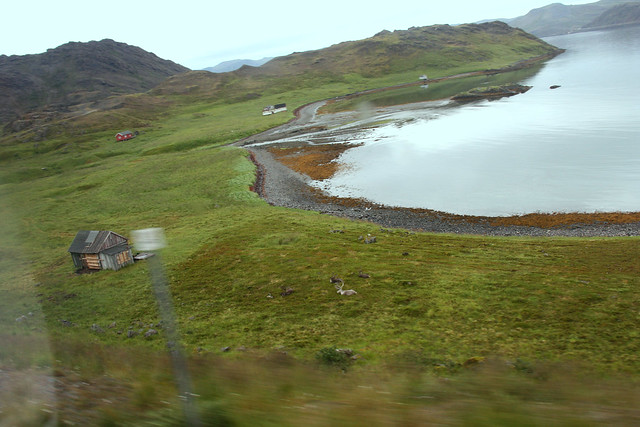

IMG_4837 Norkapp bus view

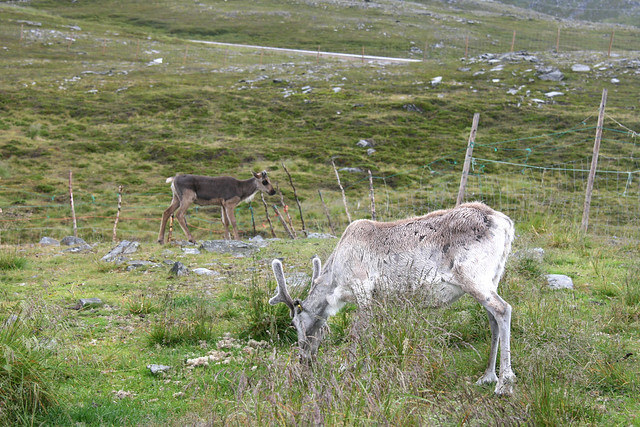
Only the indigenous people called the Sami (also spelled Sámi, or Saami) are allowed to practice reindeer husbandry in Norway. Magerøya Island can boast 5,000 reindeer, all owned by five Sami families. The reindeer are allowed to roam freely, with only minimal fencing to keep them from harm. 
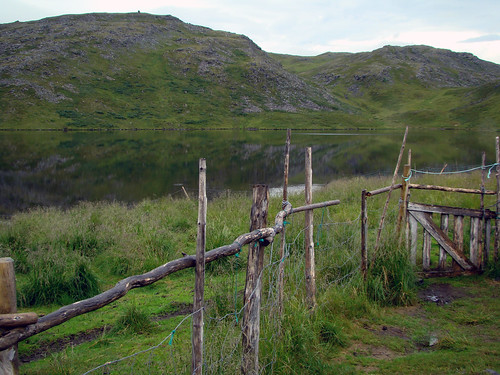
DSC07820 Nordkapp fence

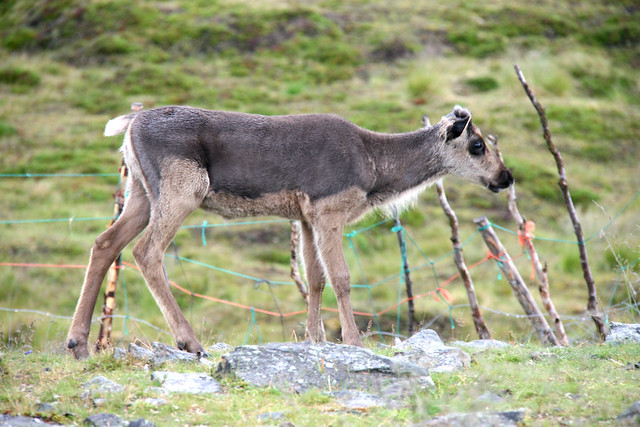
The tags in the ears of the reindeer indicate ownership. 
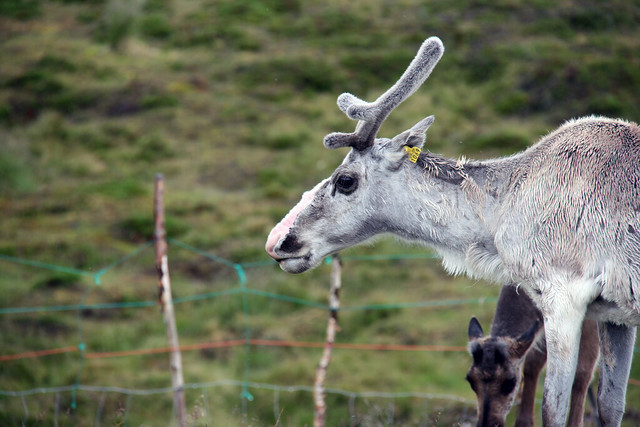
IMG_4858 reindeer numer 1069
Reindeer (Rangifer tarandus)

IMG_4855 reindeer

IMG_4854 reindeer

Both males and females grow antlers.  I was amazed how fuzzy they were (no, I did not touch them). 
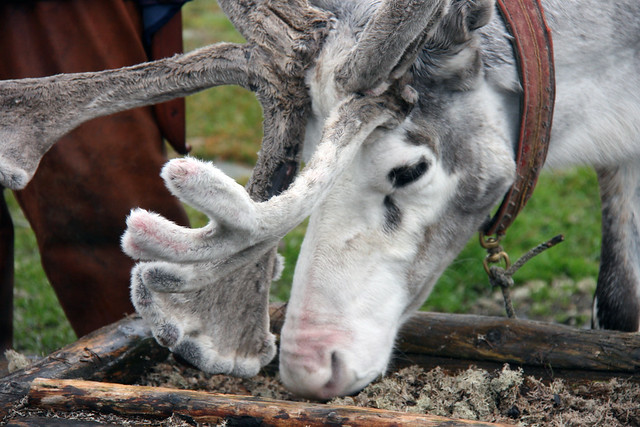
IMG_4870 reindeer

To save energy, they shed them annually. On our way back to the ship, we found shed antlers offered for sale in a small Sami shop near the ship.

The bus stopped at a Sami trading post where a Sami posed with tourists in his colorful native costume. It is not difficult to imagine the seed of inspiration for Santa's elves' costumes.
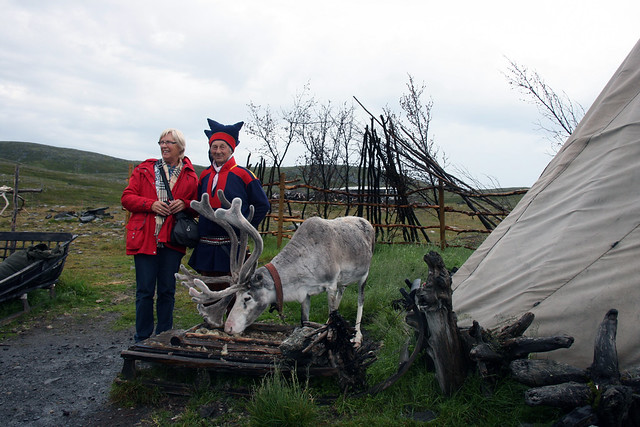
IMG_4851 reindeer photo op

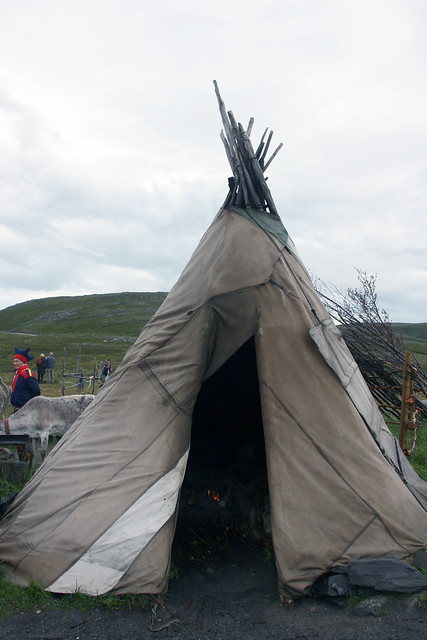
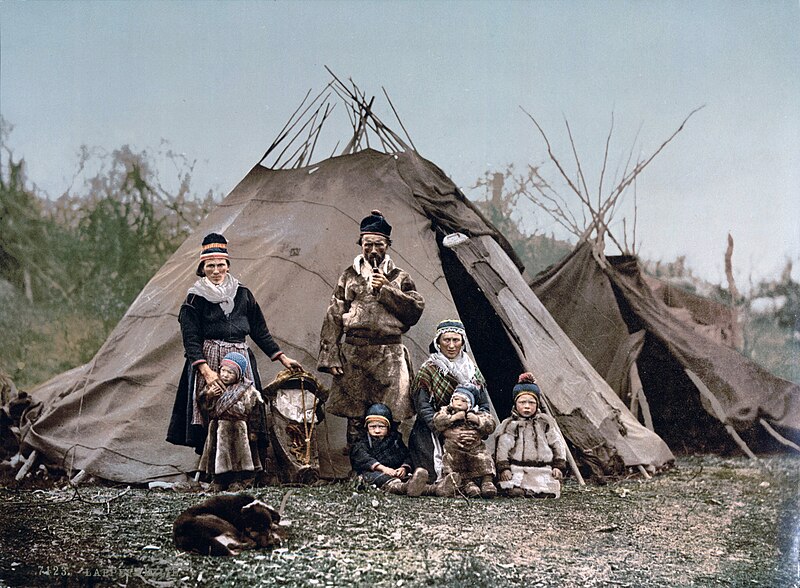
The Sami use a temporary shelter, called a lavvu, which is strikingly similar to the teepees of Native Americans of the Great Plains. The portability of this structure allows the herdsmen to follow their reindeer.
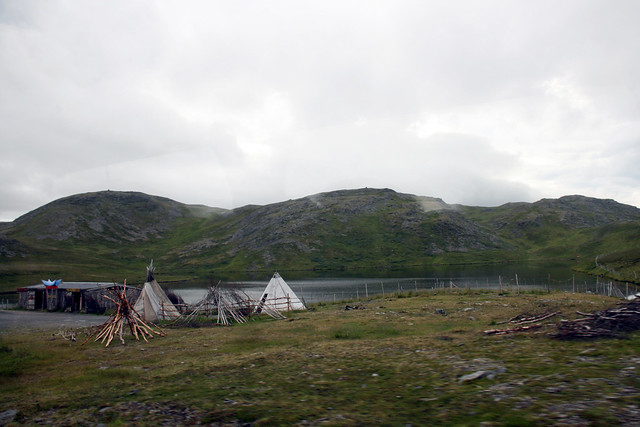
IMG_4930 Sami Trading Post


IMG_4867 saami tent

Traditionally the reindeer hides were used as a cover, but now lighter fabrics are used to lighten the load. The long straight poles to construct these dwellings must be prized because tall vegetative growth appears to be scarce in this region. To our surprise there was an open fire inside, but the smoke easily escapes from the smoke hole at the top. 
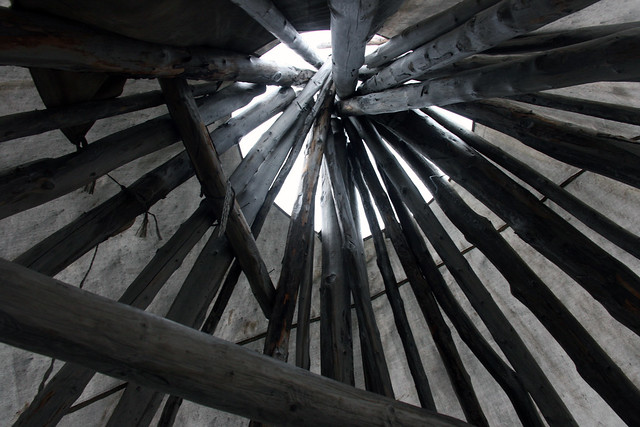
IMG_4865 saami tent

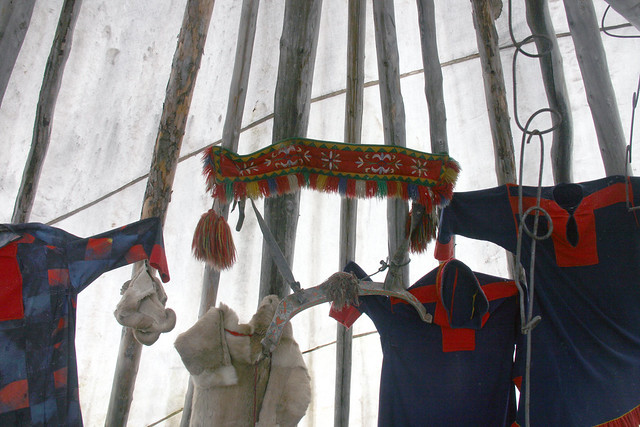
The interior walls were decorated with the gorgeous native attire made with generous yardage and elaborate workmanship. I can imagine how fantastic these crisp, bright colors would look in the stark white snow. 
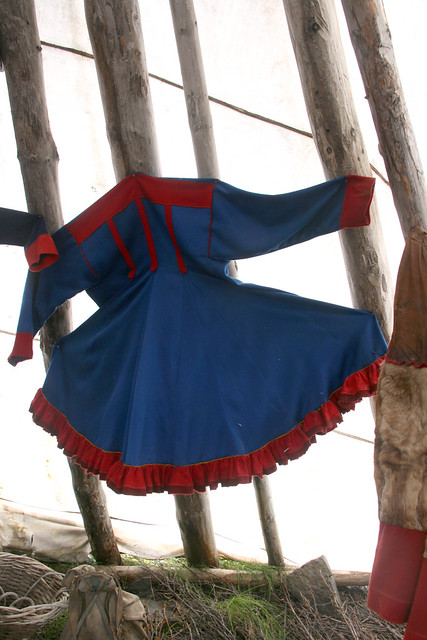
IMG_4861 saami costume

The trousers are made of reindeer hides.
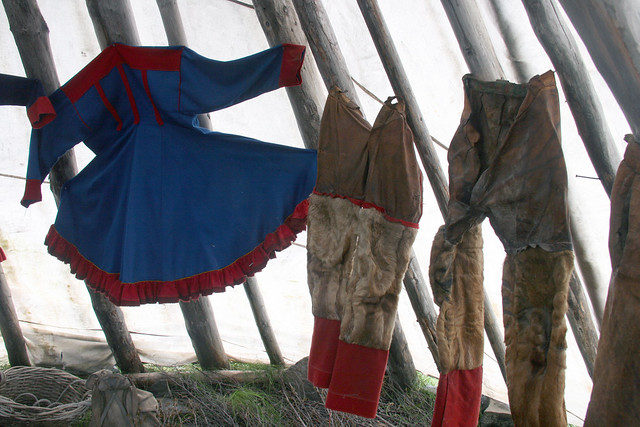
IMG_4863 saami costumes

IMG_4864 saami costumes

The style and colors used in these these garments appear to be a perfect blending of Scandinavian, Russian, and Northwest Indian cultures.  Not surprising, given that all these descend from within the Arctic Circle and the nomadic nature of the Sami people. 

Many Sami regard the term Laplander as a pejorative term. In most Scandinavian languages the word "lap" means a patch of cloth used for mending. Where one culture used a scrap of fabric out of necessity, one could see how it may be difficult to understand that another culture used them as artistic adornments. 

We had only a few minutes to take a look at the goods offered in the trading post. My sister is to be commended for finding and purchasing a splendid black wool shawl for our mother in less than five minutes.
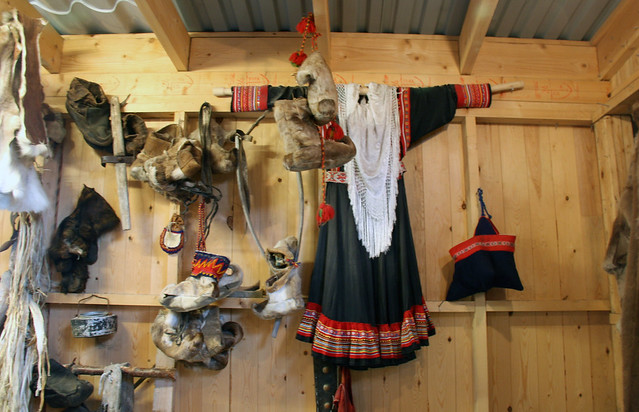
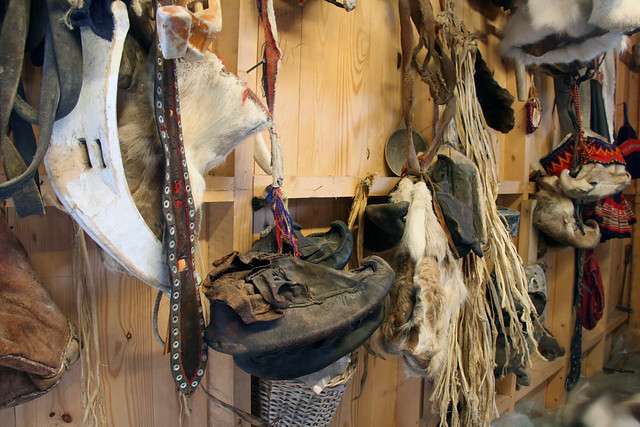
IMG_4873 saami costumes

IMG_4874 saami accessories


The Sami people suffered from laws of forced assimilation into the Norwegian culture, which peaked from 1900 to 1940 when anyone who wanted to buy or lease state lands for agriculture in the county had to have knowledge of the Norwegian language and register with a Norwegian name.

Sami Family, 1900, Source: Wikipedia

Despite these pressures and other draconian practices since the nineteenth century, the Sami prevailed. The pressures to chip away at their colorful culture is now coming from all around the globe.
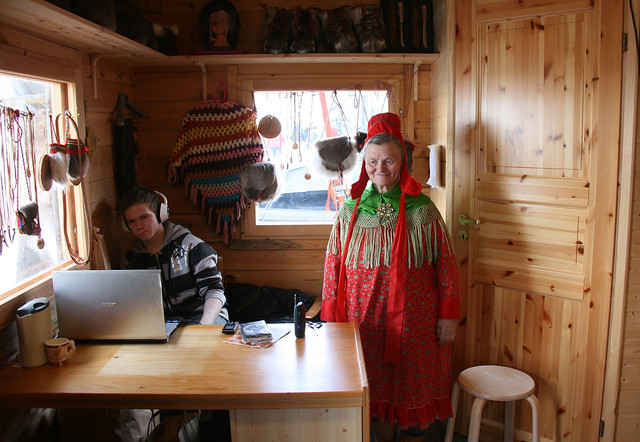
IMG_4938 Nordkapp Saami vendor and teen

I dearly hope that the Sami culture continues to prevail so that the world can enjoy their artistry. 
Enhanced by Zemanta

Tuesday, September 21, 2010

The Viking Ship Museum - Gokstad ship


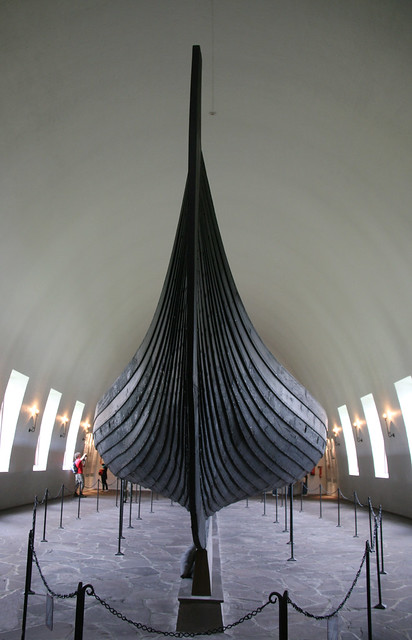
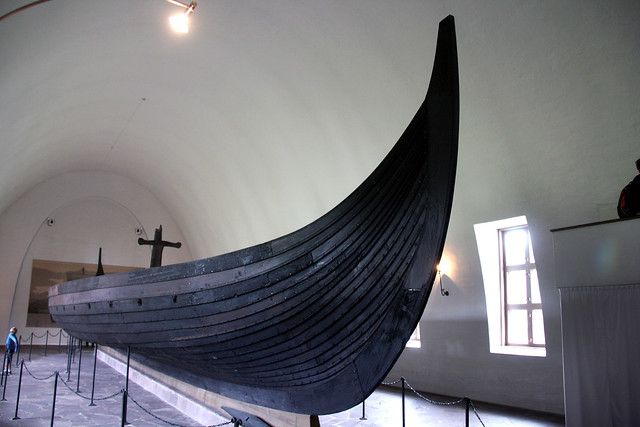
IMG_2603  Gokstad Viking Ship


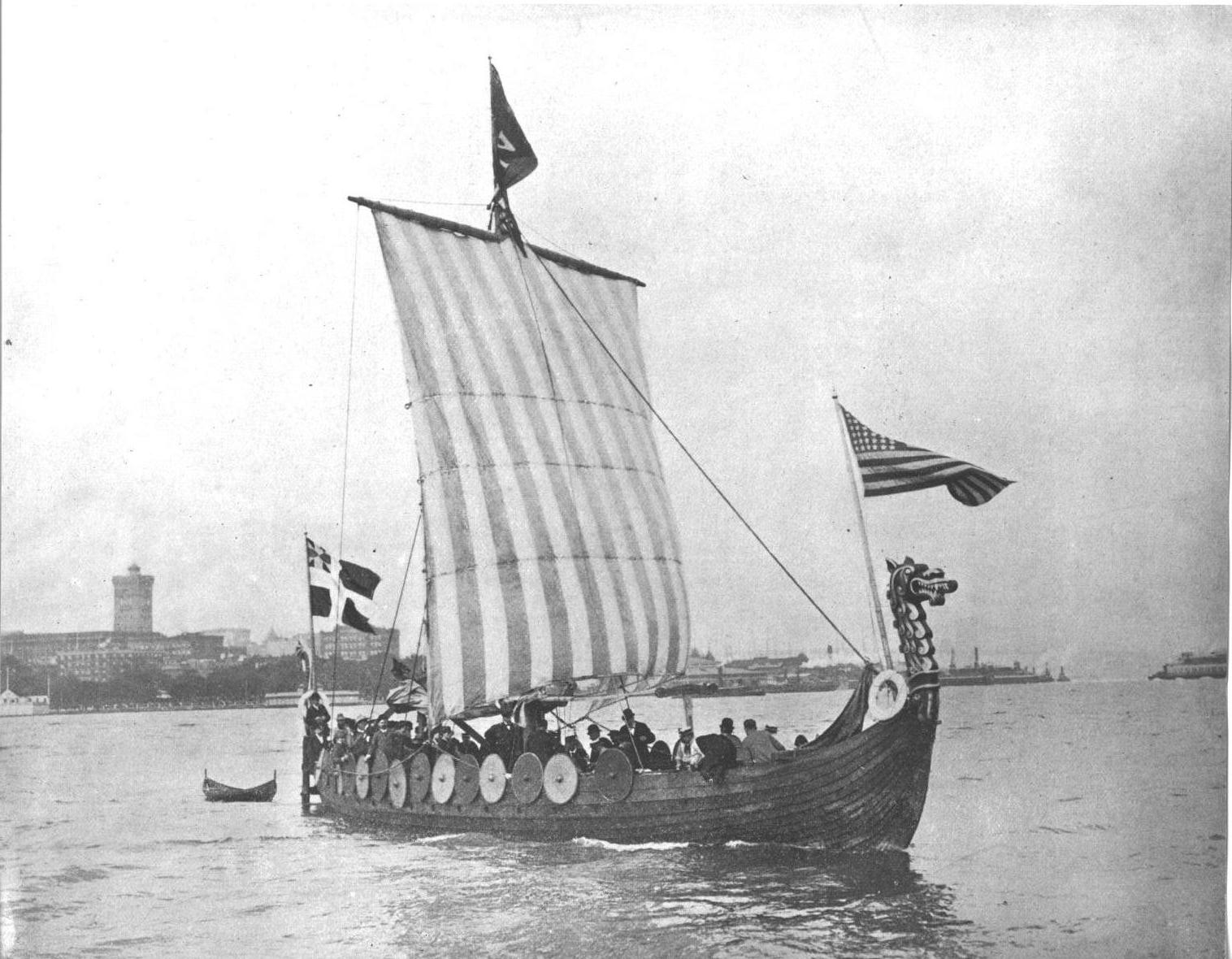
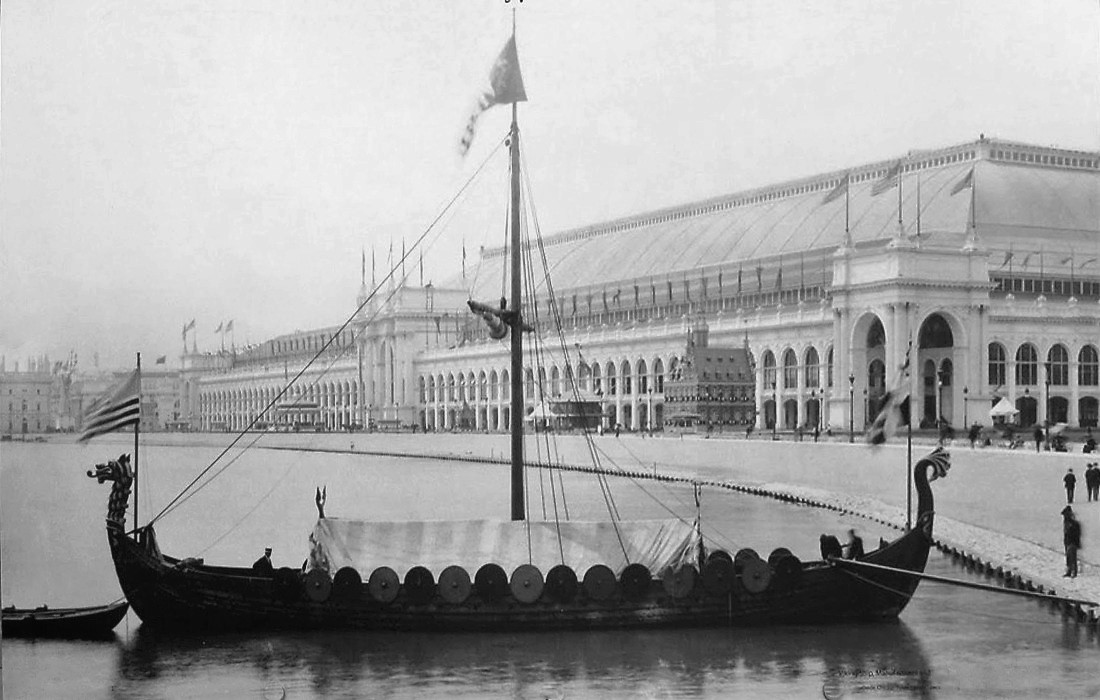
As beautiful as the ceremonial grandeur of the Oseberg was, the simple grace of the Gokstad was the ship at the Viking Ship Museum that took my breath away. Intuitively, this longship looked more seaworthy than the Oseberg. I later learned that in 1893 a full-scale replica of the Gokstad successfully completed a 44-day voyage across the Atlantic Ocean from Bergen, Norway to Chicago for the World’s Columbian Exposition. 

Image: http://www.danstopicals.com/gokstad.htm 

Ironically, the exposition was held in celebration of Christopher Columbus’ discovery of the western hemisphere in 1492. In a move that predated the term “political correctness”, in order to minimize offending the Columbian Exposition, the ship’s proposed name “Leif Ericson” was rejected in favor of “The Viking”.

Image: Wikipedia 


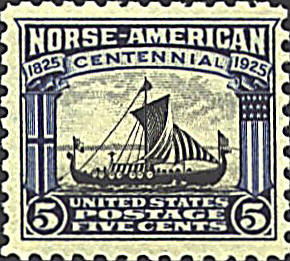
In 1925 a stamp commemorating the Norse-American centennial depicted the Gokstad’s replica, complete with the American flag at the bow and the Norwegian flag at the stern.

Image: danstopicals.com


* * *

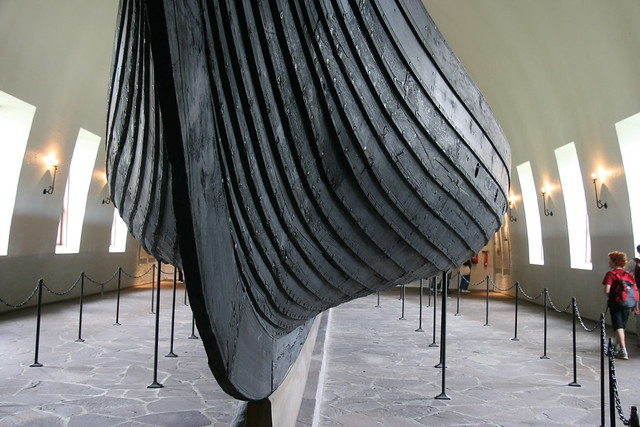
Both the Oseberg and the Gokstad were built using the clinker method where the oak planks overlapped along the edges. The Gokstad is slightly bigger. 


Ship
Length
Width
Oseberg
21.58 meters (70.8 feet)
5.10 meters (16.7 feet)
Gokstad
23.24 meters (76.25 feet)
5.20 meters (17.1 feet)


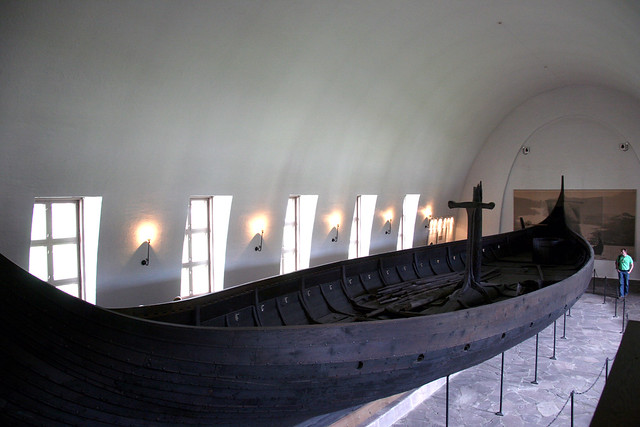
IMG_2606  Gokstad Ship


A single piece of oak was used to ensure the structural integrity of the keel.The length of the keel then determined the dimensions of the rest of the ship. I imagine that the tallest and straightest oaks in the land would be a Viking boat builder’s greatest treasure.

IMG_2618 Gokstad Viking Ship


The invention of the keel is one of the key reasons for the Vikings maintained naval superiority for over two hundred and fifty years. A keel allowed the ship to be rowed and sailed as well. The smaller draught, along with a removable rudder, the ship had the distinct advantage of being able to navigate in shallow inland waters.

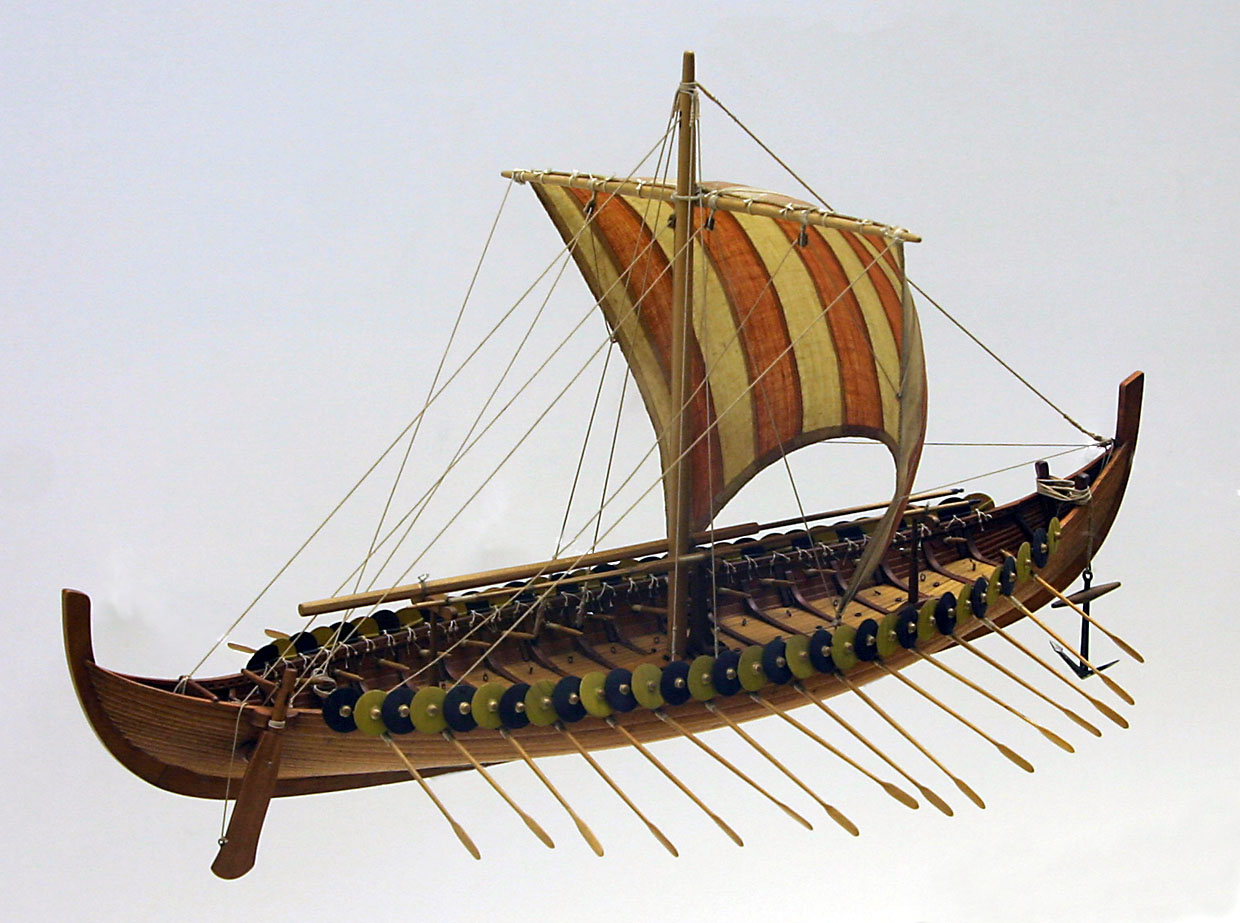
Remnants of 32 shields, alternately painted black and yellow, along with 16 oars for each side, and a striped woolen sailcloth were excavated from the buried ship. There were no benches, thus it is speculated that the oarsmen sat on their sea chests.


Model of the Gokstad ship
 Image: Wikipedia


Like the Oseberg, the Gokstad was used as a burial chamber. A 50- to 70-year-old male was uncovered with the ship along with some modest grave goods. It is believed that the valuable items were plundered long ago.


IMG_2607 Gokstad Viking Ship


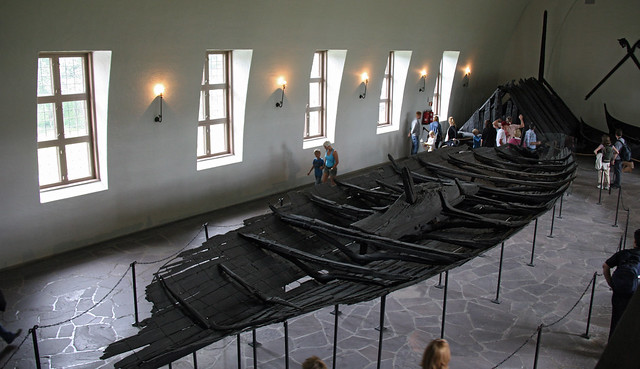
The third ship at the Viking Ship Museum is a 22-meter fragment of the Tune ship.


IMG_2602 Tune Ship

The incomplete state of this ship reminds us how remarkable the nearly complete finds of the Oseberg and Gokstad were.

Monday, September 13, 2010

Macro Monday - Oseberg Detail

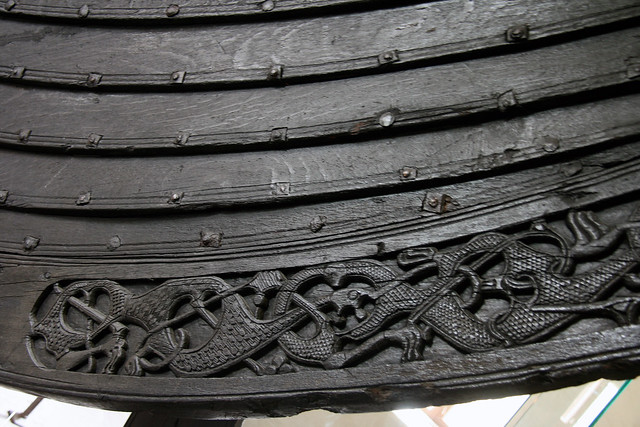
IMG_2597 Oseberg detail


When I was trolling through reviewing my Norway photos for my next post, I ran across this detail of the Oseberg ship. I rejected it for the post I wrote because it was out of focus. I like how the photo shows off the original rivets and the craftsmanship of the woodcarver.  I decided to fiddle around with the sharpen settings in PhotoShop and came up with this. It's still not great, but what do you think? You can see it larger here. Should I have published this? Here's the original picture; click to enlarge it.


Wednesday, September 8, 2010

The Viking Ship Museum in Oslo - Oseberg Excavation

IMG_2585 Oseberg Viking Longship

During our stay in Oslo, we ferried over to Bygdøy peninsula where we spent the day visiting several impressive cultural and historical museums. The Oslo Pass proved to be a great investment because it was accepted on the public ferry to Bygdøy and at all the museums here.

The Viking Ship Museum was a great treat for my brother-in-law because, like his father did, he works on the San Francisco Bay every day. We say that he has salt water running through his veins, no doubt a trait that passed down from his Norwegian ancestors.

The Oseberg Viking Longship

The Oseberg Viking longship is the world’s most complete ship ever found. A farmer discovered the ship in 1903 while he was digging in a mound on his farm. The following summer, Swedish archeologist Gabriel Gustafson led an excavation team for five months until the last piece of the the 70-foot longship was unearthed. The blue clay of the mound preserved the wood for longer than a millenium.

Image: Univeristy of Oslo 

It was determined that the ship dates from before the year 800 and that she was buried since 834. Conservators spent twenty-one years meticulously restoring the ship using almost all of the original wood and even many of the original iron rivets. Unfortunately, the conservation method of boiling the oak in a concentrated solution of alum rendered the wood brittle as crisp bread. In 1926, the delicate ship was moved to her new, custom-made home where she still stands today.

Image: Univeristy of Oslo 
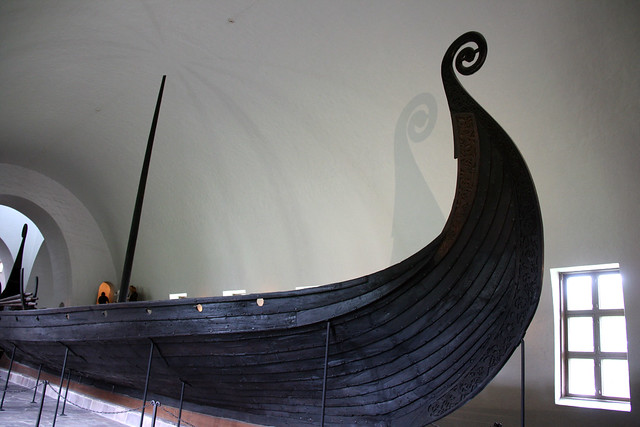
She is housed in the first room of the Viking Ship Museum which is bathed in a beautiful blend of natural and understated man-made lighting with a ceiling that is shaped like an upside down ship hull. As I was taking the photo at the top of this post, my son sidled up next to me and suggested that I take a couple of steps to the left. Then I saw what he saw...

IMG_2584 Oseberg Viking Longship

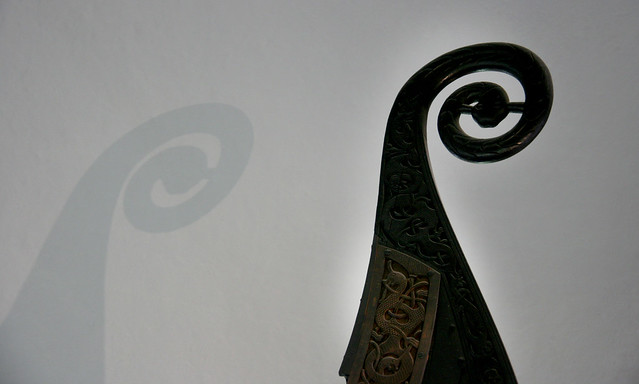
...a shadow twin.

IMG_2588 Oseberg Viking Longship with shadow twin

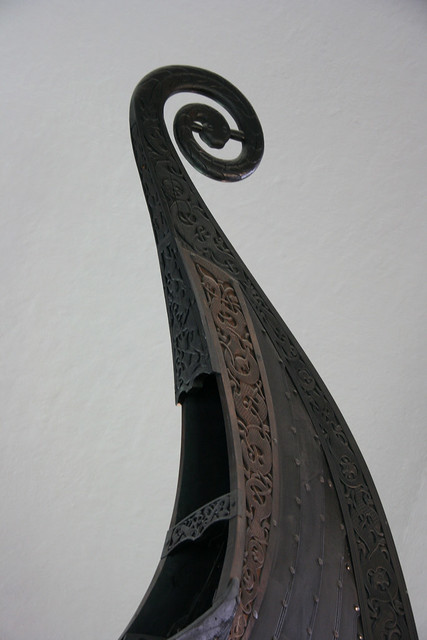
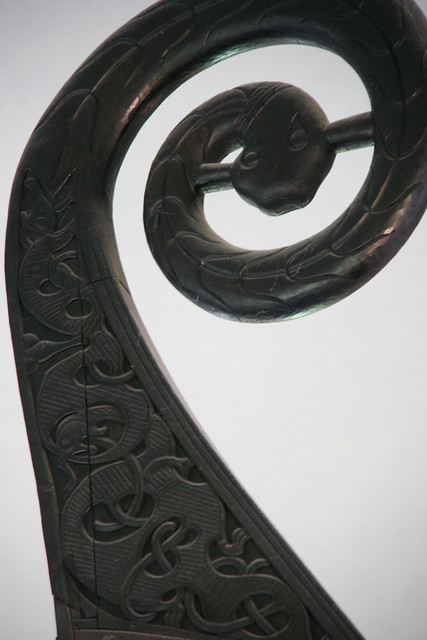
The frond-like prow ...

IMG_2590 Oseberg Viking Longship

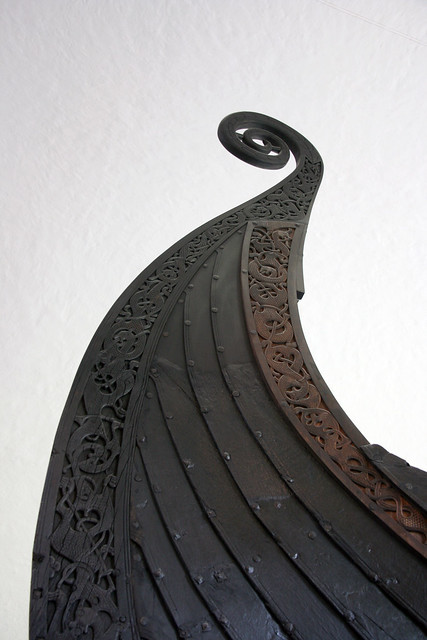
.... turned out to be the head of a serpent...

IMG_2587 Oseberg Viking Longship

... with its body intricately carved along the keel and terminating with  its tail at the stern:

IMG_2592 Oseberg Viking Longship

A giant serpent emerging out of the fog would feed any fears and “confirm” numerous sightings of legendary sea monsters.

The Oseberg was thought to only be seaworthy enough for coastal voyages. A full-scale copy of the ship sank in the Mediterranean Sea during trials in 1987. The New Oseberg Ship Foundation hopes to make new replica.

The Oseberg's elaborate ornamentation suggests its use as a ritual vessel and, in fact, the ship was used as a burial chamber. When found, it contained the remains of two women with livestock and objects to be used for the afterlife. The opulence of the grave goods in the ship and the attire of the women suggested  that at least one of them was of very high status. They even unearthed the remains of a peacock which must have been an exotic pet.


The Oseberg Cart

The women were reburied in the original Oseburg mound, but many of the artifacts are on display in the museum. The extravagantly-carved Oseberg cart is the oldest known vessel with wheels in Norway.


IMG_2608 Viking Museum cart

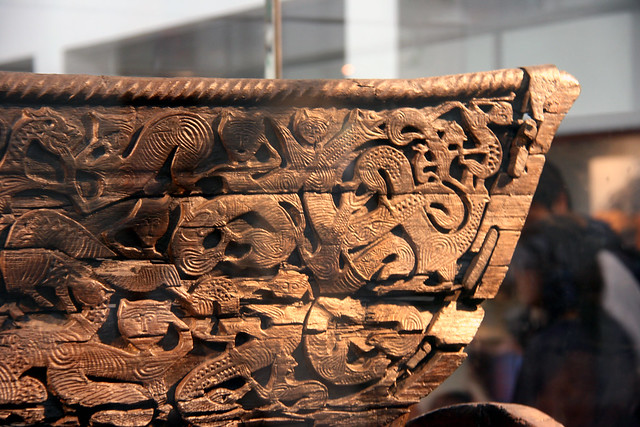
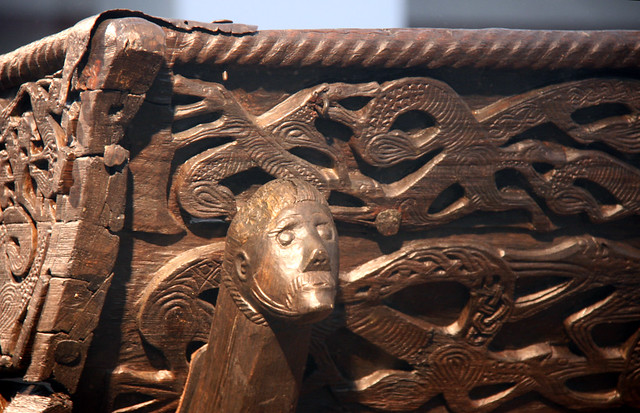
It is believed that the artist who carved the decorations of the Oseberg ship also executed the carvings on the cart. The front of the cart depicts a pit of snakes...

IMG_2611 Viking Ship Museum cart

...surrounding a man believed to be Gunnar in the snake pit of Viking mythology. 

IMG_2614 Viking Museum cart detail

Gunnar was chained and thrown into a pit of snakes but played a harp with his toes so well that all but one snake were lulled to sleep. Tragically, the final adder killed him.
Related Posts Plugin for WordPress, Blogger...
Bookmark and Share