Showing posts with label Stanley's Camp. Show all posts

Sunday, May 8, 2011

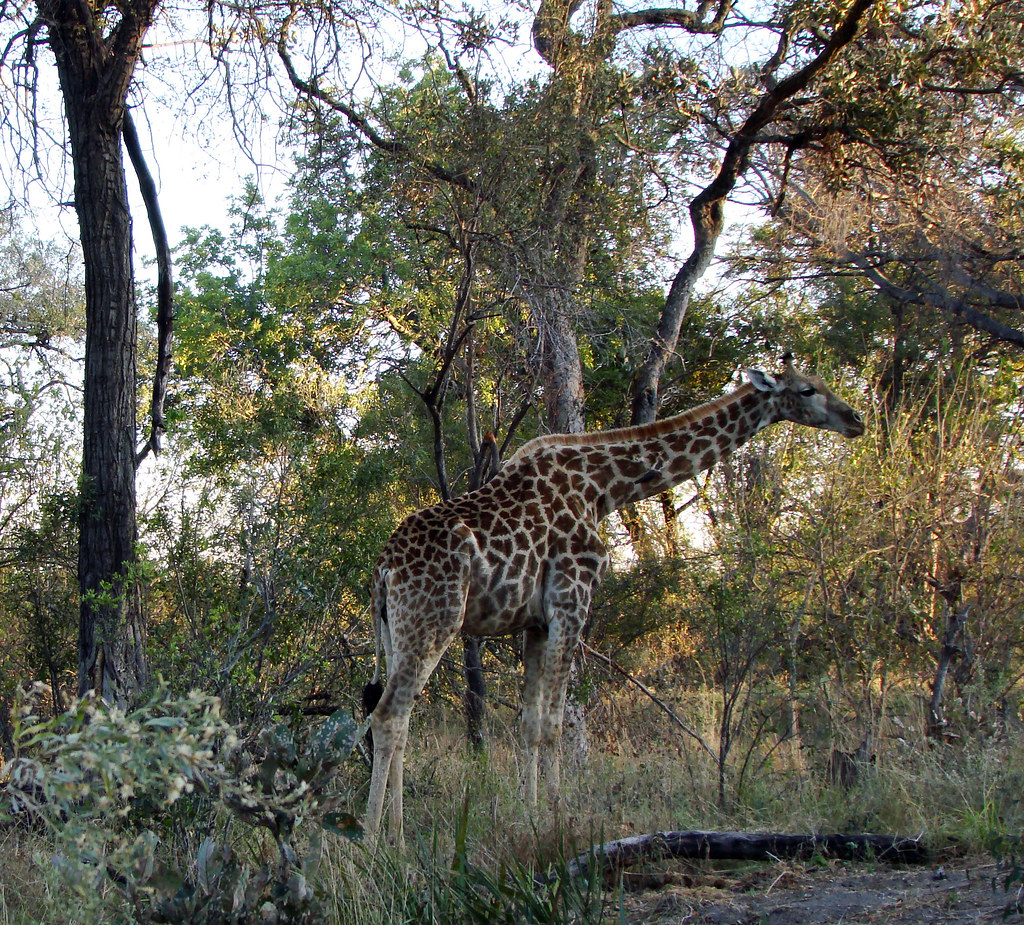
South African Giraffe and their Calves


DSC09031 Baby Giraffe
South African Giraffe (Giraffa camelopardalis giraffa)

Some of our fondest memories of our trip to Botswana in the summer of 2009 were the times we encountered the gentle South African Giraffe. I forget who in our Landcruiser spotted the chestnut-brown and buff fur through the trees of the African savanna on first morning at Stanley’s Camp.

DSC07502 Southern Giraffe hiding


Our guide, Poniso, immediately stopped the car and we quietly waited to see if this giraffe will reveal herself. Within a minute of motionless silence, this giraffe cow stepped out of the camouflage of the acacia tree into the open as if to admit defeat in a game of hide and seek.  We were taken by her beauty and couldn’t believe our good fortune as we viewed her through our camera lenses. When our shutters stopped snapping, Poniso whispered to us that she was hiding a calf.  
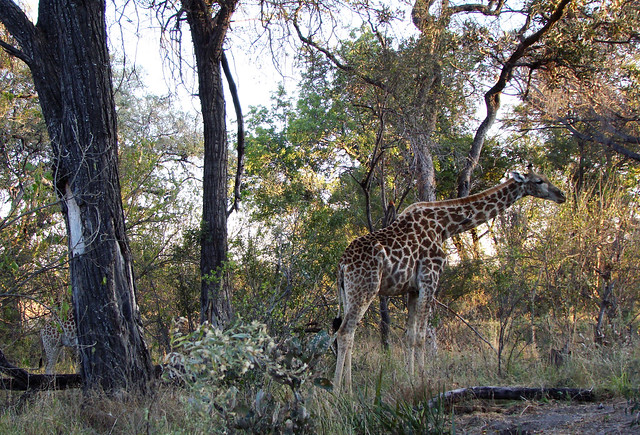

DSC07511 Southern Giraffe with hidden calf

We all quickly scanned the landscape until we finally saw the rump of a small giraffe hidden behind the large tree trunk on the left, below the light spot where an elephant has stripped the bark bare. Click on the photo to see a hint To see this photo in original size click here.


We now understood why this mother stepped out of hiding so quickly; she placed herself in a vulnerable position to protect a calf. 

*** 

Three days later, at Chief’s Camp, we stumbled upon another giraffe cow and calf. 


DSC09028 Mama and Baby Giraffe


We can’t assume that this is the calf’s mother because chances are good that this cow is watching several calves in a nursery herd while other giraffe cows browse for acacia leaves. The giraffe male does not assist in parental care because would be impossible to defend the vast terrain required to supply the large quantity of food he needs to stay healthy. Without a defined territory, he does not know which calves are his. Thus the female giraffes pool together their resources and form what amounts to a babysitting co-op.

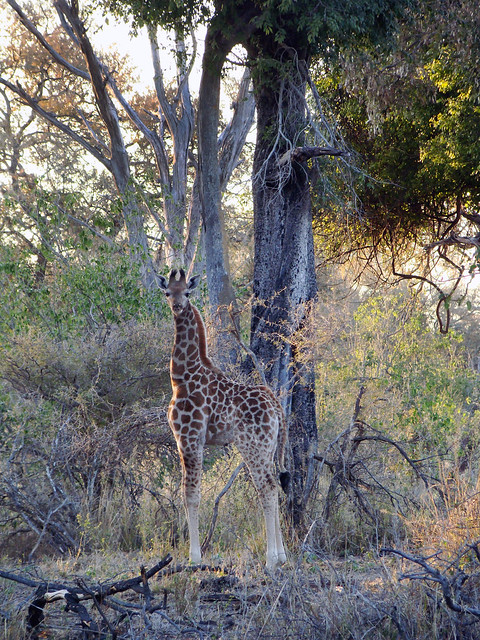
The calf’s tawny brown spots are lighter than an adult’s, giving it an even more endearing appearance. I’m sure you can imagine our muffled squeals of delight when we got a close view of this curious calf.
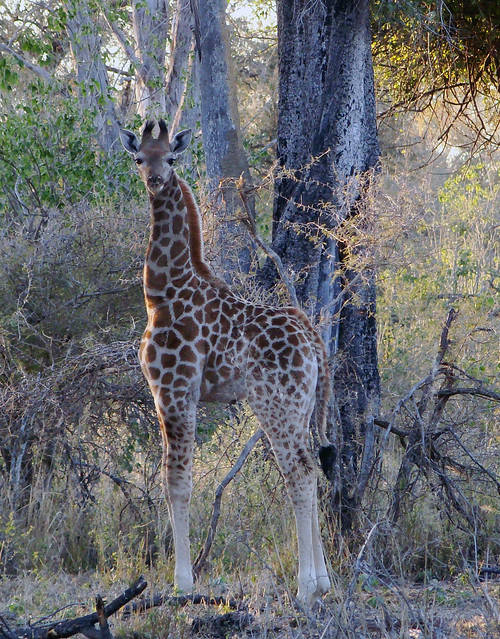

DSC09031 Baby Giraffe cropped

DSC09038 Giraffe calf


Happy Mother’s Day to all the mothers who bond together and form a village to raise their young.

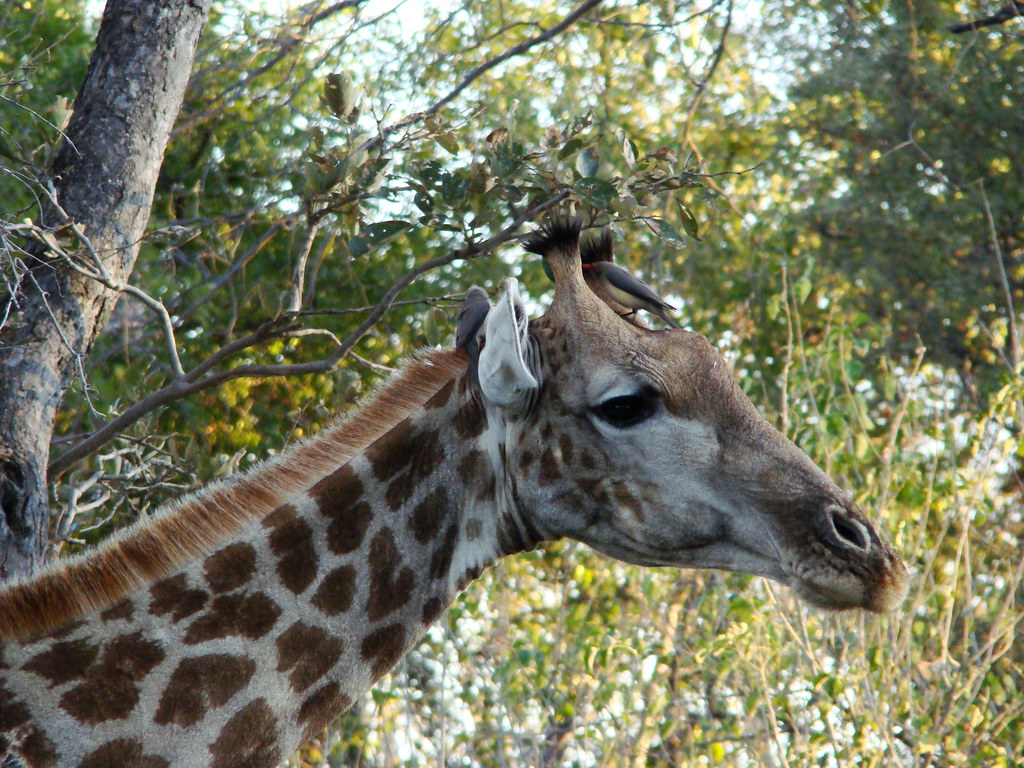
DSC07509 Southern Giraffe ox-pecker bird
South African (or Southern) Giraffe (Giraffa camelopardalis giraffa) and Red-billed Oxpeckers (Buphagus erythrorhynchus)
________
Resource:
"Introduction to the Social System of Giraffe (Giraffa Camelopardalis)." Biology @ Davidson. Web. 08 May 2011. <http://www.bio.davidson.edu/people/vecase/Behavior/Spring2004/breedlove/parentalcare.html> .

Saturday, October 10, 2009

High-Style Picnic in Botswana

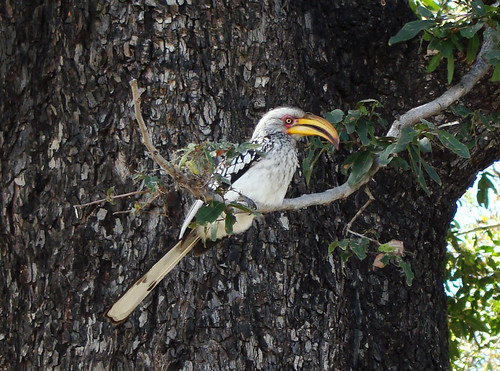
DSC08195 Southern Yellow-billed Hornbill
Southern Yellow-billed Hornbill (Tockus leucomelas)

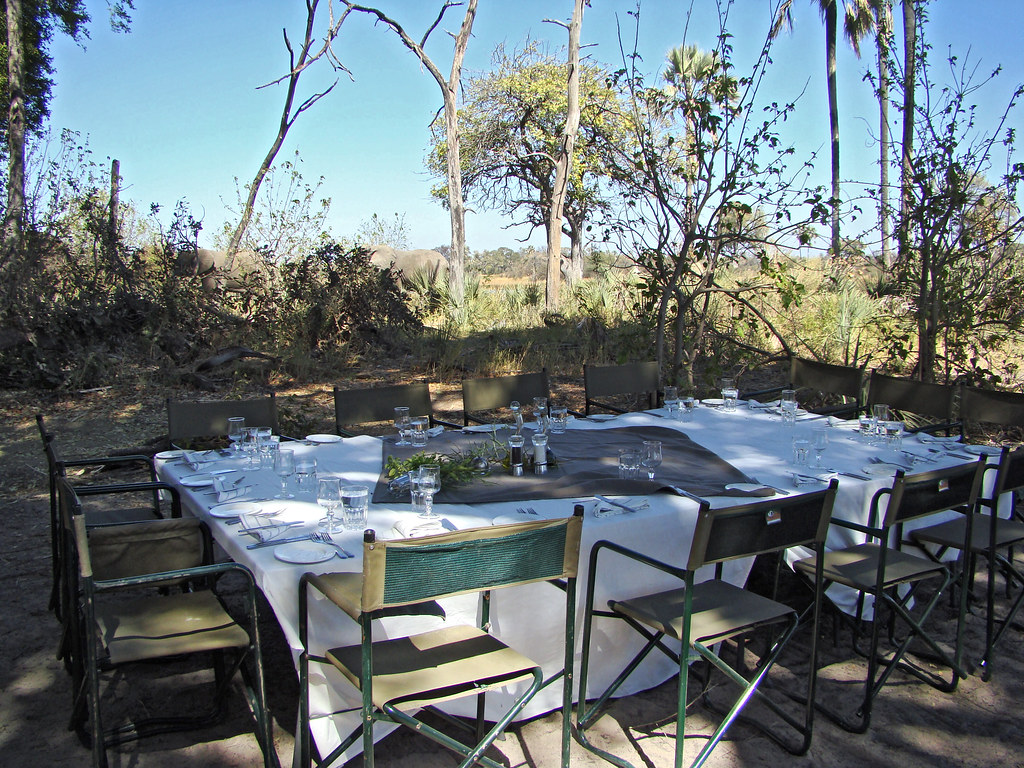
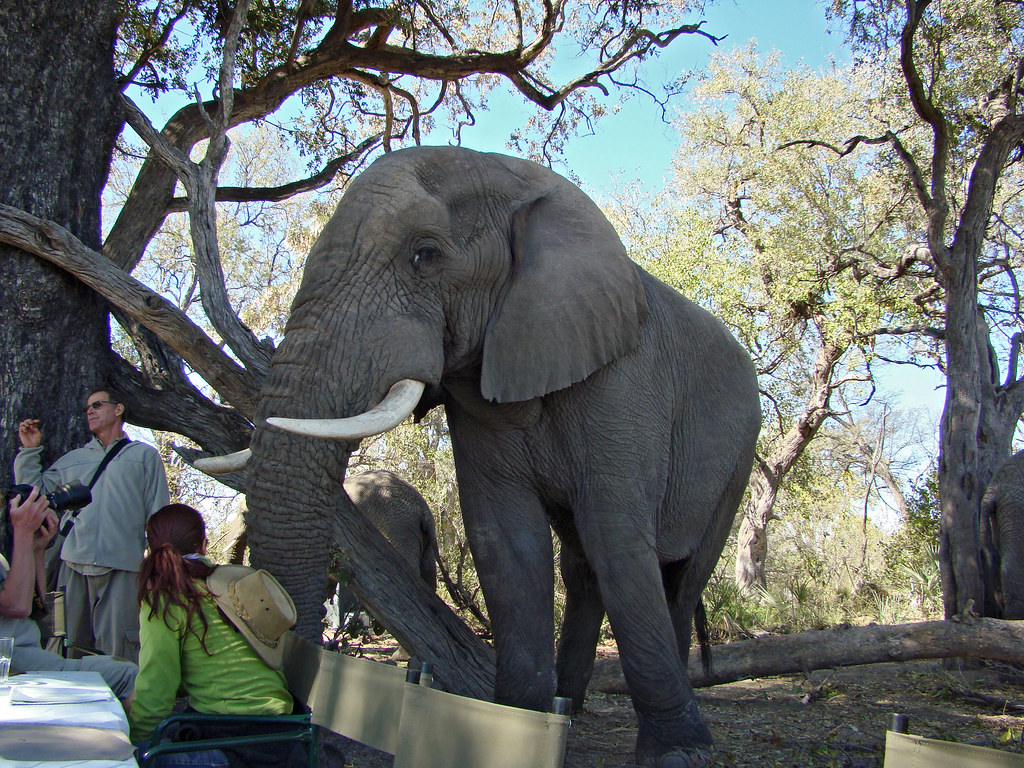
After spending the morning with Douglas Groves and his elephants, we arrived at our lunch spot  to find this elegantly set picnic table with a crisp white tablecloth and napkins. If you look closely, or click on the photo, you can see the elephants in the background.
DSC08189 Picnic table in the bush

While we waited for the elephants to catch up with us, I used the opportunity to photograph the birds that shared their space with us. I think they tolerated us knowing that crumbs were on their way.

Even though Zazu of "The Lion King" is a red-billed hornbill and the one we saw was yellow-billed (opening photo), the similarity was so striking that I couldn't help but expect a Morning Report à la Zazu:


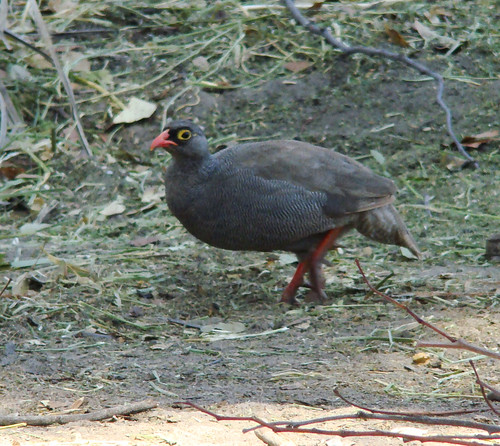
I think this Red-billed Francolin is a prime candidate to become a Disney character because the yellow ring around the eye makes this bird look like he has a perpetually perplexed look on his face.

DSC08217 redbilled francolin (francolinus adspersus)
Red-billed Francolin (Francolinus adspersus)

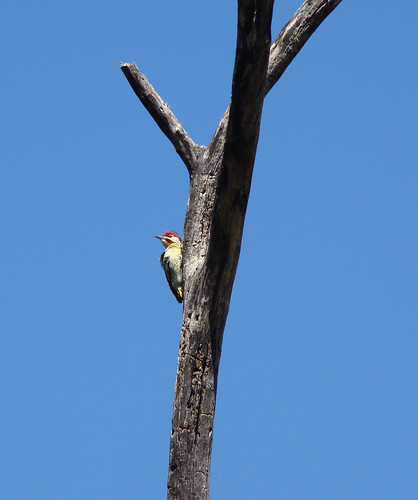
I heard the rapid "rat-tat-tat" long before I located this Cardinal Woodpecker at the top of a very tall tree stump.

DSC08200 Cardinal Woodpecker
Cardinal Woodpecker (Dendropicos fuscescens)

When Douglas Groves arrived, he placed some exotic African fruits on the table:

DSC08202 Picnic with the elephants

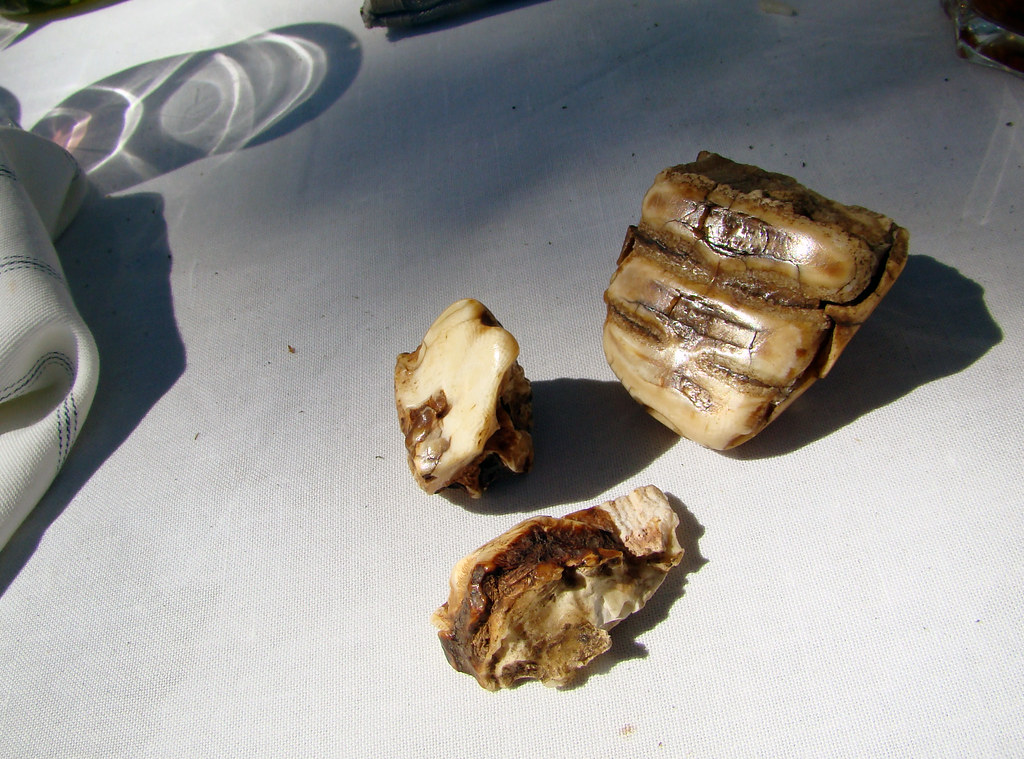
and he even showed us some elephant teeth:

DSC08204 elephant teeth

We enjoyed a delicious lunch while the elephants enjoyed more special treats of fruits and vegetables, their reward for patiently posing for photographs with every party at the picnic table.

DSC08206 Picnic with elephants

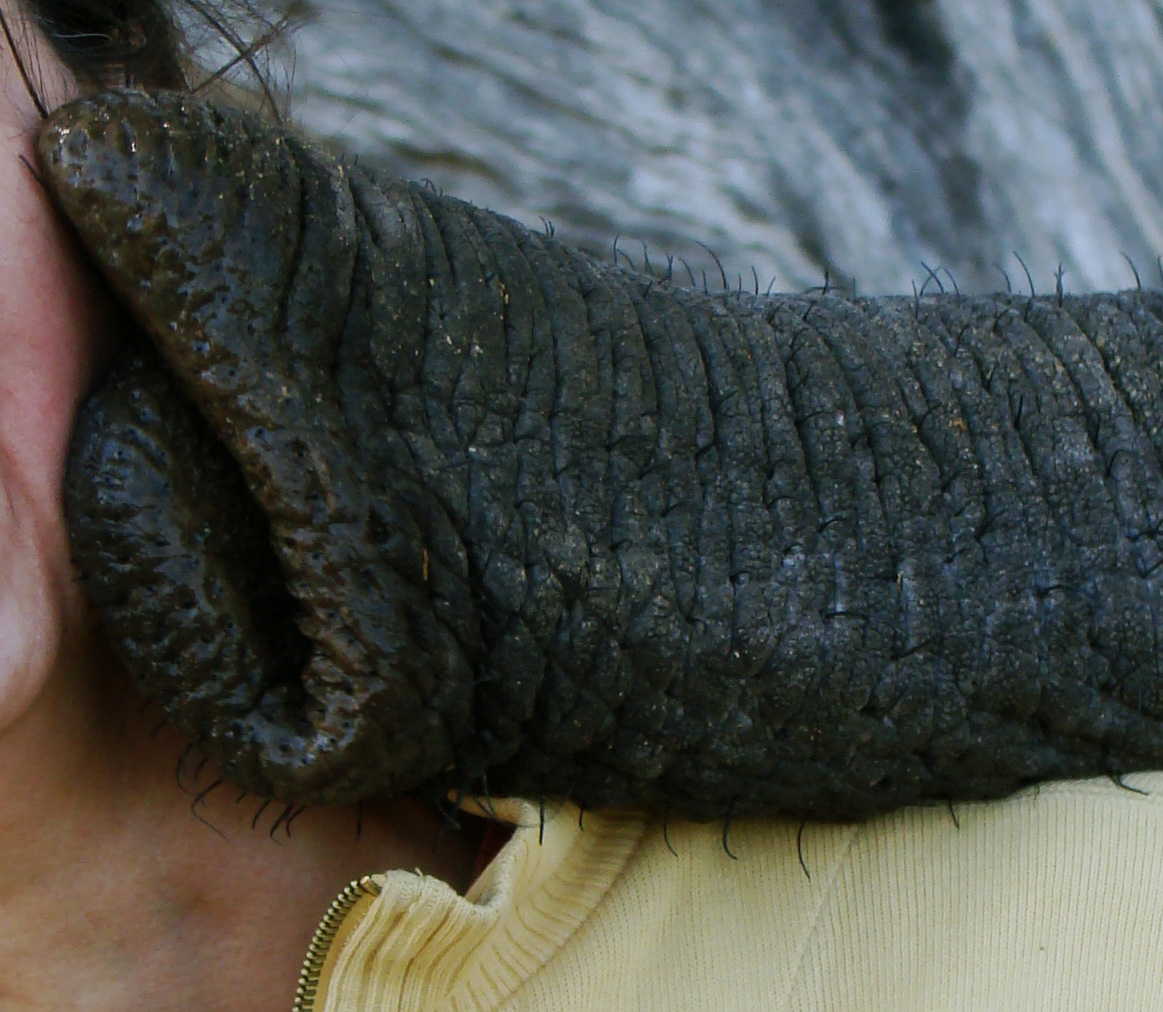
After lunch, the elephants continued their ambassadorship by giving each and every one of us a great big elephant trunk kiss on our cheeks. It was impossible not to flinch. The trunk was wetter, slimier, and hairier than I imagined.

DSC08233 elephant smooch cropped

Slimy or not, it was one of the most memorable send-offs I have ever received.

Thursday, October 8, 2009

Living with Elephants

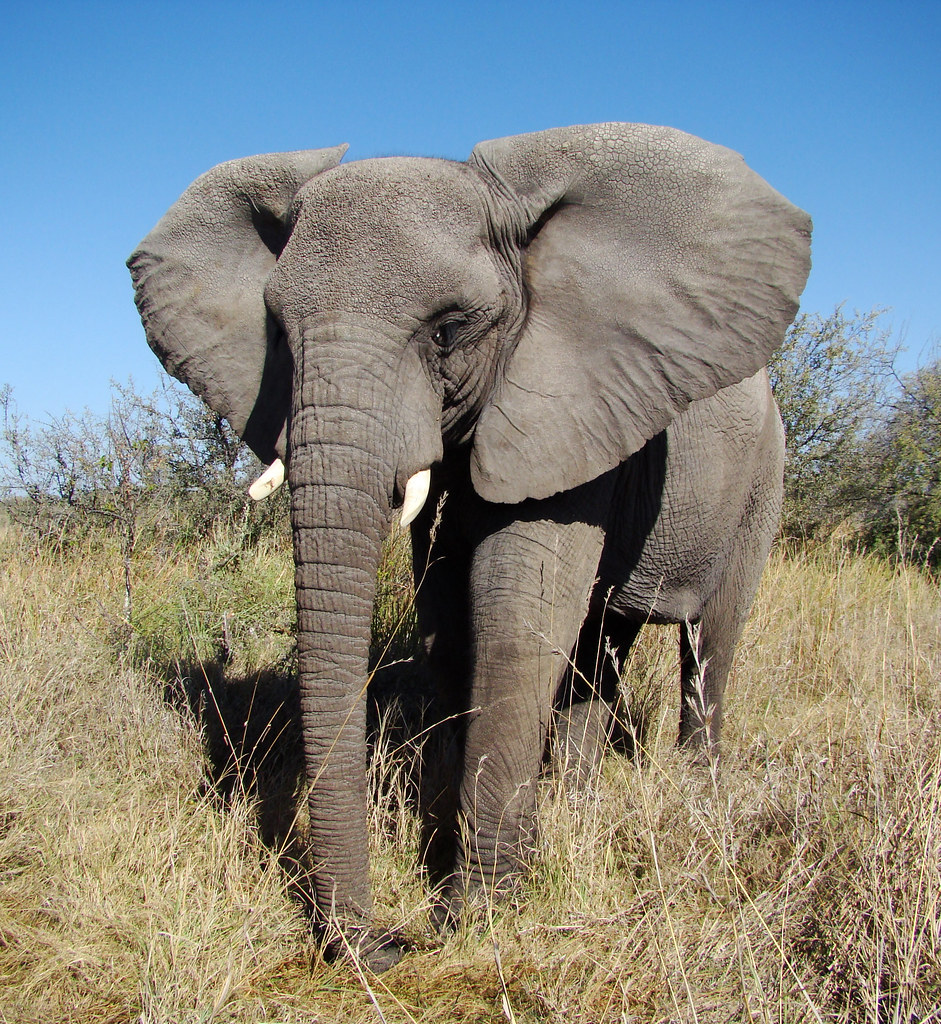
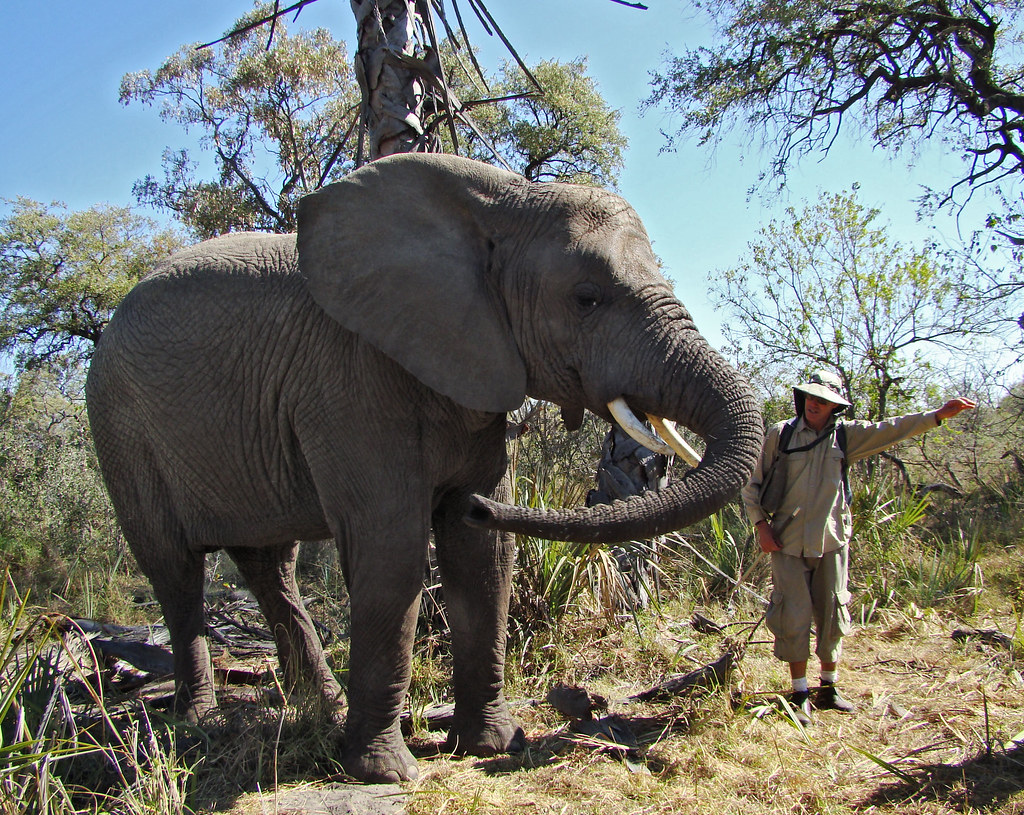
DSC08097 Elephant posing
African Bush Elephant (Loxodonta africana


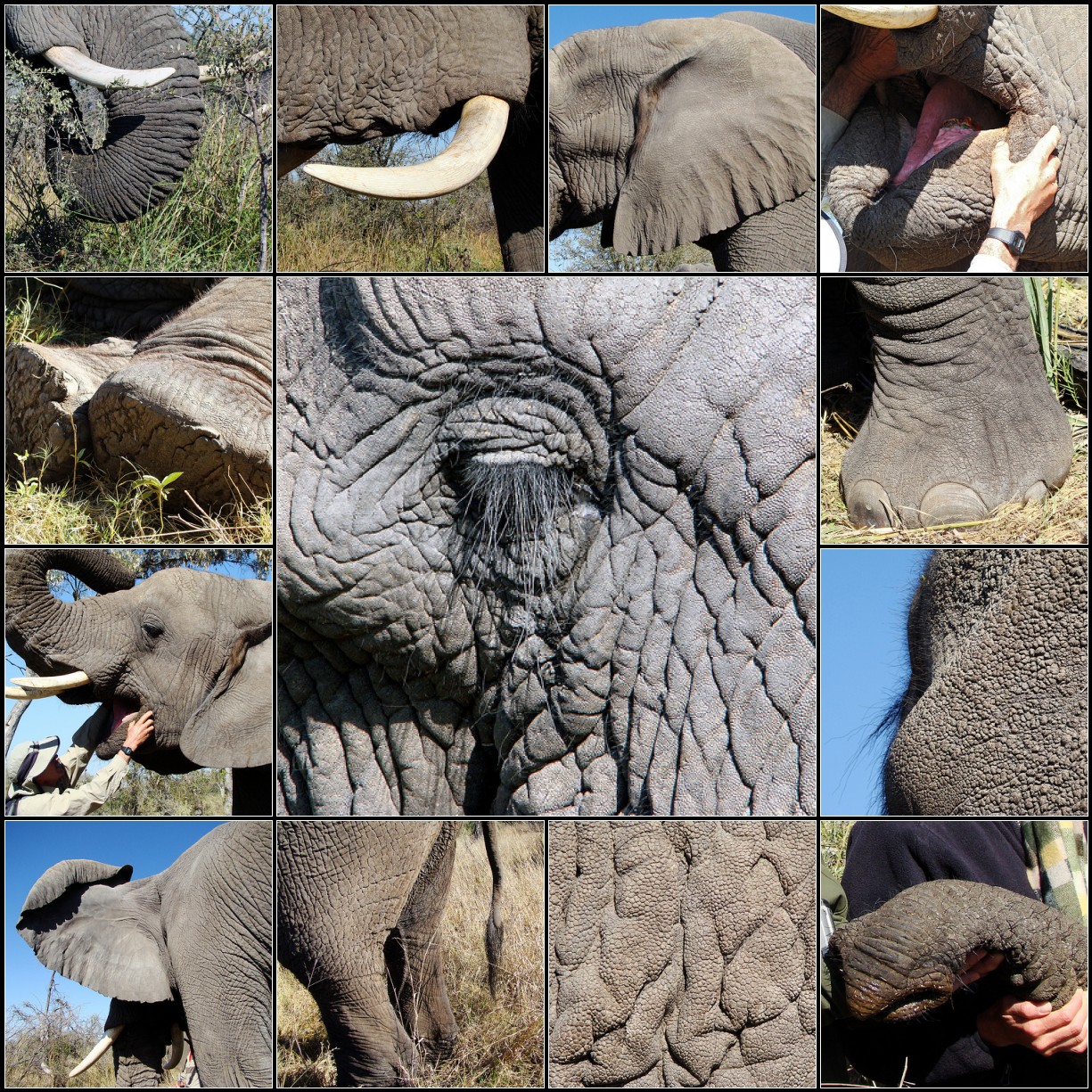
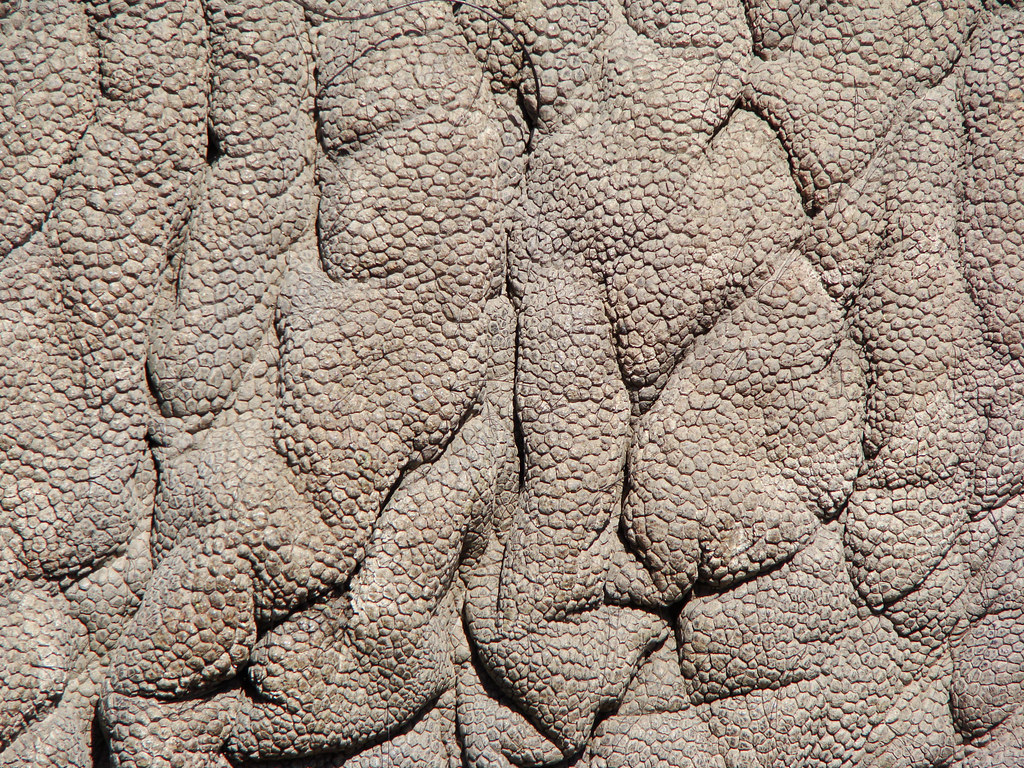
Ta da!  I now reveal the identity of the textured photo from last week. Those of you who guessed elephant, go to the head of the class.

Our elephant adventure began when we stepped into the dining tent at Stanley’s Camp in the Okavango Delta of Botswana. My fifteen-year-old son immediately exclaimed “Wow! This is the best lunch ever!” I looked around to see what earned this declaration. The food was not in sight yet, so that wasn’t it. He wasn’t even looking at the cool way the tent gave the right of way to the sausage trees:


DSC07792 Stanley's Camp dining tent

When he saw my puzzled face, he exasperatedly gestured past the flap and said: “No there!”


DSC07789 Elephant at Stanley's

Our very first elephant sighting was of this exceptionally large bull, affectionately named Stanley by the camp staff. It seemed fitting that the camp would be named after this elephant rather than
the famous explorer. After all, the camp encroached upon Stanley the Elephant’s territory when it was built. On the other hand, the camp’s wildlife program helps protect Stanley and other animals in the region. Our guide Poniso was thrilled to see our son’s glee because he was certain that he would experience the “best vacation ever” with what was coming ahead.


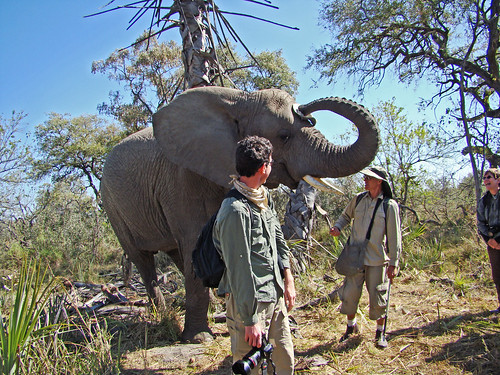
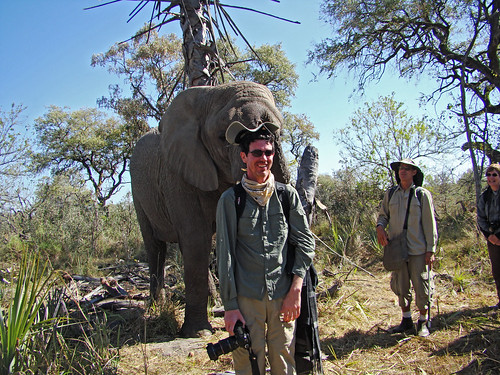
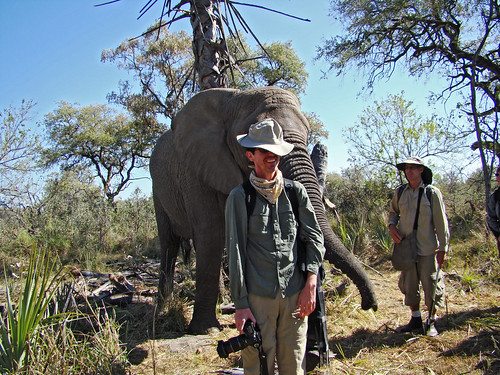
On our last day at Stanley’s we spent an extraordinary morning with a trio of special elephants. Oregon native Douglas Groves, founder of Living with Elephants Foundation, and his two capable elephant handlers introduced us to Jabu, Thembi and Morula. Groves and his zoologist wife Sandi adopted them after they were orphaned by culling programs in South Africa and Zimbabwe. The controversial culling practice is used to reduce the burgeoning elephant population.


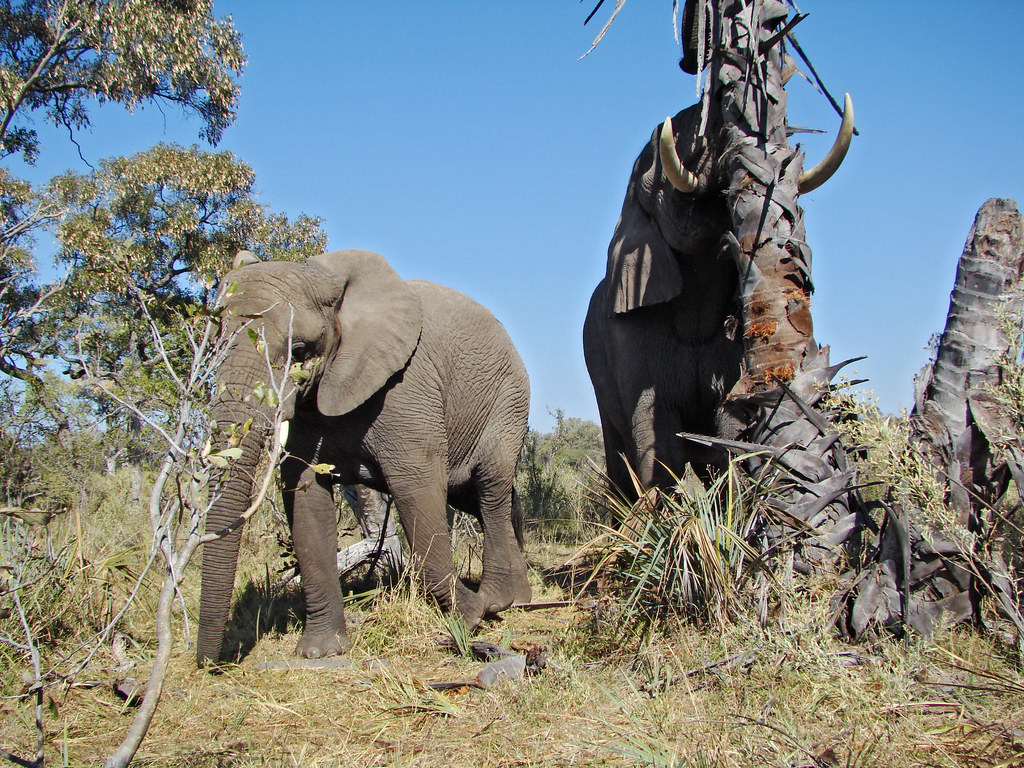
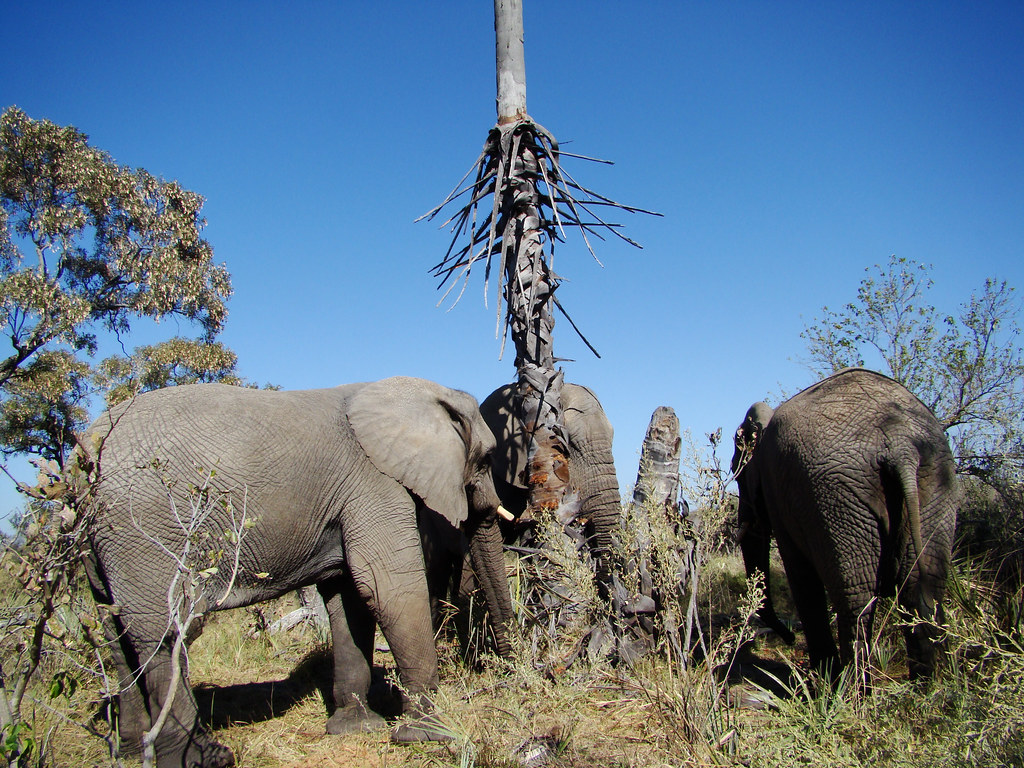
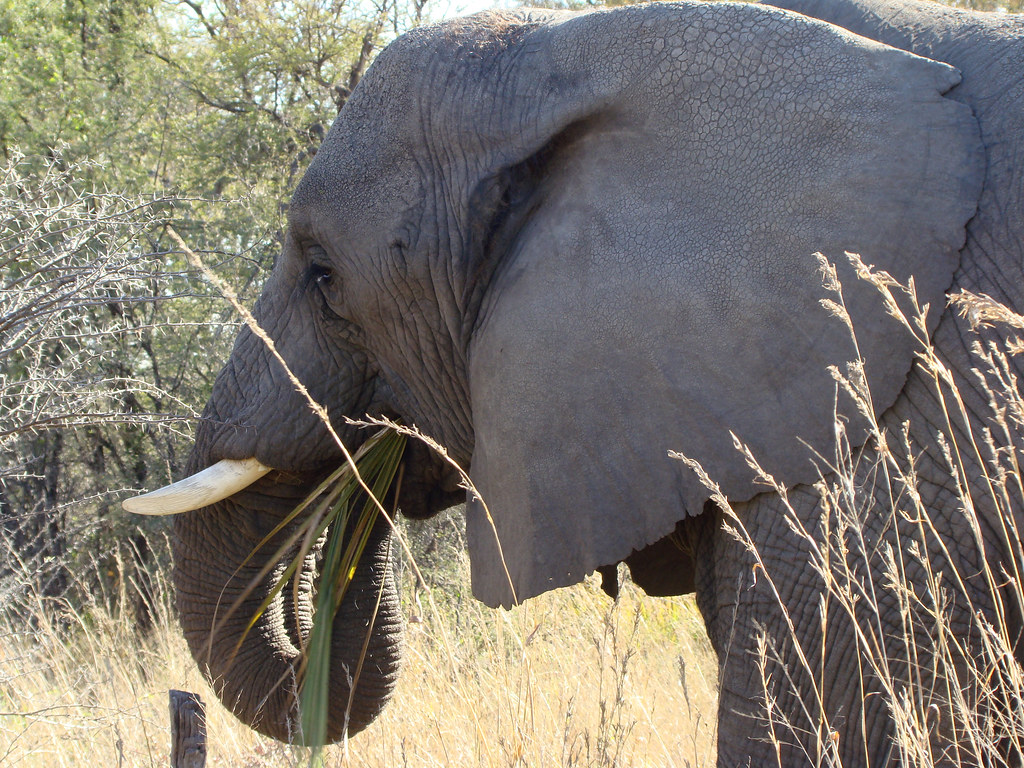
As soon as we met Groves he began sharing his encyclopedic knowledge of all things elephant. He rattled off facts about the elephant’s habitat, behavior, diet, anatomy, and morphology in rapid-fire succession. In the mean time, the threesome stayed within our sight eating everything in their path. Here Jabu gave  the Real Fan Palm several vigorous shakes with his trunk. It looks like the tree on the right got shaken a bit too vigorously in the past:

DSC08117 Elephant shaking real fan palm tree


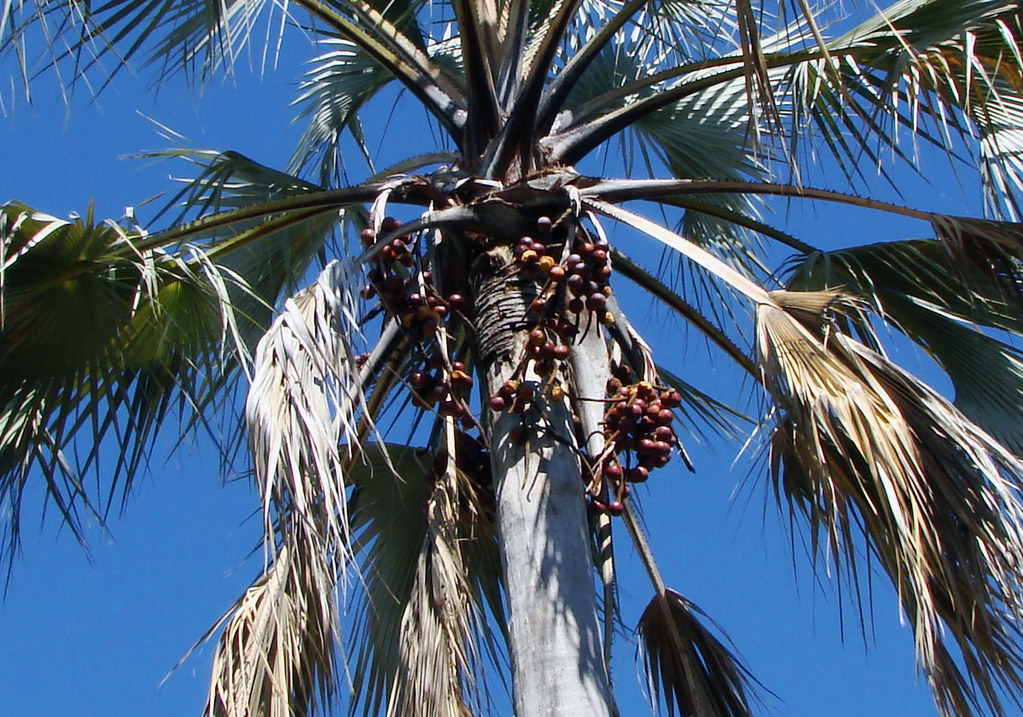
His goal was to free these prized nuts, known colloquially known as vegetable ivory:


DSC08116 Real Fan Palm nuts


Once released, all three hoovered up this elephant delicacy:


DSC08120 Three elephants


The leaves of this palm appeared to be tasty too:


DSC08017 African Elephant eating palm


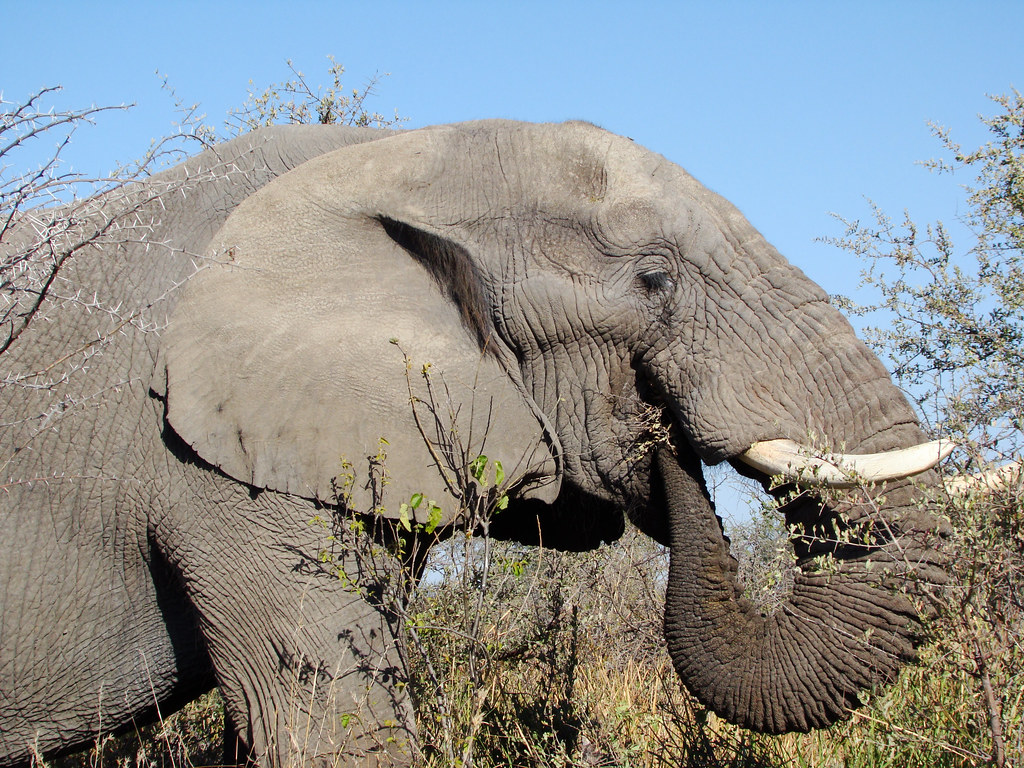
A branch of this juvenile raintree was within easy reach and with a snap and a “crunch crunch” the branch vanished within a minute, leaving only a stump behind.


DSC08146 Elephant grabbing a branch


DSC08032 elephant


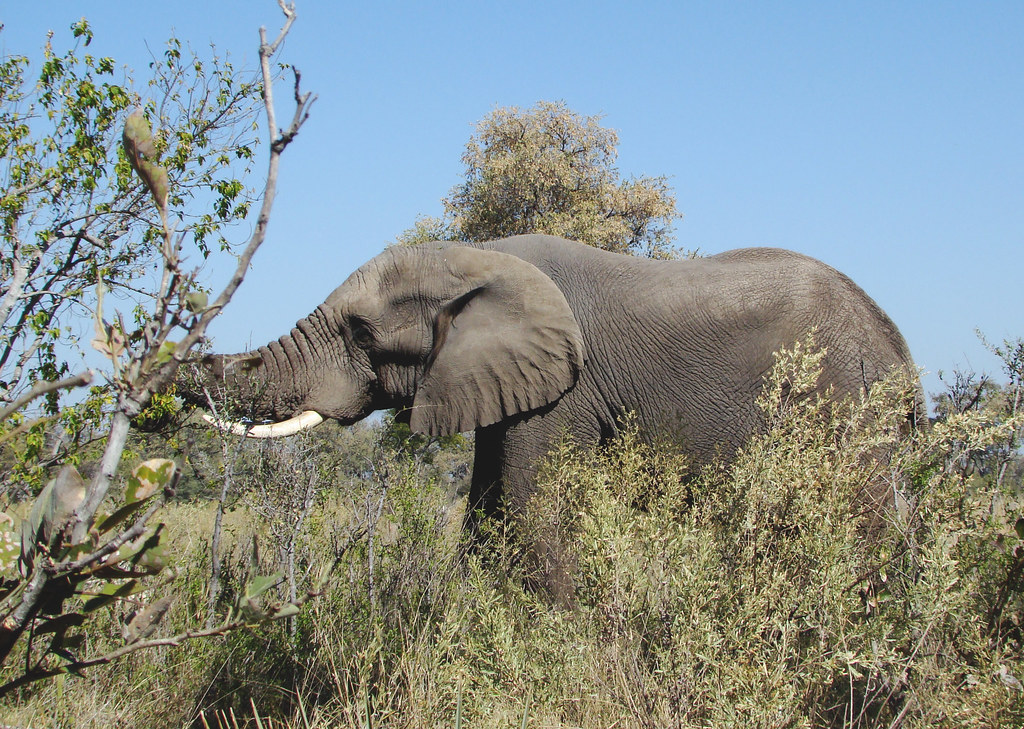
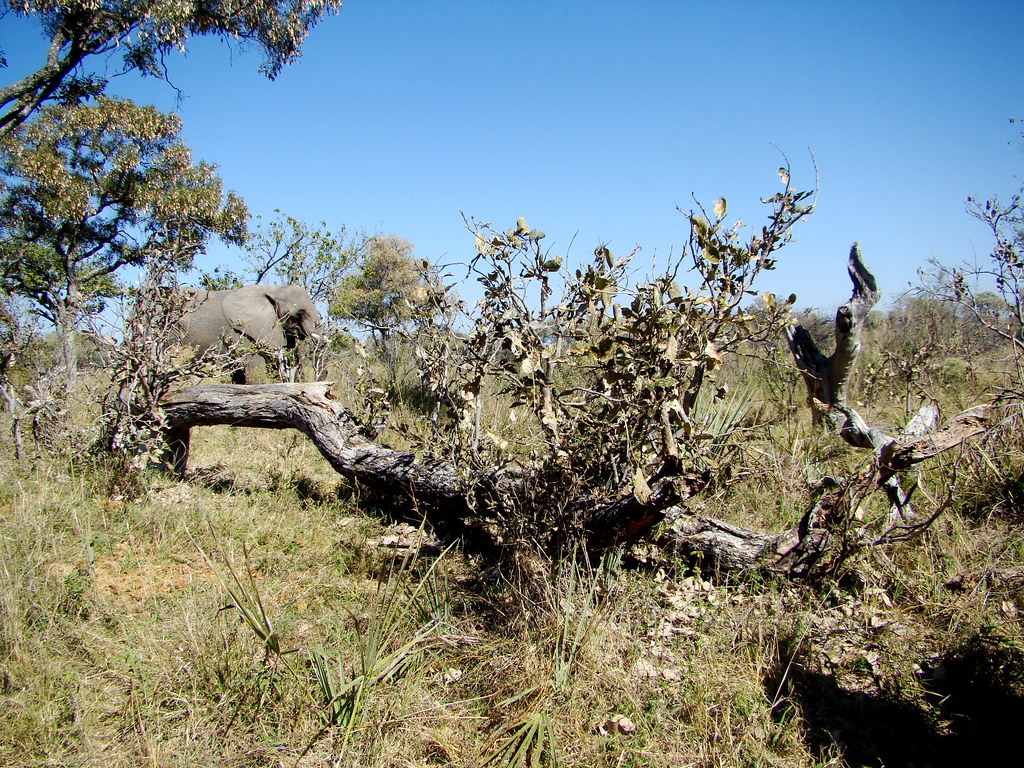
Elephants spend sixteen hours a day foraging and need to eat an average of 300 pounds (140 kilograms) of vegetation per day to survive. It didn’t take long for us to learn how to recognize where elephants have trod:


DSC08152 Elephant with felled raintree


giving us a glimpse into the complex debate about the practice of elephant culling in many parts of Africa. I promise to do a separate post on this very complex issue.

Groves put his elephant training background to use when he taught the trio multiple maneuvers to teach us about their anatomy and behaviors:


My creation


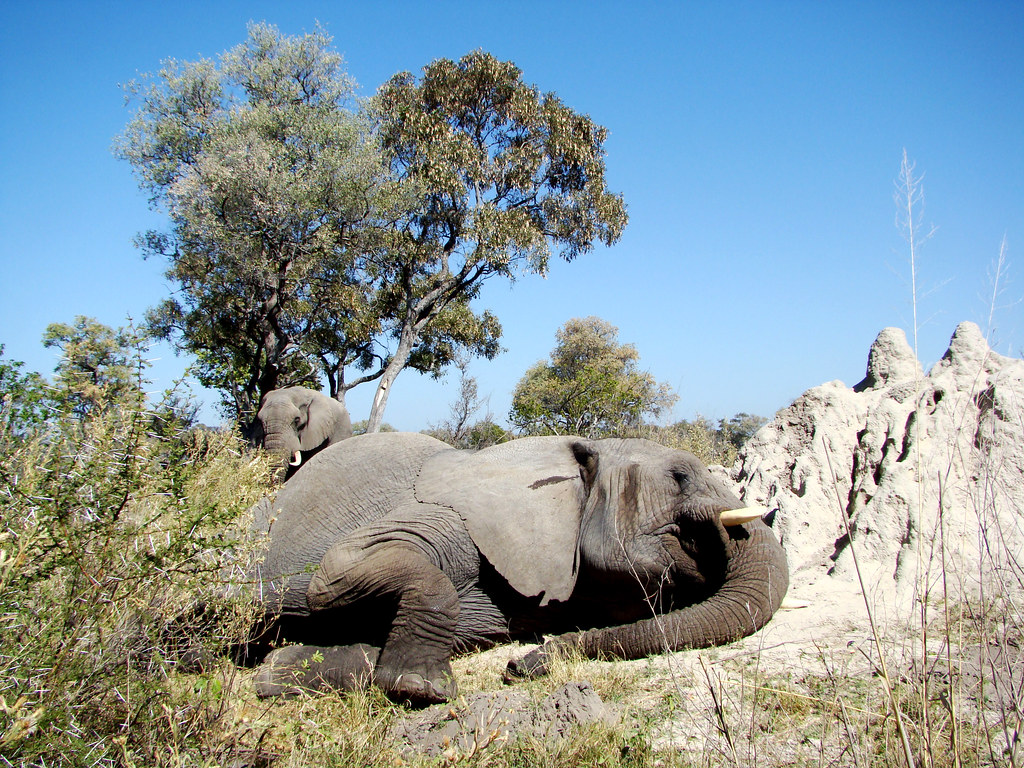
Elephants rarely lie down, but when they do, they favor lying on the slope of a termite hill so they don’t get crushed by their own weight and to make it easier to rise again.


DSC08162 Elephant lying down on termite hill


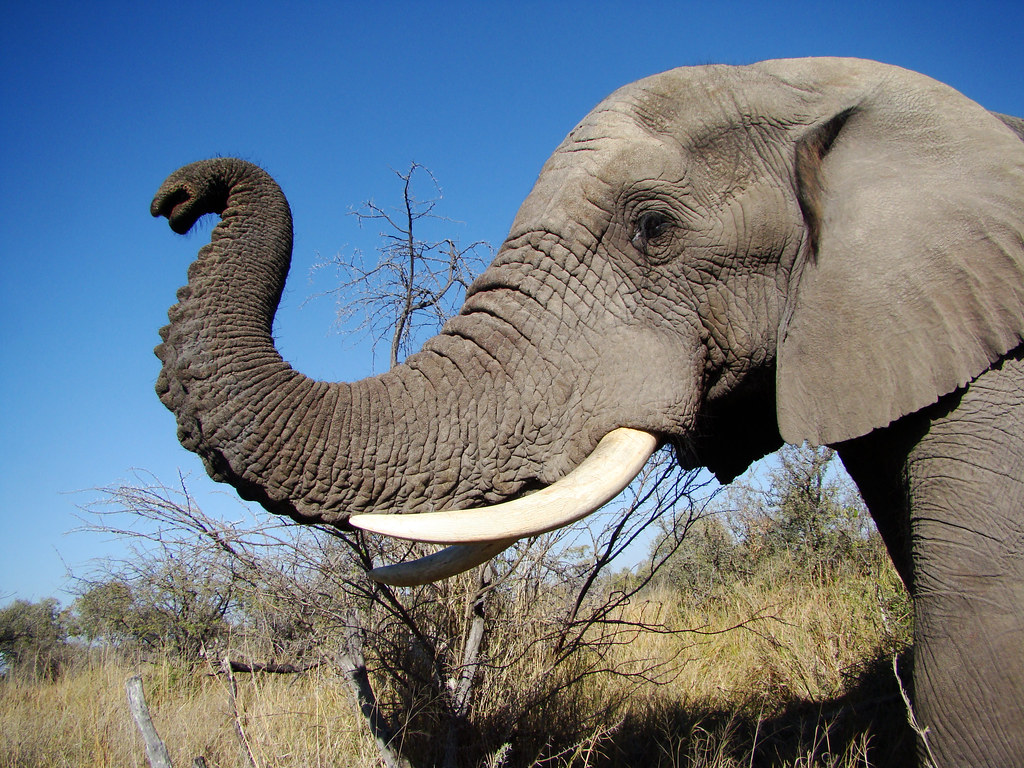
Groves taught Jabu to trumpet on command and even how to make very funny kissy noises:


DSC08051 Elephant trunk


Groves understood how the livelihood of his beloved elephants depended on creating photo opportunities for his audience. Here he produced fruit and vegetable tidbits from his pouch to persuade Marula to flex her ears:


DSC08096 Douglas Groves directing elephant pose


I believe it was Thembi who liked to borrow hats:


DSC08148 Elephant stealing hat


DSC08149 Elephant returning hat


DSC08150 Elephant returned hat


She was also very talented at swinging her trunk in circles on command:


DSC08143 Elephant swinging trunk


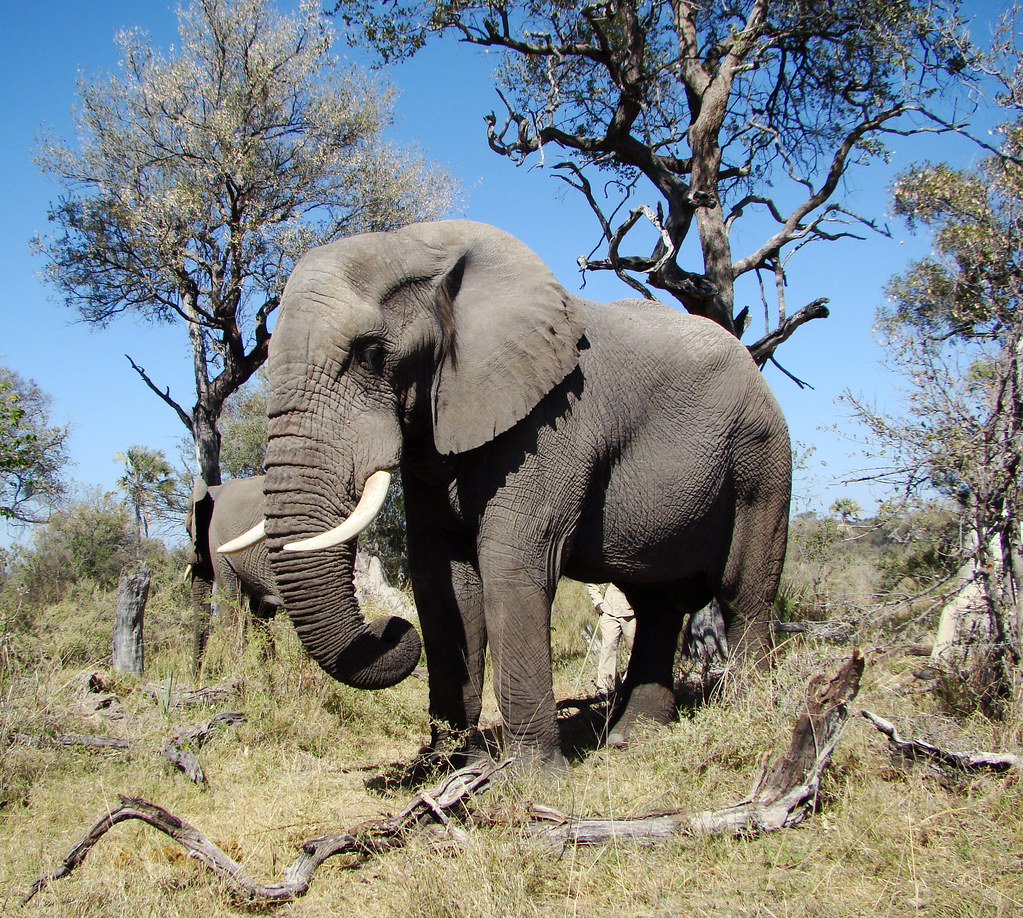
As I observed these elephants in their natural environment, I had to keep reminding myself that we were not in a zoo or looking through the window of a diorama in a natural history museum. When I was reviewing my photos, this shot looked to me like it might have been taken on a set in Hollywood:


DSC08156 Elephant


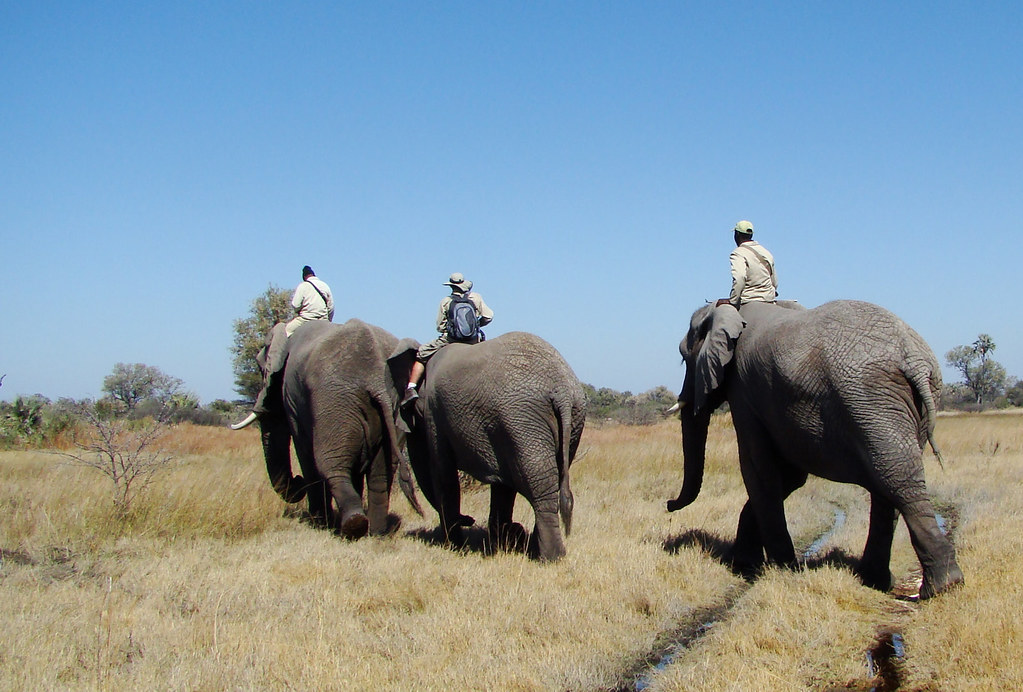
After the entertaining and informative demonstration, Groves and his handlers mounted the elephants and rode to the luncheon waiting for us in a shade of a lovely grove of trees.


DSC08184 Elephant walk


It was difficult to take in the marvel of the morning we spent with these magnificent elephants. I'm sure you understand how I turned black and blue from pinching myself throughout this trip.

Friday, August 28, 2009

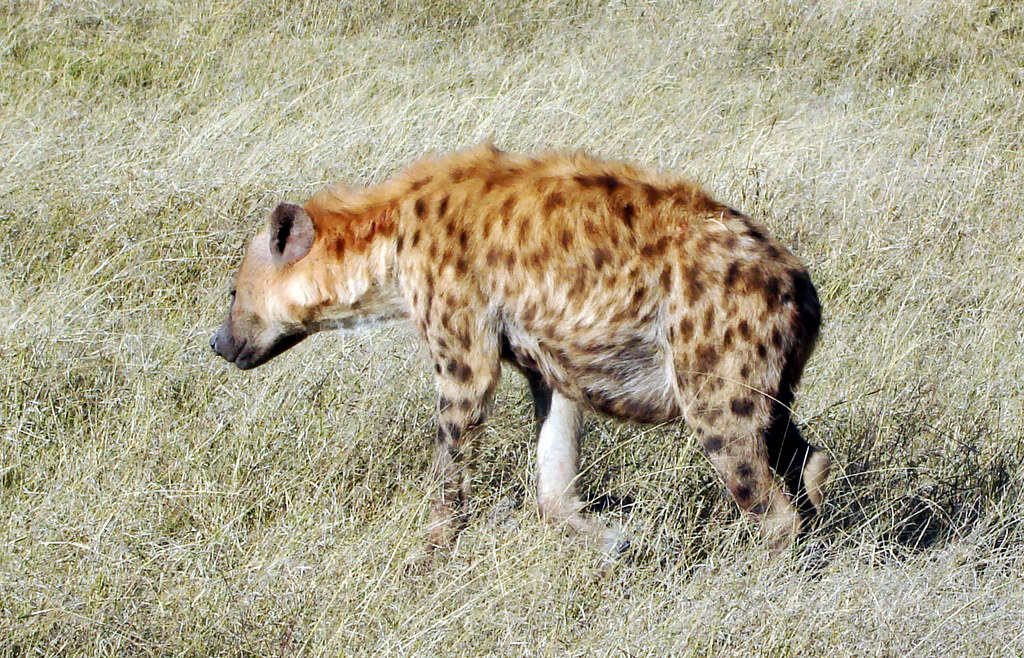
Spotted Hyenas in Botswana

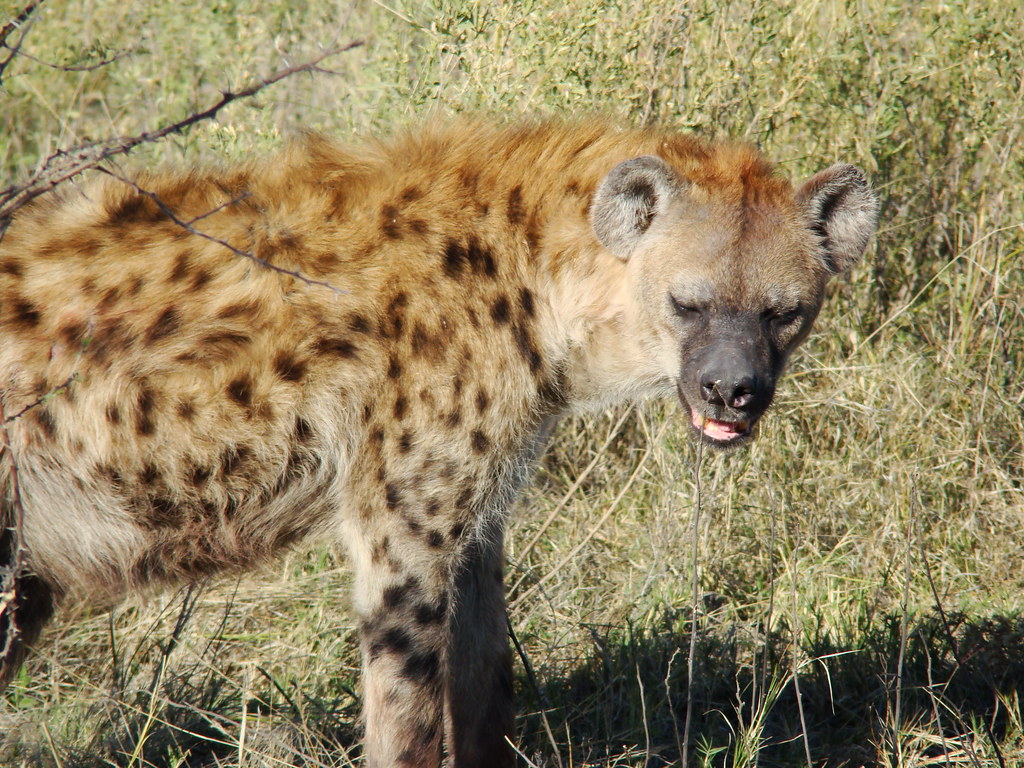
DSC07675 spotted hyena
Spotted Hyena (Crocuta crocuta)

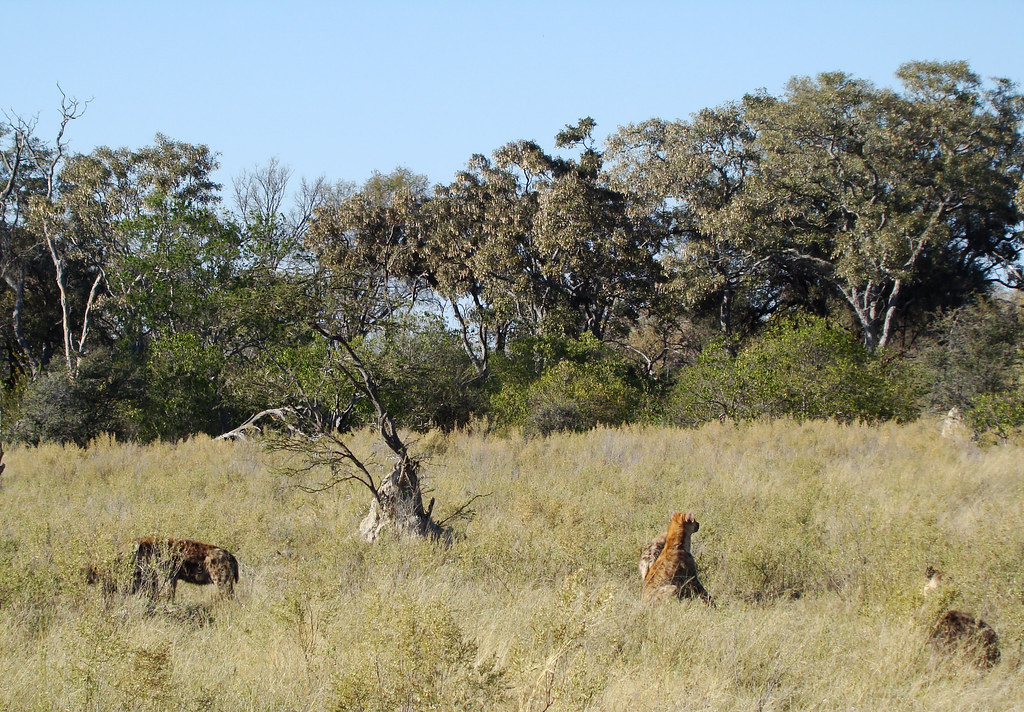
In a clearing near the airstrip of Stanley’s Camp, located in the Okavango Delta of Botswana, we encountered a clan of spotted hyenas (Crocuta crocuta).

From a distance we could see some standing sentry in every direction while others napped in the tall dry grass of the savannah.

DSC07650 hyenas

DSC07670 Hyena Sentries

Though their silhouette is more canine, their fluffy fur coat suggests their feline roots.

DSC07674 spotted hyena

Our guide, Poniso, knew right away that they had just eaten; observing the red blood coating their necks and legs with their heavy bellies hanging low to the ground.

DSC07664 spotted hyena with full tummy

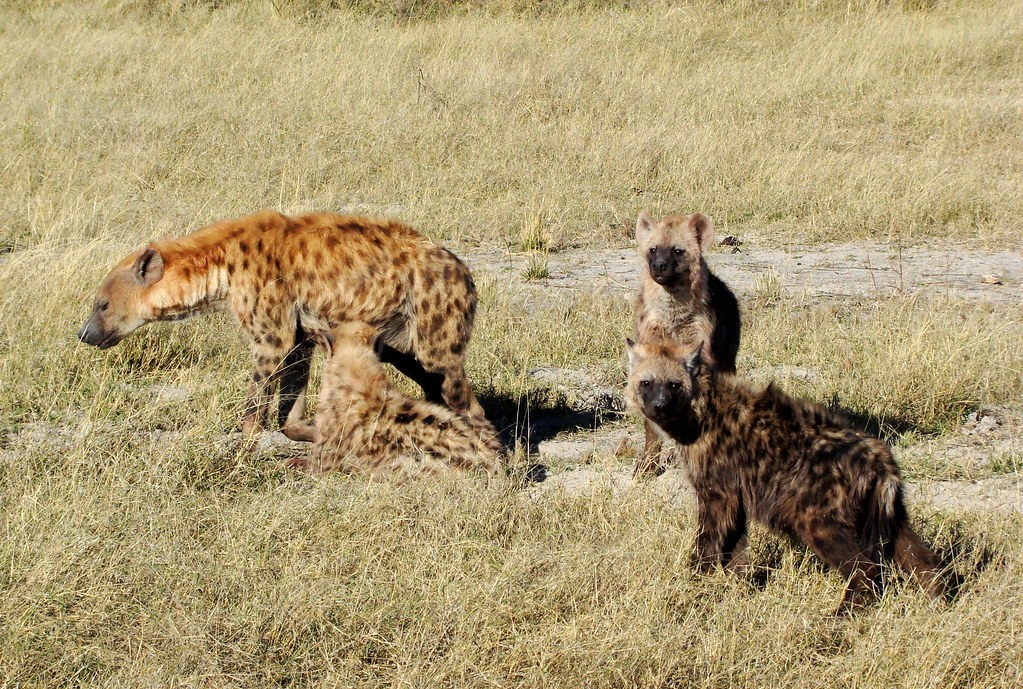
The quiet lazy mood indicates that there was enough for everyone, even sufficient to produce rich milk for young cubs. Spotted hyena milk has the highest protein content of any terrestrial carnivore, second only to polar bear milk.

DSC07663 spotted hyena nursing

Cubs shed their brownish-black coat at age two to three months and then they develop the spotted coat.

DSC07680 spotted hyena cubs

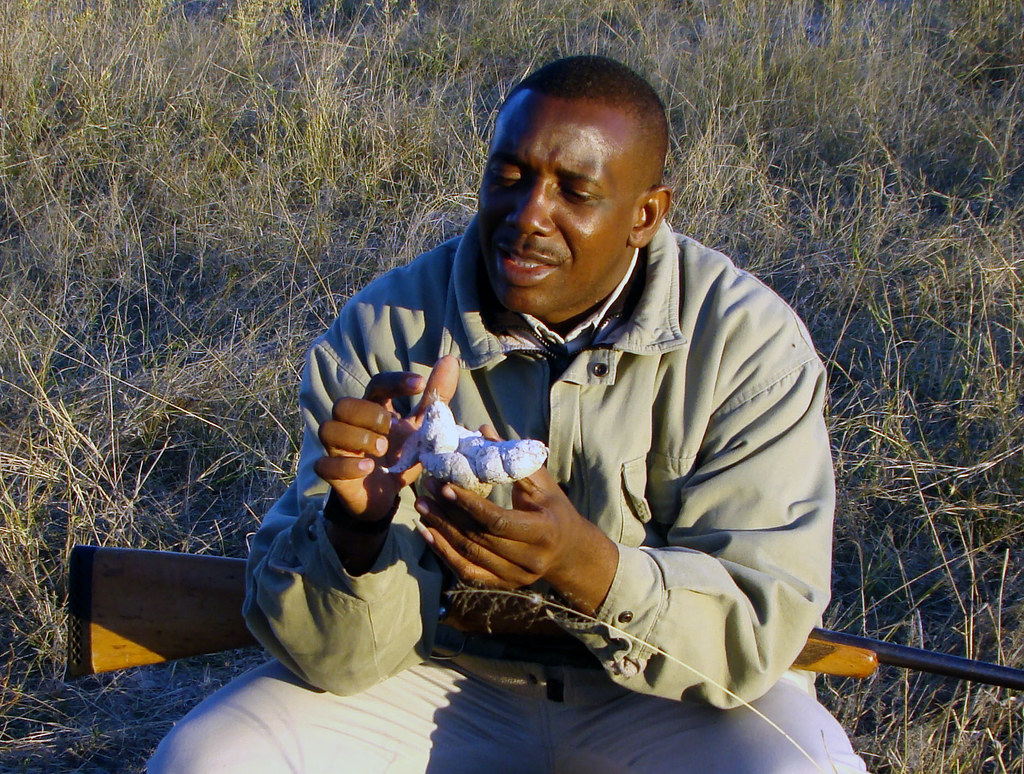
Hyenas are well-equipped predators. They have the second most acidic digestive system in the animal kingdom, after the crocodile, allowing them to tolerate bacteria from carrion. Their strong jaws are capable of eating entire animals, pulverizing bones, horns, and teeth. Their scat is chalky white, filled with the calcium from the bones.

DSC07932 hyena scat

Completing the eco-cycle, the African Leopard Tortoise eats this dung to fortify its shell.

DSC07669 spotted hyena

Though their skulking profile probably contributes to the hyena’s sinister reputation, they looked like real pussycats to me.

Tuesday, August 18, 2009

Spotting Wildlife at the Okavango Delta

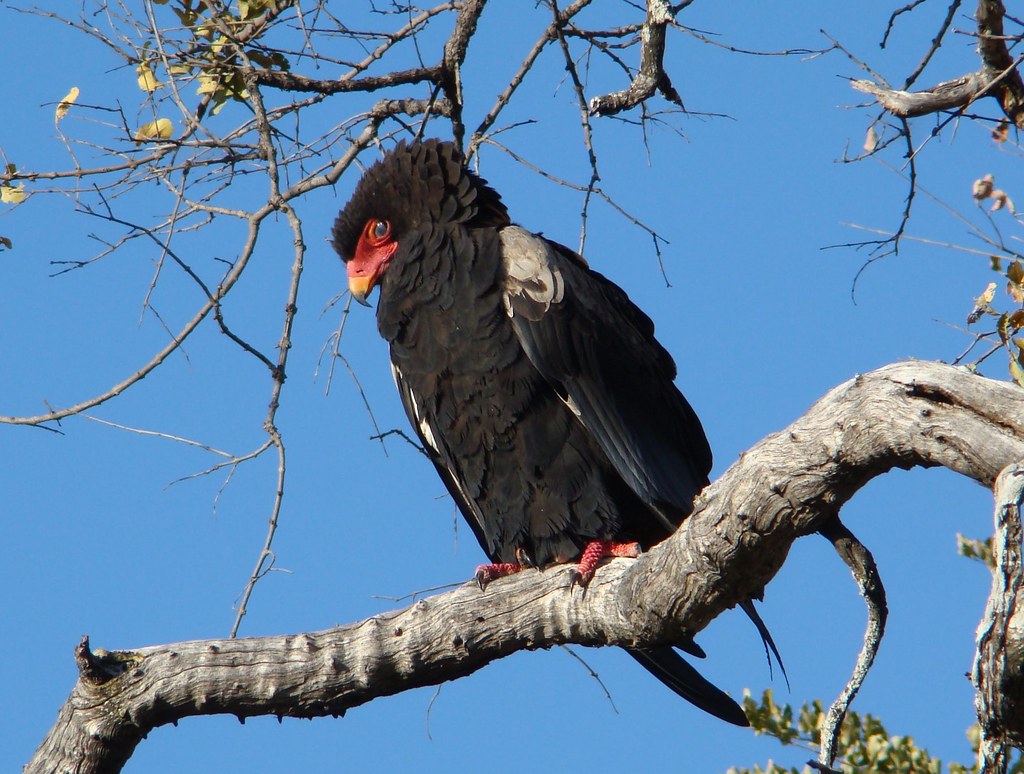
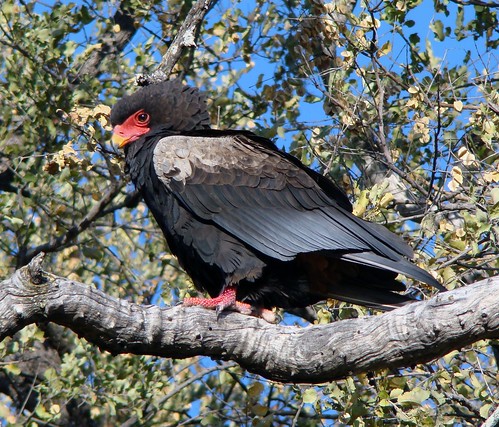
DSC07595 Bateleur Eagle cropped

The Bateleur (Terathopius ecaudatus)

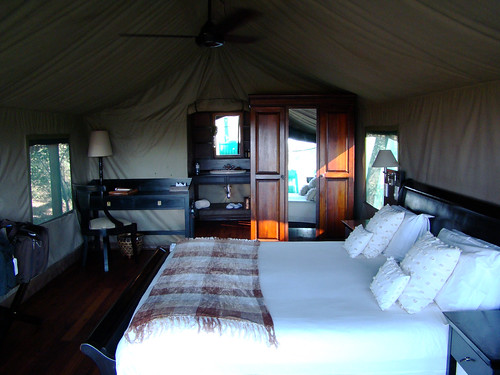
Our grand life at Stanley’s Camp continued as we indulged in an afternoon siesta after high tea.

DSC07347 Stanley Camp tent interior

Refreshed, we climbed back into the Landcruiser for our afternoon game drive, eager to explore the territory. We were all on the lookout to score the next big find. Maybe we could spot an elephant, a lion, or even a leopard. A couple of us were very interested in birds, so we also scanned the trees for unusual profiles.

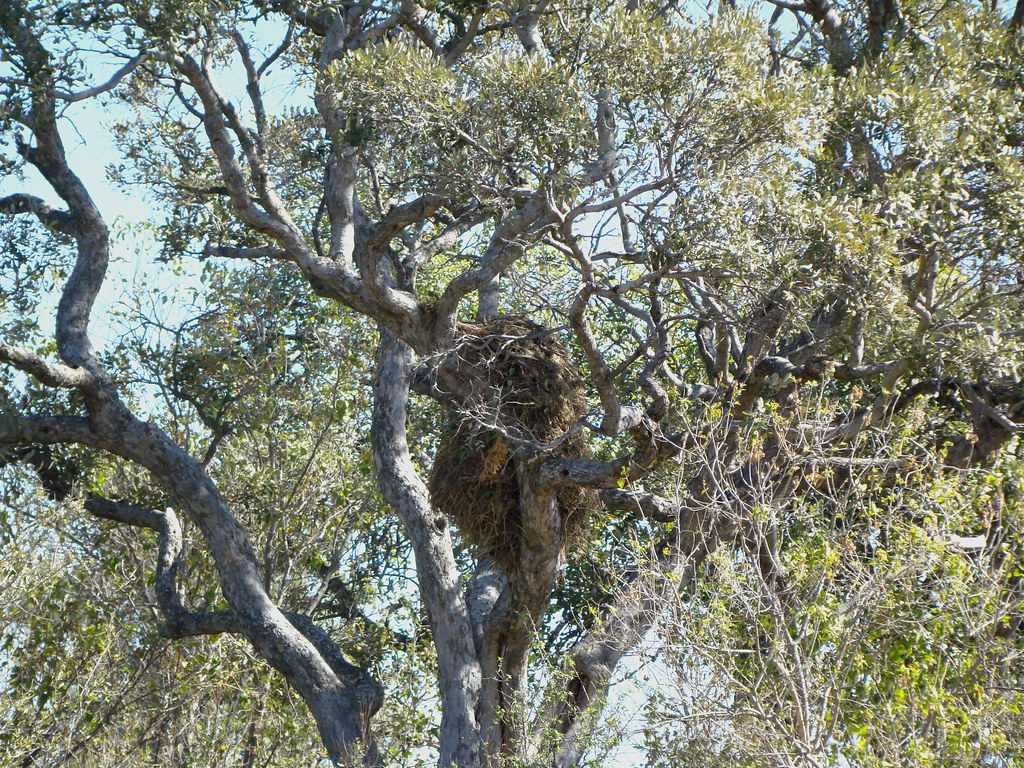
DSC07777 Hamerkop nest

We asked our guide, Poniso, what bird builds these uncommonly large nests. We were convinced that it belonged to a giant eagle or oversized stork.

DSC07778 Hamerkop Nest

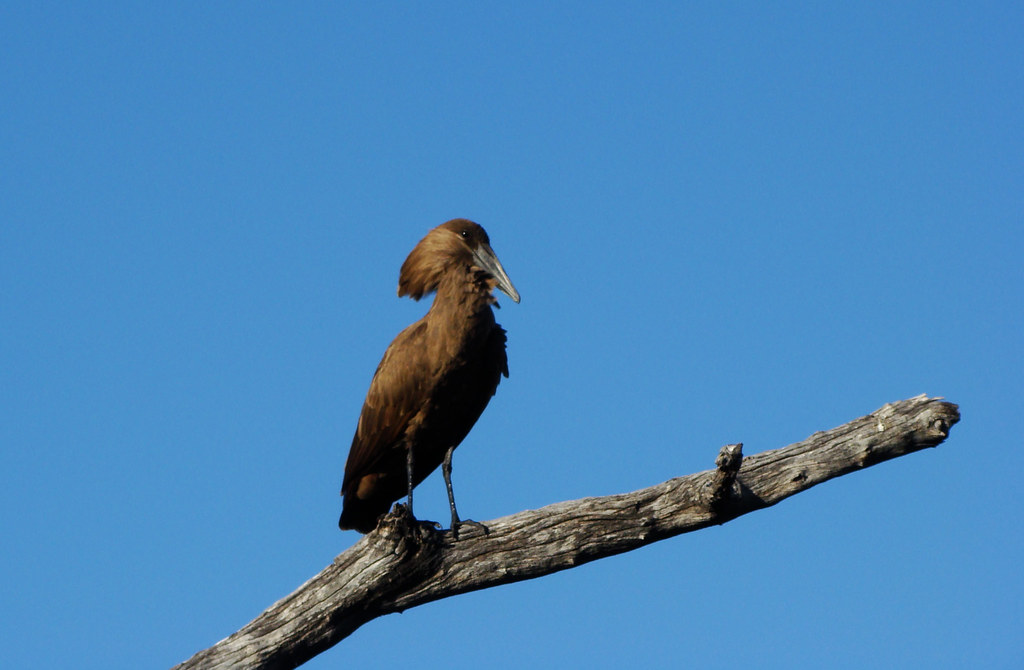
The architect of this mansion, he told us, is a medium-sized wading bird called the Hammerkop. Believe it or not, this compulsive nest builder may build 3 to 5 of these nests every year. http://en.wikipedia.org/wiki/Hammerkop

DSC07874 Hamerkop
Hammerkop (Scopus umbretta), also known as the Hammerhead Stork.

Even from a distance, we knew this silhouette showed promise.

DSC07580 Bateleur in tree

I was bowled over when we drove closer:

DSC07600 Bateleur

Named the Bateleur, it is no surprise that this eagle is sometimes called the “Pine Eagle”. As the top photo reveals, its fluffed feathers sometimes resemble a conifer cone.

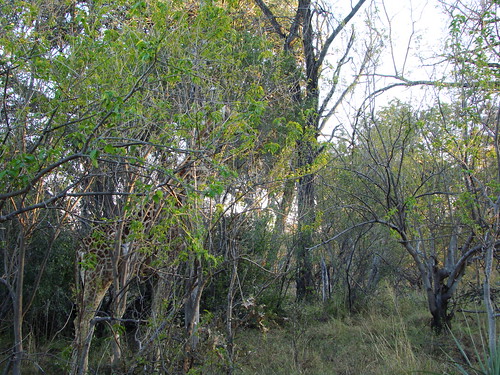
Here’s another unusual profile in a tree. Is it another nest?

DSC07500 Southern Giraffe hiding

Here another hint:

DSC07502 Southern Giraffe hiding

Surprise!

DSC07511 Southern Giraffe

If find her Red-billed Oxpecker bird “tiara” quite fetching:

DSC07509 Southern Giraffe ox-pecker bird

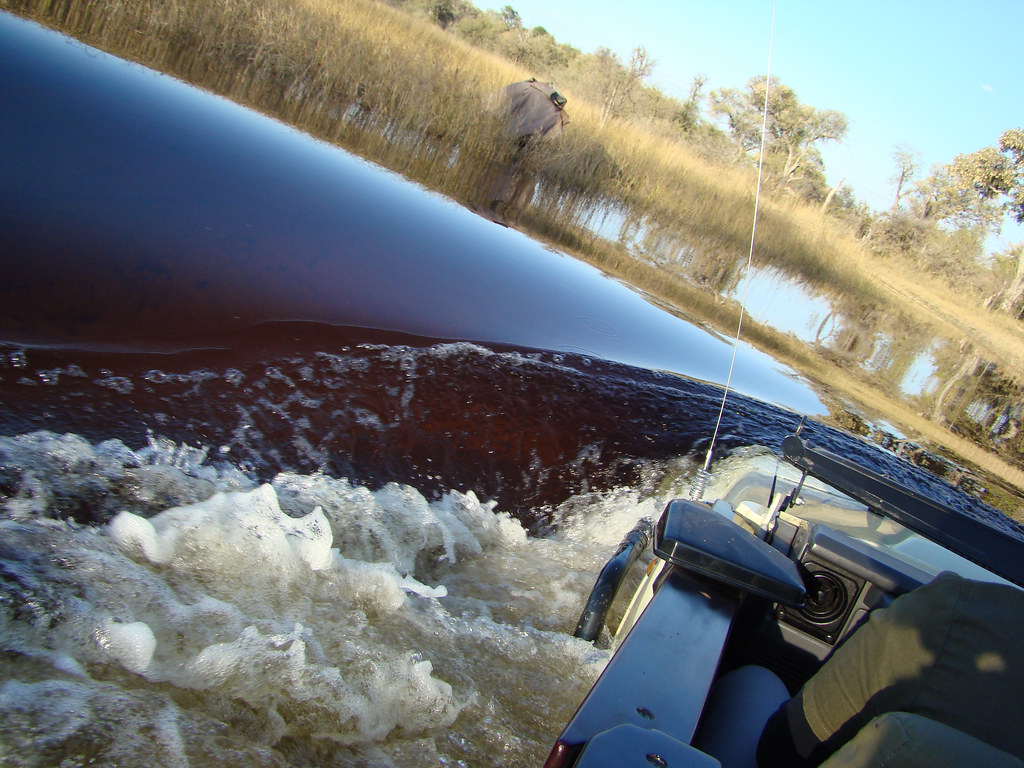
Here’s where one of us shouted “Elephant!”

DSC07398 Landcruiser wading

Not! It was only a pump, not a baby elephant.

I don’t have a photo of the termite mount that I declared to be a giraffe. A bit gun-shy now, I was hesitant to call out a dark shadow in the distant grass. Poniso smiled as he drove unhurriedly in its direction.

DSC07441 African Buffalo skeleton

Known as one of the “big five”, the African Buffalo is a formidable foe with its considerable size and impressive horns. It probably took multiple lions to bring this one down.

DSC07446 African Buffalo skull teeth

With their impressive row of incisor teeth, the African Buffalo can eat tall, coarse grass more quickly than most other African herbivores.

***
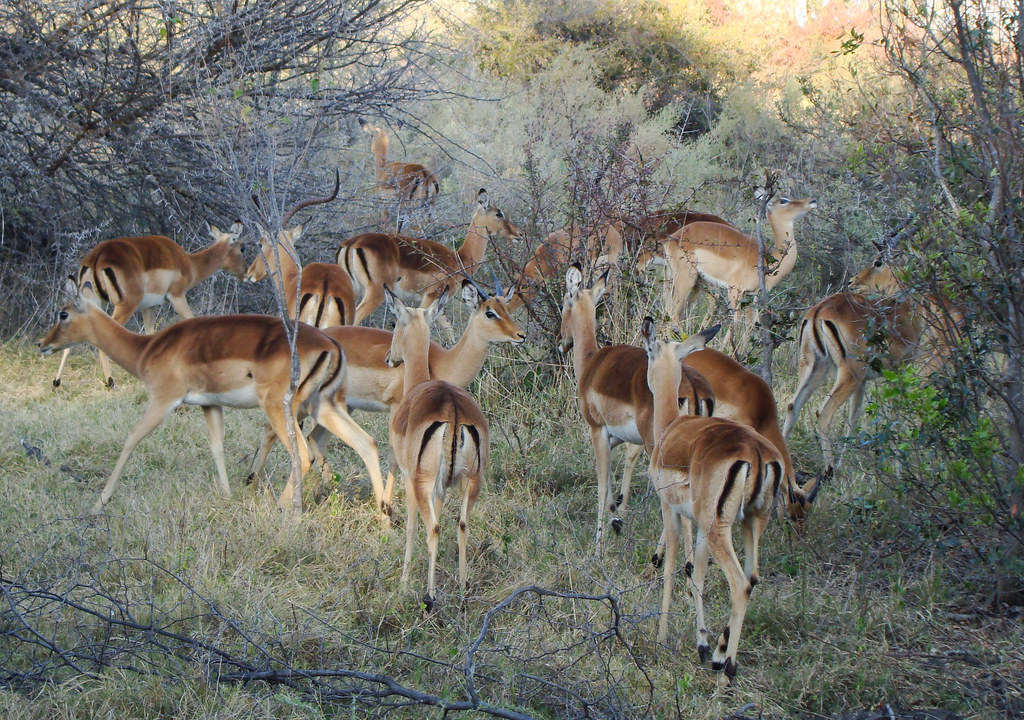
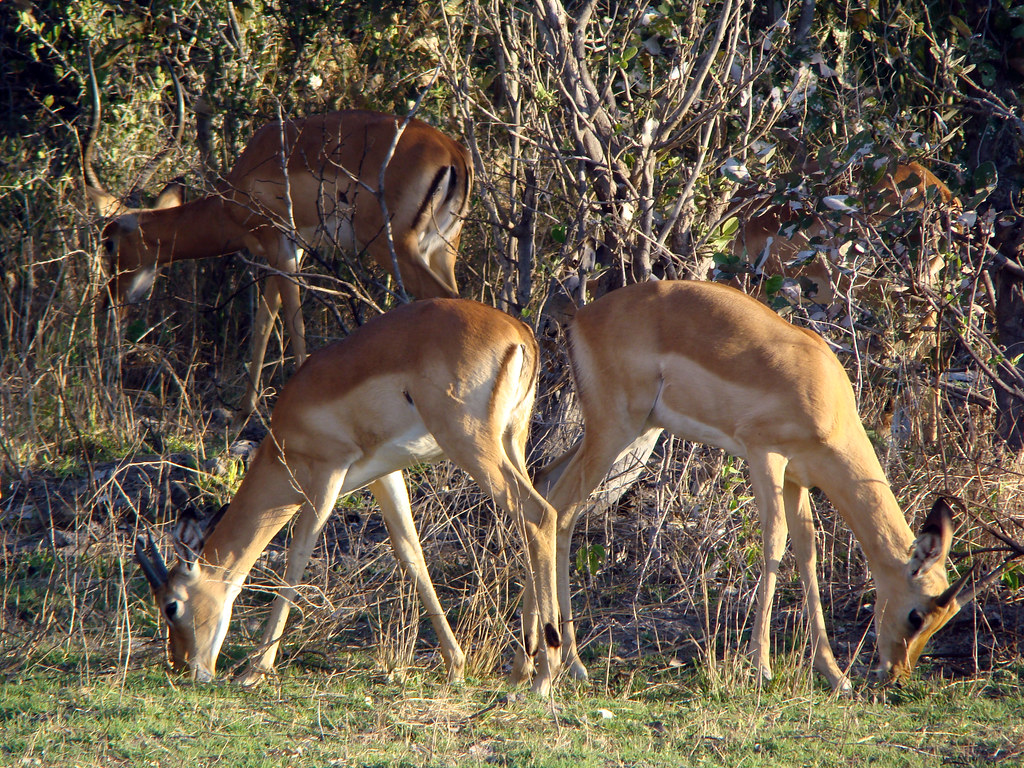
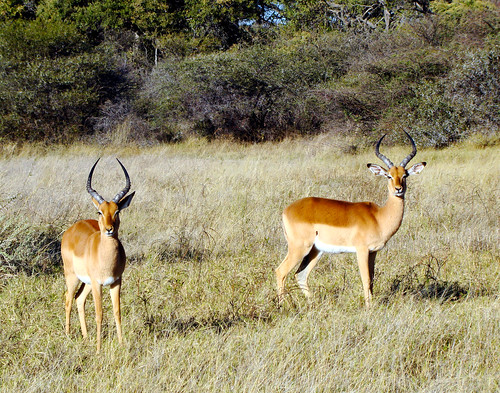
It takes no talent to spy impalas. The impala is the most ubiquitous antelope in the region. Poniso said some locals refer to it as the McDonalds of the delta. McNuggets on the hoof? Running at 50-75 km/hr, impalas give new meaning to fast food. They were so plentiful, we eventually dismissed them as “only impala”. They are easily identified by the two vertical stripes on both sides of their tail.

DSC08555 impala herd

DSC07421 impalas


When they don’t think they can outrun their predators, impalas sometimes try to stand perfectly still, hoping to blend with the environment.

DSC07623 Two impalas

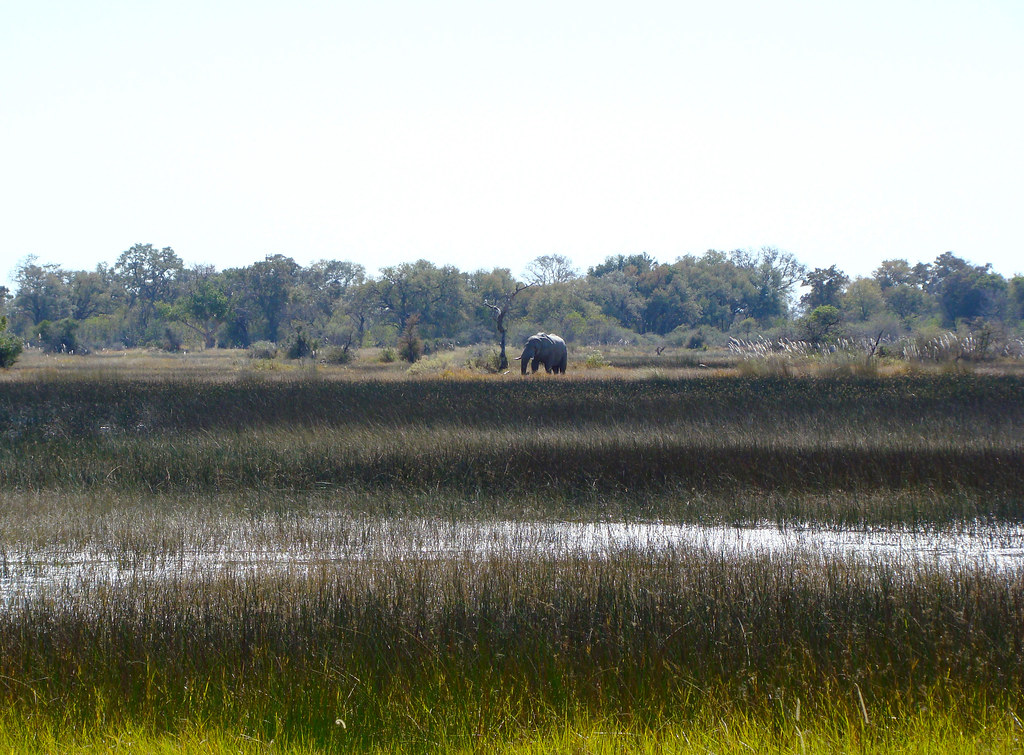
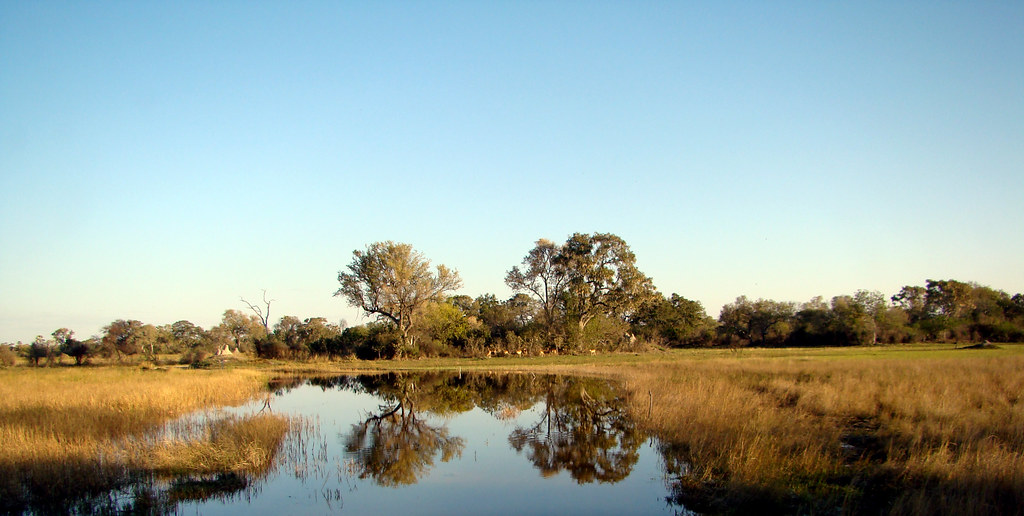
Even when we don’t see game, the tranquil terrain is a treat to explore.

DSC07413 two trees reflection
Related Posts Plugin for WordPress, Blogger...
Bookmark and Share